‘Somebody’s got to pay’: Russell pushes F1 to ditch rotating stewards for permanent panel
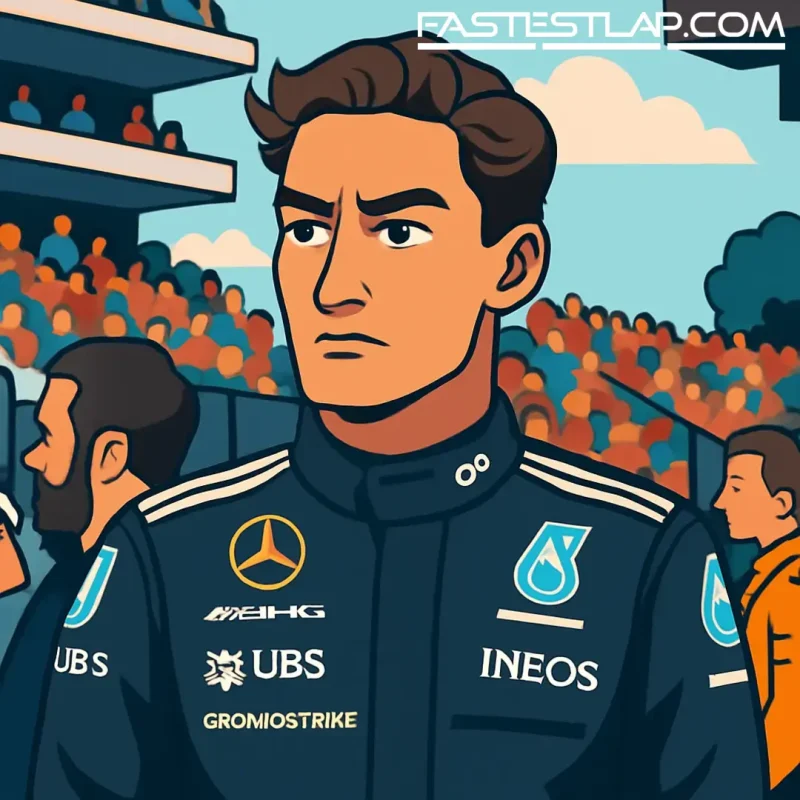
George Russell didn’t dance around it in Qatar. In a season where the rulebook feels thicker than ever and patience thinner than usual, the Mercedes driver says it’s past time Formula 1 stopped relying on a rotating cast of volunteer stewards to police a multi‑billion dollar sport.
His solution is blunt: pay for permanent stewards, ideally with deep racing experience, and make the calls consistent from race one to race 24.
Russell’s comments landed as drivers met with the FIA ahead of the Qatar Grand Prix to air long‑simmering grievances about how incidents are judged. The flashpoint came from Brazil, where Oscar Piastri’s 10‑second penalty — after a tangle that also involved Andrea Kimi Antonelli and Charles Leclerc — sparked an “urgent” sit‑down requested by Carlos Sainz.
Sainz had pointed to Sky F1’s Karun Chandhok and Anthony Davidson, plus ex-F1 racer Jolyon Palmer, as examples of how incident analysis can be done clearly and credibly. Russell didn’t disagree — but he said the real issue isn’t who’s on TV, it’s who’s in the room making decisions under pressure.
“I respect those three from an analysis perspective. They do get things absolutely spot on,” Russell said. “The benefit they have versus stewards is they’ve got no pressure, time on their hands, and they’re not following guidelines. Stewards are. If the guidelines aren’t correct, the decisions won’t be correct.”
And there lies the crux. You can’t write a clause for every racing scenario. The moment the sport tries, it ends up tying itself in knots. Russell wants experienced eyes applying judgement the same way, every weekend, rather than a rolling jury that interprets grey areas differently from race to race.
“It goes back to consistent stewarding, from individuals who’ve got that racing experience, who can see an incident for what it is,” he said. “That’s where the likes of Anthony, Jolyon and Karun have that benefit.”
So how do you get there? With a chequebook.
“Somebody’s got to stick their hand in their pocket to pay the stewards the correct amount it would be to have consistent stewarding over the course of 24 races,” Russell added. “At the end of the day, it’s a job. It’s a multi‑billion‑dollar sport. We shouldn’t be having volunteers having such great power in certain roles.”
The drivers laid out to the FIA just how many nuances get missed when the “guidelines” are doing the heavy lifting. Russell cited the Brazil clash as an example of why context matters: a wheel locking doesn’t automatically mean a driver’s out of control, and circuit camber or the car’s roll stiffness can momentarily lift a tyre and change the line. Those are the kinds of details you don’t easily codify, but a seasoned panel can understand.
“I hope we make progress,” he said, before admitting a familiar worry — that the sport tweaks a paragraph or two, only for a new corner case to blow it all up again next year. “I think the majority of drivers do believe permanent stewarding is the way forward.”
Inevitably, that raises the question of bias. If the same faces are judging every week, won’t teams accuse them of picking favourites? Russell pushed back.
“If you find yourself in the stewards’ room week in, week out, then maybe you need to look at yourself in the mirror,” he said. “There shouldn’t really be chance of a bias, because you shouldn’t be in there that often in the first place.”
As for drivers ever agreeing among themselves on individual incidents — no chance, not when emotions are hot and carbon bits are still falling off. But from the neutral camp, Russell argued, there’s more alignment than people think. And, crucially, predictability is the point. With a permanent trio, teams and drivers learn how the panel reads Lap 1 squeezes, late lunges, elbows‑out defenses. Even if you don’t love every call, you can at least anticipate the next one.
Russell, who currently carries just a single penalty point on his licence across the last 12 months, isn’t pitching this from a place of grievance. He’s making a structural argument — that in a championship this complex and commercially rich, stewarding shouldn’t feel like a game of musical chairs with the rulebook.
F1 has spent years wrestling with this balance between black‑and‑white regulations and racing instinct. The latest driver push won’t magically settle it in one meeting, but the mood music is clear. The grid wants consistency. Russell wants the sport to pay for it. And after Brazil, Qatar felt like the right room to say it out loud.