Brundle questions “very harsh” Piastri penalty after three‑wide chaos at Interlagos
Oscar Piastri left Sao Paulo with points on the board and a headache he didn’t need. The McLaren driver was hit with a 10‑second time penalty and two licence points for triggering the clash that ended Charles Leclerc’s race at the restart, a call Martin Brundle says went too far.
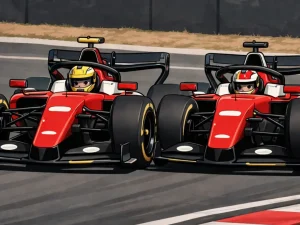
The flashpoint came as the field launched into Turn 1 after an early Safety Car. Piastri had the kind of run every driver dreams of down to the Senna S, diving to the inside of Mercedes rookie Kimi Antonelli with Leclerc sweeping around the outside. Three cars fighting for second, one apex — you know how that story usually ends.
Piastri climbed the inside kerb and pinched a brake. His McLaren tagged Antonelli’s rear axle, the Mercedes slid left, and Leclerc’s Ferrari was the innocent bystander that paid the price. The left‑front parted company with the SF‑25 and rolled away down the hill. Piastri and Antonelli carried on; Leclerc was out.
The stewards called Piastri “wholly responsible” and slapped on 10 seconds plus two penalty points, taking the Australian to six for the 12‑month period. He salvaged fifth at the flag, but it was hardly the Sunday he needed as team‑mate Lando Norris swept the Sprint and Grand Prix to stretch his title lead.
Piastri toed the line in front of the cameras but couldn’t hide his disbelief. Squeezed to the limit on the inside, he argued there was nowhere else to put a McLaren at full chat. “When you’re fully alongside into Turn 1, you’re not just going to back out,” he said, noting he was “as far left as I could go.”
Brundle, who’s seen most variations of Turn 1 mischief in his time, was sympathetic. In his Sky Sports column he called the sanction “very harsh,” pointing to a clear mitigating factor: Antonelli’s presence and the three‑wide postage stamp Piastri was forced to operate within.
“He had a tremendous run with a real chance to pass both cars down the inside,” Brundle wrote, adding that any racer offered the same picture “20 more times” would send it up the inside again. The lock‑up, the optics — a car understeering into the middle of a three‑wide stack — did Piastri no favours. But Brundle felt it was easy to justify five seconds rather than 10, given the squeeze.
That’s the crux of this one. On paper it looks like a slam‑dunk: a driver locks up, triggers contact, another retires. But context matters in wheel‑to‑wheel decisions, and Turn 1 at Interlagos is where context goes to die. The inside car had kerb, dust and a narrowing wedge; the middle car had to think about the apex and the Ferrari to the right; the outside car was taking the high line on cold tyres. You can argue Piastri didn’t quite get it stopped and that’s on him. You can also argue he left margin, hit the kerb, and was pinched into a mistake. Both can be true.
Calling him “wholly” to blame feels absolute for a moment that rarely is. A five‑second call would’ve fit the modern handbook: acknowledge the error, but recognise the three‑wide squeeze that contributed to it. No penalty at all would’ve been generous. Ten seconds, plus two licence points, reads like the hammer.
The bigger sting is what it means for McLaren’s in‑house title fight. Norris ran the table at Interlagos to edge further clear at the top of the standings, while Piastri’s P5 and penalty points underline how narrow the margins are becoming. A 24‑point swing between team-mates after a weekend like that isn’t fatal, but it isn’t nothing either.
For Ferrari, it was another “what if” on a circuit that’s usually kind. Leclerc looked well‑placed to hassle the papaya cars on race pace before the restart pile‑up. For Mercedes, Antonelli’s afternoon was more about bruises than glory, though there was little else he could do once the inside car locked a wheel.
The debate won’t go away quickly. Drivers want freedom to race hard into those opening corners; stewards are tasked with keeping a line. Somewhere in the middle sits Sao Paulo: a high‑risk lunge that had to be made, a minor misjudgment amplified by geometry, and a sanction that felt heavier than the moment demanded.
McLaren leaves Brazil with a swagger and a win double, plus a reminder that championship runs are built as much on damage limitation as they are on trophies. Piastri will know that better than anyone. He’ll also know he can’t just disappear when a gap opens at the Senna S — and next time, he won’t try to.