The fairy tale of Spa ’91 could have starred someone else entirely.
Bernd Schneider says he was one phone call and a bit of nerve away from taking the Jordan seat that launched Michael Schumacher’s Formula 1 career. The four-time DTM champion revisited the sliding-doors moment on Beyond the Grid, and it’s a story soaked in timing, money, and a healthy dose of self-doubt.
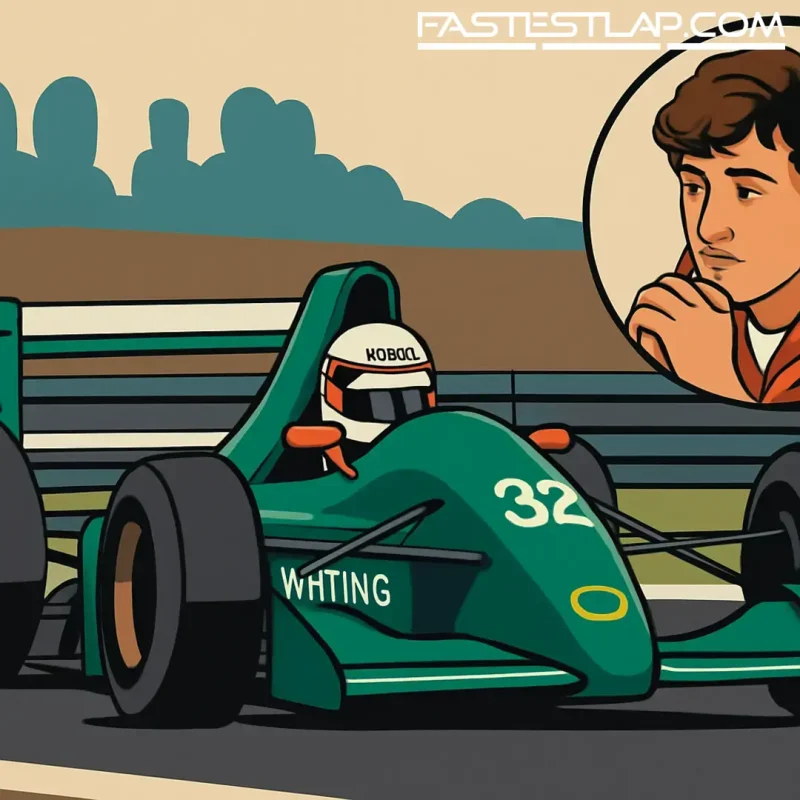
In late summer 1991, Eddie Jordan needed a driver. Fast. Bertrand Gachot had been jailed after an altercation with a taxi driver, and Jordan’s sparkling green 191 suddenly had a vacancy for the Belgian Grand Prix. Schneider’s phone rang.
“Jordan called me, ‘Hey, Bernd, you can drive at Spa, 300,000 bucks,’” Schneider recalled. He was already en route to the U.S. for back-to-back IMSA races with Porsche. The catch was brutal in its simplicity: first to pay gets the drive. Jordan made the same pitch to a young Michael Schumacher, then a rising star from Mercedes’ sportscar ranks.
Mercedes guaranteed Schumacher’s money. Schneider, juggling commitments and doing the math on risk versus reward, hesitated.
“I was a bit scared,” he admitted. Miss in the Jordan at Spa, and he could lose the IMSA seat; nail it and maybe there’s an F1 future, but nothing guaranteed. He didn’t call back quickly enough. Schumacher did.
We know the rest. Schumacher qualified a stunning seventh at Spa on debut, his clutch failed on lap one, and it still didn’t matter—Flavio Briatore saw enough to sign him to Benetton for the next race. Within a few years, he was the dominant force in the sport.
Schneider had been in and around F1 before. He’d endured two seasons trying to wring performance out of Zakspeed’s wayward machines in 1988–89, starting just nine races across both years. By ’91 he was building a proper career in IMSA, and the safe path felt safer than the moonshot. That’s the part that still stings.
“I was not brave enough; I just did not have the confidence to get it together,” he said. He watched Spa from America. “I finished on the podium, but my eyes were on Spa, and I watched Michael and said, ‘F**k’ to what he achieved.”
There’s a twist in this tale. Schumacher had been dovetailing with DTM in those days, driving a Zakspeed-run Mercedes 190E. When Benetton came calling after Spa, he was out of the tin-tops—and Mercedes needed a replacement. Norbert Haug, then head of Mercedes motorsport, called Schneider. Could he step in for the final four races?
He could, and he did. The performances were strong enough that Haug told him to stay. The partnership flourished; Schneider became a DTM front-runner immediately and won the title in 1995. The road not taken in F1 became an autobahn in touring cars.
It wasn’t even Schneider’s first brush with Jordan. A year earlier, as the Irish team was gearing up for its F1 debut, Eddie had courted him hard—old-school Eddie, part talent scout, part salesman.
“EJ was convinced because he followed my career. He also gave you a good feeling,” Schneider said. But the paperwork was heavy. Two contracts. One to drive—reportedly five million dollars required—and a 10-year management deal. There was flexibility on how to pay it back, but the long tail spooked him. He walked.
Jordan went the other way, landing Andrea de Cesaris—bringing substantial backing—and Gachot. It was, as Schneider put it, “quite good for him, bad for me.” So he signed with Joest Porsche and kept racking up results stateside.
To this day, Schneider doesn’t sugarcoat it. He calls the missed Spa chance “a really disappointing moment” in his life. Not because he thinks he’d definitely have matched Schumacher’s debut, but because he never put himself on the grid to find out.
There’s an easy temptation to write this off as a money play in the murky pay-driver era of the early ’90s. It was that, to a degree. But it was also Formula 1 in its purest, harshest form: a sport of razor-thin margins where careers spin on who answers a call first, and who’s willing to roll the dice on themselves. Schumacher did. Schneider didn’t. And both men still ended up exactly where their talent could take them—one becoming a byword for F1 greatness, the other a legend in Mercedes’ touring car lore.
Thirty-plus years on, in a paddock that’s slicker and more corporate but just as unforgiving, the lesson hasn’t aged a day. Opportunity rarely knocks twice. Sometimes it barely knocks at all.