How Mercedes’ 1999 Le Mans nightmare almost rewrote Hamilton’s story
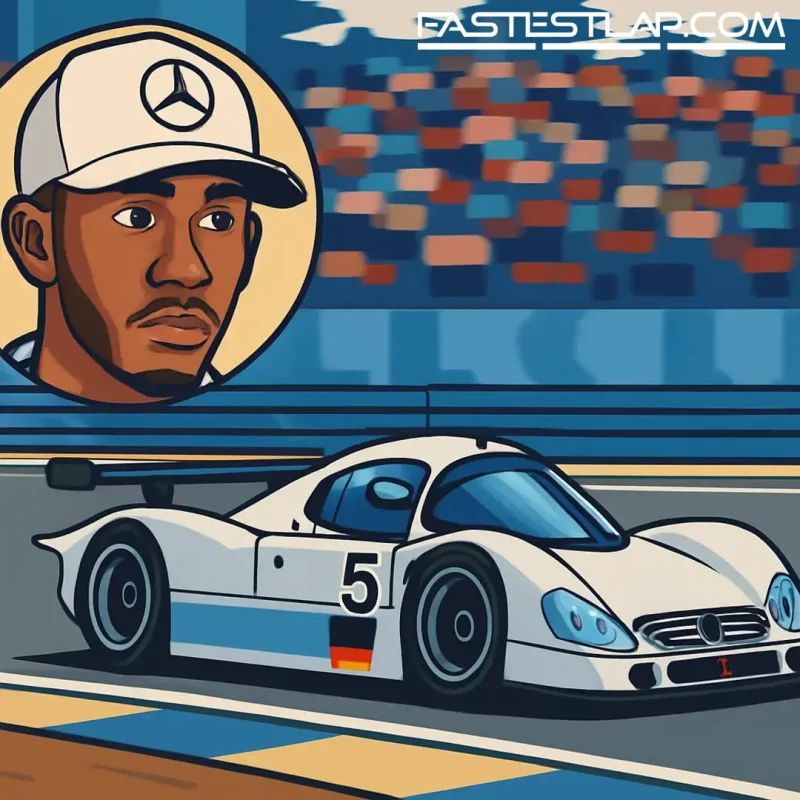
A quarter-century on, the image still chills: a silver Mercedes CLR levitating into the night sky on the Mulsanne before cartwheeling into the trees. Peter Dumbreck walked away. So did Mercedes—out of Le Mans, and out of sportscar racing entirely. And according to Bernd Schneider, that luck-laced escape may have saved the future that made modern Formula 1 what it is.
Schneider, the DTM titan drafted into Mercedes’ ’99 Le Mans assault, has revisited the weekend that went from meticulously planned to utterly unthinkable in a handful of heart-stopping moments. The CLR, developed with AMG and HWA to the LMGTP rules as successor to the mighty CLK GTR, had looked the part in testing. Mercedes pounded through roughly 35,000km across California Speedway, Homestead, Magny-Cours and Hockenheim. Nothing much to see, nothing much to fear.
But the trap was already set. Short wheelbase, big overhangs, and a sensitivity up front that became lethal when the team, chasing reliability, wound back the engine and trimmed downforce to keep the top speed. In dirty air, the nose could unstick. Lift beat downforce. And then physics took the wheel.
Mark Webber found it first. On Thursday, tucked up behind an Audi, he suddenly wasn’t — the CLR flicking skyward in a moment TV failed to catch, leaving only stunned witnesses and a shaken Australian who’d seen treetops from a driver’s-eye view. Mercedes rebuilt the car. Webber flipped again in warm-up. This time, the cameras didn’t miss.
Inside the garage, Mercedes motorsport boss Norbert Haug hit the brakes. Schneider, operating on belief and imperfect information, wanted to run. The team convinced itself it had a setup problem to solve. They stiffened their resolve, trimmed the risk with a high-downforce approach, and lined up with cars #5 and #6 anyway.
On Lap 75, Dumbreck’s CLR took off, cleared the barriers, and somersaulted into the forest. The live feed beamed a corporate nightmare into living rooms worldwide. Dumbreck climbed out. Mercedes switched everything off.
“We were so lucky,” Schneider has said of that decision and the fact no one was hurt. Lucky, and maybe spared a very different era. Because if Le Mans had turned tragic, he believes Mercedes would have shuttered its motorsport programme entirely. No extended commitment to Formula 1. No works team revival. No Hamilton-as-we-know-him.
Consider the dominoes that did fall. In the CLR’s aftermath, Mercedes doubled down on F1 power, continuing its works engine relationship with McLaren. A teenaged Lewis Hamilton had already joined McLaren-Mercedes’ driver programme in 1998; by 2007 he was on the F1 grid, and by 2008 he was World Champion.
Then came 2010: Mercedes re-entered F1 as a factory team. Hamilton made the leap from McLaren at the end of 2012 and proceeded to build a dynasty in silver and black. All his world titles to date have come with Mercedes power. In 2025, he’s finally in Ferrari red, the most seismic transfer of the season, while Mercedes presses on with a new-look line-up and an eye on its next act in the ground-effect era.
Schneider’s point is simple and pointed: if Le Mans 1999 had ended in catastrophe, that entire arc might never have been written. “One of the luckiest days in Mercedes motorsport,” he calls it, precisely because it didn’t turn into the brand’s darkest.
Back to the mechanics of that weekend. The CLR’s flaw wasn’t entirely unprecedented — other cars had flirted with air in the late-’90s prototype wars — but Mercedes hadn’t seen it in the wild during testing. The decision to dial down power for reliability, then strip wing to claw back speed, pulled the pin. In slipstream and over crests, the front would lighten, and once the air got under there, nothing short of luck and gravity was going to help.
Webber lived it twice. Dumbreck made it unforgettable. Haug, faced with rolling the dice a third time, withdrew Mercedes on the spot and shuttered the programme soon after. The remaining CLR did an airfield test to correlate wind-tunnel findings; conclusions were never made public. The two destroyed monocoques vanished from view. The survivor ended up behind velvet ropes in a German museum.
It took until 2025 for Mercedes to reappear at the sharp end of sportscar racing, partnering Iron Lynx in a new phase while the F1 team navigates its post-Hamilton reality. The Le Mans ghosts remain — not just in grainy replays, but in the way that single weekend bent the road ahead.
There’s a version of this sport where Mercedes walked away in 1999, McLaren-Mercedes never carried a young Hamilton all the way to F1, and the hybrid-era juggernaut never formed. We don’t live in that world. We live in the one where a car flew, a programme paused, and a brand doubled down on Grand Prix racing instead.
History is dramatic like that. Sometimes it turns on a millimetre of front ride height and a gust of wind. Sometimes it turns on luck. In Mercedes’ case, it turned toward Lewis Hamilton — and changed Formula 1 with it.