DRS signs off with a whisper: Antonelli pushes F1’s last button
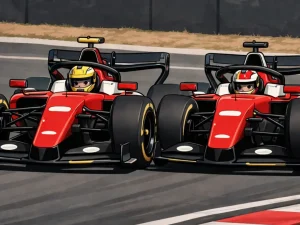
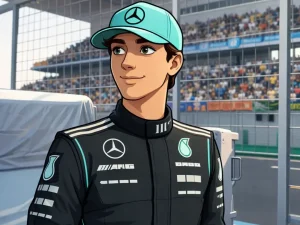
F1’s most contentious piece of kit bowed out not with fireworks, but with a long exhale of downforce. On the final lap in Abu Dhabi, Kimi Antonelli flicked his Mercedes’ rear flap open in pursuit of Yuki Tsunoda’s Red Bull — the last time anyone in Formula 1 will legally do so. He closed to within six tenths at the flag. No dive, no last-corner lunge. Just the end of a 14-year era.
Fitting, in its own way. DRS always split opinion — a necessary device for the aero age or a bolt-on fix that made passes too easy. Introduced in 2011, it handed the chasing car a 10–12 km/h top-speed bump when in range, and with it came a new kind of racecraft: battery and tyres in the first sector, pounce in the zone. It changed Sundays, for better and sometimes for worse.
There was poetry on the other side of the timeline too. Jenson Button, the 2009 World Champion, was the first to hit the DRS button at the 2011 Spanish Grand Prix. Earlier this year, the now-Sky pundit half-joked he wanted to be the last to press it as well. Instead, that moment fell to a driver who was four years old when Button first deployed it: Antonelli, in silver, chasing a blue car into the sunset.
Farewell, DRS 🫡
Kimi Antonelli is the last F1 driver to open the rear wing… he was just four years old when Jenson became the first driver to press the DRS Button 😉#F1#AbuDhabiGPpic.twitter.com/da1mB2azJF
— Formula 1 (@F1)December 9, 2025
Don’t let the quiet exit fool you: DRS defined an era. It propped up overtaking when cars were notoriously hard to follow, and it reshaped how teams planned a Grand Prix. Even the drivers’ vocabulary changed: “DRS train” entered the lexicon, along with that familiar radio refrain — “I’m stuck; no DRS.”
But F1’s next act doesn’t include it. From 2026, Manual Override Mode takes over — MOM, yes really — and the philosophy shifts from opening flaps to managing energy. The wings will still move, but both the leading and following cars will have their rear and front wing devices available in prescribed circumstances. The actual edge goes to the hunter via a lump of electrical boost.
FIA single-seater technical director Jan Monchaux explained it this way: when a car is close enough, “we are going to allow the car behind to deploy more electrical energy for a given portion of time during that lap.” In other words, no more one-second detection and push-to-pass in a straight line. The logic remains — reward proximity — but the weapon changes. “I am given an extra amount of energy for that one lap, which I can deploy any way I want,” Monchaux said. The aim is simple enough: deliver a decisive burst so the move is on by the end of the straight.
If it sounds more tactical, that’s the point. Drivers will decide where to spend the bonus energy and how to blend it with the normal recovery and deployment cycle. Teams will choreograph it with tyre life and brake temps. And crucially, because the leading car isn’t left defenceless — with its own aero tools in play — the pass should be earned rather than inevitable. That’s the theory, at least.
Back to Yas Marina: Antonelli’s late chase was a neat bookend. A rookie in a Mercedes taking DRS to its final frame, staring at a Red Bull gearbox as the city lights reflected off the halo. It was emblematic of DRS’s best and worst: it closed the gap, it set up the fight, and sometimes that’s all it did.
Mercedes marked the moment with a nod to the device that’s been simultaneously loved and loathed since its debut.
So long, old friend ❤️ DRS 2011-2025 🙏pic.twitter.com/Da8mytcigs
— Mercedes-AMG PETRONAS F1 Team (@MercedesAMGF1)December 5, 2025
And that’s probably the right tone. DRS did what it said on the tin. It brought more passes, more set-ups, more jeopardy — and yes, more hollow highway moves than anyone would like. It also forced the sport to keep wrestling with the real problem: modern F1 cars generating too much dirty air. With new regulations on the way and MOM ready to debut, the tools change but the mission remains the same.
So, DRS doesn’t get a heroic last overtake. It gets a final button press, a close-up in the mirrors, and a gentle fade to black. For a device that shaped so many races without ever stealing the spotlight for itself, that feels about right.