Tears on the pit wall: Lambiase’s raw Abu Dhabi shows the weight of Red Bull’s year
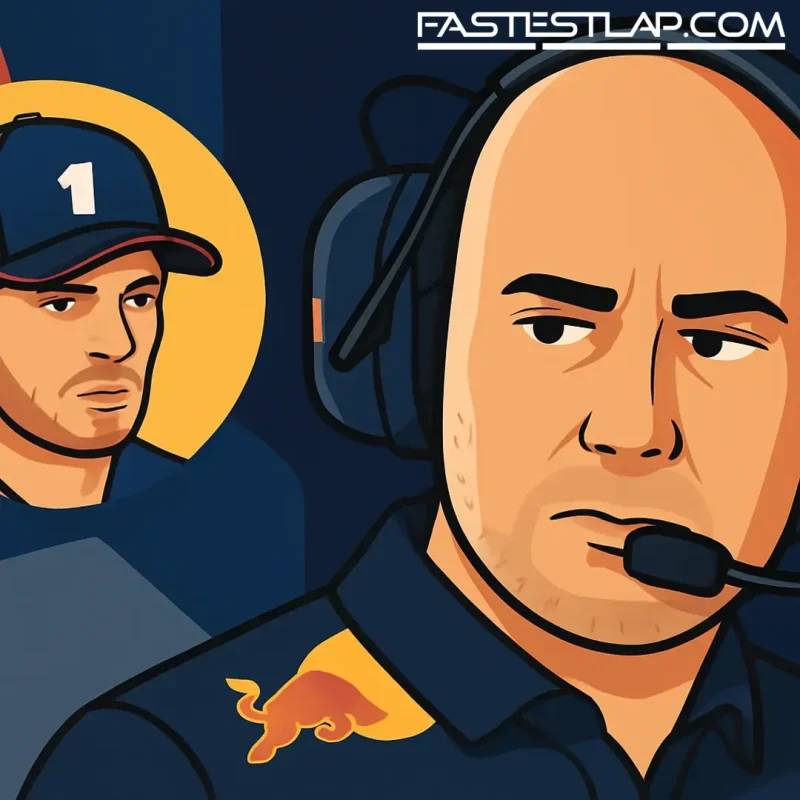
Max Verstappen won the Abu Dhabi Grand Prix. He didn’t win the title. And as the fireworks fizzled out, Gianpiero Lambiase — the voice in Verstappen’s ear for every high and low since 2016 — quietly broke.
The Red Bull Head of Racing, still doubling as Verstappen’s race engineer in 2025, was visibly emotional after his driver’s eighth victory of the season wasn’t enough to keep a fifth straight crown out of Lando Norris’ hands. Two points. A whole season decided by the smallest margin that hurts the most.
It was a striking image in a year that asked too much of too many at Milton Keynes. Lambiase has shouldered a dual mandate since pre-season: steering the sporting side as Head of Racing while continuing to run Verstappen’s car on Sundays. He even missed Austria and Belgium, with Simone Rennie stepping in on the radio, a rare break in one of F1’s most effective partnerships. The toll, you sense, was never going to be paid in public — until Sunday night.
Verstappen, typically stoic in defeat, peeled back the curtain on their bond. He called Lambiase more than a race engineer. He called him a friend. It’s not hard to see why. Through title runs, car resets and this season’s turbulence, the pair have been Red Bull’s constant. “A proper example of someone who never gave up,” Verstappen said. You didn’t need the quote to believe it; you could see it.
What comes next is the part no one at Red Bull wants to spell out yet. The chatter in the paddock is that Lambiase’s job will evolve, perhaps becoming more factory-centric after a punishing 24-race slog and a year where the team’s structure has already creaked and shifted. It would make sense. Head of Racing is a big job at the best of times; it’s a monster when you’re also running car 1 on a Sunday night under pressure.
Because Red Bull is changing. That much is beyond debate. The team shed long-time principal Christian Horner in the days after the British Grand Prix and has been living in a state of controlled volatility ever since. The next domino could be Helmut Marko. The 82-year-old, a foundational pillar of the Red Bull programme, has been non-committal about his future and at the centre of internal friction since the Qatar weekend, when comments about Kimi Antonelli sparked a backlash and a team apology. Succession planning has been looked at for months, with big names — Sebastian Vettel, Gerhard Berger — whispered as possible figureheads to help steer the next era.
In the middle of it all, Verstappen has been driving like a man intent on making everyone else’s noise irrelevant, hauling points and wins even when the maths looked grim. Abu Dhabi was a reminder of that fight. He did what he had to do. Norris still walked away with the title.
This is what separates eras: moments like Sunday that feel like endings and beginnings at once. Red Bull left Yas Marina with a win and a void, with a star driver publicly protecting a confidant who’s been his north star, and with decisions looming that will shape how this once monolithic operation looks in 2026 and beyond.
If this really was the last act of the Verstappen–Lambiase radio show as we know it, it ended on a very human note. No bravado, no bravura, just the kind of emotion that’s easy to forget exists inside a headset. And if it wasn’t the end — if the band stays together, just with a new setlist — then Abu Dhabi might be remembered as the night Red Bull rediscovered what holds it together when the silverware slips away.