‘His nose was too big’: The eyebrow-raising Kubica tale from McLaren’s 2008 driver search
There are odd little footnotes in F1 history that tell you everything about an era. Here’s one: when McLaren sifted through candidates to partner a rookie Lewis Hamilton for 2008, Robert Kubica was discussed at the top table—and, according to a former insider, nudged aside with a line about his nose.
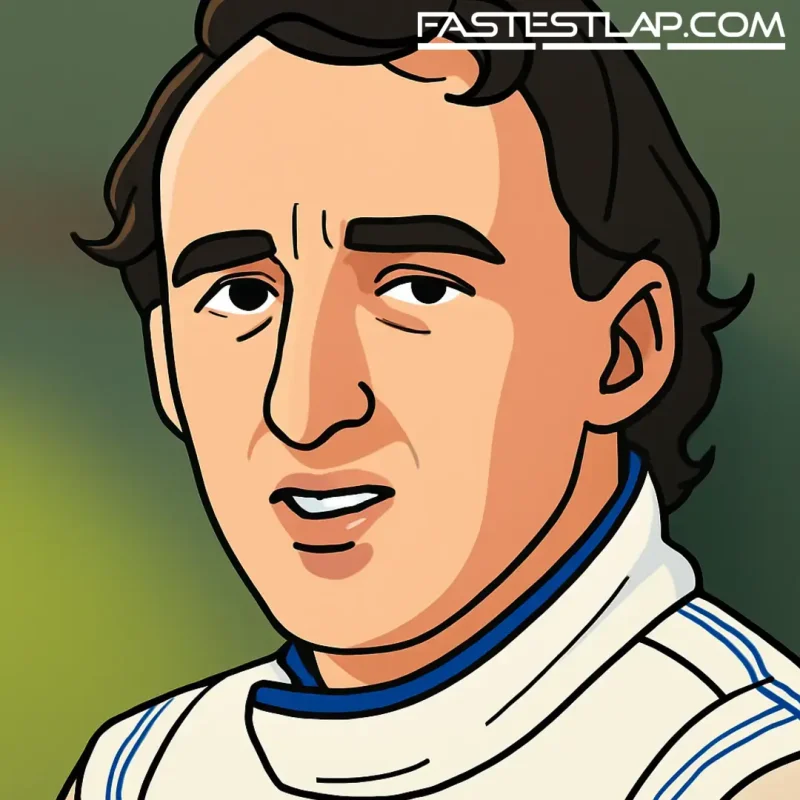
That’s the claim from Matt Bishop, McLaren’s communications chief from 2008 to 2017, who recalled on his And Colossally That’s History! podcast that then-CEO Martin Whitmarsh quipped Kubica’s “nose was too big” as the team debated its post-Alonso reset. Bishop can’t say for sure whether Whitmarsh was kidding, but the anecdote is so distinctly McLaren of that era—ultra-polished, image-obsessed—that it instantly rings true.
“I remember Whitmarsh said one of the problems with Kubica…was that his nose was too big,” Bishop said, adding with a laugh that if there was an issue it was “aesthetic” rather than aerodynamic. He suggested it was probably a joke, while noting that Whitmarsh—and before him Ron Dennis—could be exacting about how McLaren drivers presented themselves.
If you’re new to the rabbit hole: McLaren was reeling at the end of 2007. The Alonso–Hamilton partnership had detonated, the team was entangled in the infamous spy scandal, and a freshly minted sensation in Hamilton needed a teammate who wouldn’t explode the garage again. Heikki Kovalainen got the nod after an assured rookie year with Renault, and went on to score a single victory for McLaren in 2008. Alonso, of course, returned to Renault.
The question Bishop’s story invites—beyond whether anyone in Woking honestly weighed up facial geometry when picking a grand prix driver—is the one that’s shadowed Robert Kubica’s entire career: what if?
On pure talent, Kubica was a monster. He won in Canada in 2008 with BMW-Sauber and was a title outsider that summer before the team downshifted development to focus on 2009. His raw speed, heavy hands on the car and cool execution screamed future champion. Then came the rally crash in early 2011 that shattered his right arm, broke bones across his body—by his own account, 42 fractures—and stopped his F1 trajectory dead. He later revealed he’d signed to race for Ferrari in 2012 before the accident, which still stings to even write.
Kubica did what hard racers do: he found a way. He banked results in rallying. He returned to the F1 grid with Williams in 2019, scored the team’s only point that season in the chaos of Hockenheim, and reinvented himself as an endurance ace. This year, now 41, he stood on the top step at the Le Mans 24 Hours with Ferrari—an overdue, emotional major that felt like a bow on a career that refused to be defined by a hospital bed.
Would Kubica have been a better fit alongside Hamilton in 2008 than Kovalainen? We’ll never know. Chemistry is everything, and McLaren was a pressure cooker back then. But it’s not hard to picture Hamilton and Kubica trading lap times and worldviews in a way that raised the bar without blowing the doors off. At minimum, the idea that a face didn’t quite fit the brand is… well, very 2008 McLaren.
Bishop’s co-host, journalist Richard Williams, offered a cutting aside that today’s rookies “look like members of boy bands,” as if there’s a secret aesthetics filter at the FIA medical. It was a joke, but as with most paddock humour, the punchline lands because it brushes up against truth. F1 has always cared about the package—sponsors, presentation, the right kind of gloss. The best teams just make sure the stopwatch comes first.
Whitmarsh left McLaren in 2014; Dennis followed in 2017. The organisation that once colour-matched even its coffee cups has since rediscovered its bite with a younger, looser edge, and a driver lineup that sells posters on lap time rather than looks. The sport has moved on, mostly.
Kubica, for his part, has never needed the what-if crowd to validate him. He’s already answered the only question that matters in motorsport: when the visor drops, can you do it? In Canada in 2008, in a broken comeback at Hockenheim in 2019, in the dead of night at La Sarthe in 2025—the answer, repeatedly, was yes.
As for the nose? F1 has always been a theatre of marginal gains and sometimes marginal judgment. If a quip really helped turn a team away from one of the era’s most gifted drivers, that says more about the sport’s vanity than Kubica’s profile. The timeline didn’t break in his favour. The talent never left.