Formula 1’s 2026 shake-up is still being sold as a reset, but the sport is already running into the uncomfortable reality of what happens when the driver isn’t quite the sole author of an overtake anymore.
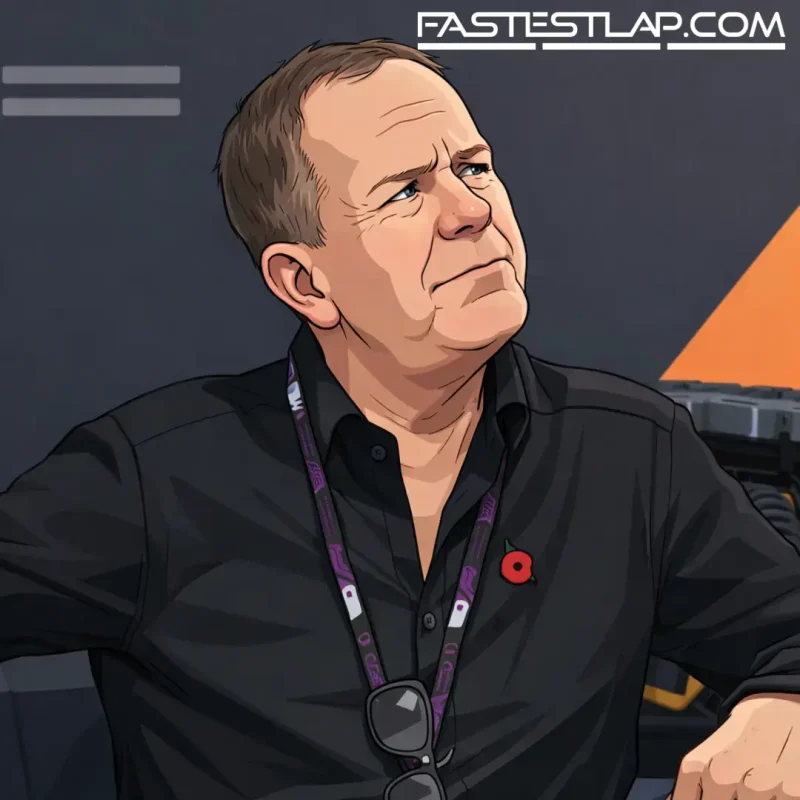
Martin Brundle, never one to dress up a concern for politeness, has put his finger on what he sees as a looming governance problem for the FIA after Lando Norris admitted something that would’ve sounded unthinkable not long ago: at Suzuka, he “didn’t want to overtake” Lewis Hamilton — yet the McLaren-Mercedes effectively did it anyway when the deployment phase pulled him past the Ferrari.
Brundle’s issue isn’t the optics of a reluctant pass, or even the etiquette of racing Hamilton. It’s the principle. If the 2026 framework encourages cars to make performance decisions that override a driver’s intention in the moment, you’re in a grey zone that F1 has historically tried to avoid. Drivers are meant to drive the car, not supervise it. Brundle described it as edging towards a “self-learning car” scenario and argued the FIA needs to “get rid” of that direction before it becomes normalised.
That’s the tricky bit for the rule-makers: once teams build tools into the systems and drivers adapt their habits around them, the sport quietly rewires its own instincts. Today it’s Norris being candid about a deployment-assisted slingshot he didn’t fancy. Tomorrow it’s drivers gaming when *not* to race because the car’s energy strategy will decide the moment for them. If you’re the FIA, you either tighten the definitions now — what the driver must control, what the car may optimise, and where the line sits — or you accept that “unaided” becomes a nostalgic word rather than a regulation.
Away from the philosophical fight over who’s really in charge, the drivers’ side quests are getting louder — and in 2026, they’re not just hobbies, they’re statements.
Max Verstappen has confirmed he’ll take the next step towards his Nürburgring 24-hour debut by entering the Nürburgring 24-hour qualifiers on April 18-19. It’s not the first time he’s been on the Nordschleife recently, but committing to the qualifiers moves it from “wouldn’t it be cool?” to a proper programme. The timing is neat, too: the qualifier weekend had originally clashed with the since-cancelled Saudi Arabian Grand Prix, and the revised calendar reality has opened a lane for Verstappen to do what he’s been hinting at.
What’s notable is how little Verstappen seems interested in treating it as a publicity lap. This is preparation with intent. In a paddock where the margins are relentlessly micro-managed, choosing to spend precious downtime on one of motorsport’s most punishing circuits says something about what still excites him — and what kind of racing he wants more of in the longer term.
Lance Stroll, meanwhile, is heading down a different endurance corridor. He’s set to make his GT3 debut during the April break, driving an Aston Martin Vantage GT3 in the GT World Challenge Europe at Paul Ricard’s six-hour night event. He’ll share the car with former F1 driver Roberto Merhi and 21-year-old Mari Boya, joining a sizeable Aston Martin presence with seven Vantages on the entry list.
Stroll’s move lands with an extra layer, given he’s also been vocal about his dissatisfaction with the 2026 F1 direction. There’s always a temptation to read too much into a driver’s extracurricular programme, but it’s hard to ignore the subtext: when drivers start seeking out categories where the machinery feels more directly connected to the person in the cockpit, it dovetails rather neatly with Brundle’s broader warning about F1 drifting towards algorithm-led moments.
Ferrari’s story is less existential and more brutally practical: bring lap time, quickly. Team boss Fred Vasseur has suggested the Scuderia could arrive in Miami with what he called “a package and a half” — a significant upgrade push that has effectively been reshuffled by the cancellations of Bahrain and Saudi Arabia.
Ferrari had been aiming to introduce a “good package” in Bahrain, which would’ve been next on the schedule. With that plan disrupted, the implication is that development parts have been allowed to bundle up into a bigger Miami reset. That can cut both ways. A larger step offers the chance to change the car’s behaviour in one hit, but it also increases the risk of correlation headaches and a messy Friday if the numbers don’t line up. Either way, Vasseur is clearly trying to turn calendar chaos into an opportunity: if you can’t bring momentum through races, manufacture it through upgrades.
And then there’s the part of modern F1 that nobody enjoys writing about but can’t be ignored.
Alpine has published an open letter condemning online abuse after a grim chain of incidents involving Franco Colapinto and Haas drivers Esteban Ocon and Oliver Bearman. Ocon received death threats following a collision with Colapinto in China, before Colapinto himself was targeted after Bearman’s frightening crash in Japan.
It’s an ugly reminder that the sport’s online ecosystem can turn any incident — even one involving genuine danger — into a trigger for harassment. Teams speaking out is necessary, but it also hints at a growing fatigue: the grid is trying to race in good faith while a minority of spectators treat every flashpoint as permission to dehumanise someone.
The common thread through all of this is control — who has it, who thinks they should, and what happens when it slips.
The FIA is being challenged on the technical philosophy of 2026 in real time. Drivers are carving out alternate stages where the connection feels clearer. Teams like Ferrari are trying to bend a disrupted schedule into performance gains. And the sport is still wrestling with how to protect its people from the worst behaviour that comes with bigger reach.
F1 has always been a fight for advantage. The question now is whether it’s also becoming a fight over authorship — of the car, of the moment, and of the sport’s direction.