Suzuka didn’t just deliver another reminder that 2026 is going to be a power-management season as much as it’s a racing one. It also produced a line from Lando Norris that should make the FIA distinctly uncomfortable: he said he overtook Lewis Hamilton without meaning to.
On the face of it, it’s the sort of complaint you expect three races into a new regulation cycle — drivers still learning where the performance is, engineers still trying to make the systems feel natural. But when a front-running driver is openly admitting that the car is making the critical decision in wheel-to-wheel combat, it goes beyond teething problems and into something far more awkward for the sport’s credibility.
Norris’s description was blunt. He didn’t want to pass Hamilton, he said, but the battery deployed anyway. He got by, then immediately paid the price: no energy left to defend, so Hamilton simply came back past. That’s not a driver misjudging a move or being caught out by DRS; it’s the car’s energy strategy effectively rewriting the fight in real time.
Martin Brundle, never shy about pulling at loose threads, called it out as a red flag. His concern isn’t that 2026 requires more management — everybody knew the new era would lean heavily on harvesting and deployment. It’s that the relationship between throttle demand and power delivery is starting to sound non-linear in a way that makes the driver a passenger at the worst possible moment.
There’s a bedrock principle in Formula 1 that Brundle returned to: the driver must drive the car alone and unaided. That doesn’t mean teams can’t run sophisticated systems — modern F1 is built on them — but it does mean the car can’t spring “surprises” on the person holding the steering wheel. If a driver is asking for one thing with the throttle and getting another because the control logic has decided it knows best, that’s a governance problem as much as a technical one.
Brundle’s argument is essentially about feel and cause-and-effect. Power delivery, he insisted, has to be proportional to what the driver is doing. The pedal can’t become a vague suggestion that’s then interpreted by software and energy maps, particularly when the consequences can be immediate: committing to an overtake, being stranded on the next straight, or arriving at a braking zone with a car behaving differently than the driver expects.
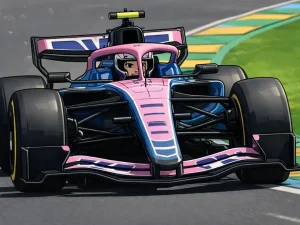
Safety, too, has been dragged into the conversation — most loudly after Oliver Bearman’s heavy high-speed crash at Spoon in the Haas during the Japanese Grand Prix. Bearman had closed rapidly on a slower Franco Colapinto in the Alpine, and the incident became the week’s most graphic illustration of how quickly scenarios can escalate when cars are arriving with big speed differentials and drivers are trying to juggle limited deployment.
The FIA has already indicated it will use April to evaluate the regulations, with further discussions scheduled. That timeline matters, because the paddock doesn’t typically do patience when it believes a problem has been identified in public. Norris, Max Verstappen and Carlos Sainz have all been part of the broader noise around how this new balance between harvesting and deployment is playing out, and once that concern is out in the open, the pressure on the regulator becomes less about engineering elegance and more about duty of care.
Brundle went further: with drivers raising the issue openly — and he suspects it’s also gone formally through the Grand Prix Drivers’ Association — the FIA is effectively on notice. If the sport acknowledges there’s an undesirable behaviour in how cars are deploying energy, then any delay in addressing it becomes politically and legally harder to defend. In his view, that makes action for the Miami round a necessity rather than a nice-to-have.
What’s making this particularly thorny is that Brundle doesn’t pretend it’s an easy fix. He points to the reality of the hardware: the 2026 power unit architecture leans heavily on electrical output compared to the previous era, and the consequence is that batteries can be drained quickly on any meaningful straight. That creates the odd racing pattern Norris described: bursts of pace that force the issue, followed by vulnerability. It also risks turning wheel-to-wheel duels into a lottery of who happened to have deployment at the right moment — or whose car decided to spend it.
And yet, there’s a second tension running through Brundle’s comments: fans, at least anecdotally, seem to like what they’re watching. He says the “random people” he’s canvassed — his own informal “Marty poll” — are enjoying the closer racing. That’s the maddening part for the FIA and F1’s rule-makers. The show is tighter, the field is closer, and the races are busy. But if the cost of that entertainment is drivers describing themselves as spectators to their own overtakes, it’s hard to argue the sport hasn’t wandered into an uncomfortable grey area.
The next few weeks will tell us whether this is simply calibration — teams learning to give drivers more direct authority over deployment without sacrificing performance — or whether the regulation set has baked in a behavioural flaw that can’t be smoothed out without intervention.
Either way, Norris’s Suzuka admission has shifted the conversation. Complaints about energy management are one thing; a driver saying the car chose to pass Lewis Hamilton is another. If 2026 is going to be remembered as a “new era”, F1 needs to decide quickly whether that phrase refers to technology enabling better racing — or technology quietly taking the racing away.