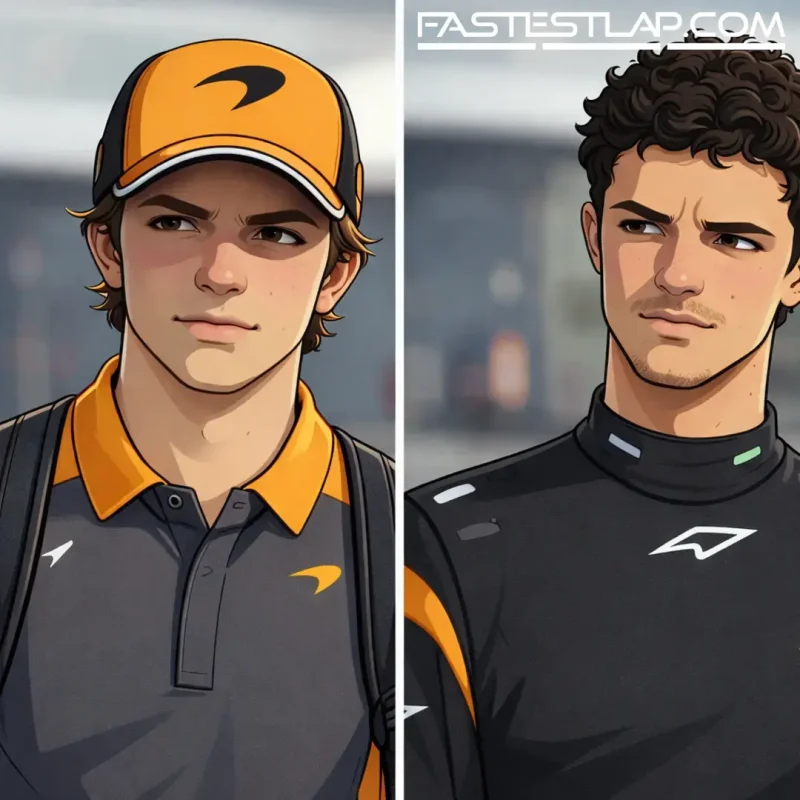
There’s a neat little contradiction sitting at the heart of McLaren’s 2026 season before a proper lap has even been counted: Lando Norris arrives as the reigning world champion, yet the conversation around him still carries an asterisk in some corners of the paddock. Oscar Piastri, meanwhile, starts the year without a title but with something arguably just as potent — the sense he left 2025 on the table.
David Coulthard, who knows a thing or two about living in the slipstream of expectation at Woking, has put his finger on the pressure point. In his view, Piastri’s next step isn’t about raw speed, which has never been the question, but about smoothing out the oscillations that crept into his championship push last season.
“I would expect Oscar to be, let’s say, more consistent over the year than he managed,” Coulthard said, suggesting that shift alone “might make it difficult for Lando.”
It’s a pointed assessment because it speaks to how tight this pairing already is. Piastri led much of the 2025 drivers’ championship and looked, for long stretches, like the sharper weekly proposition. But the second half of the season wobbled just enough to let Norris back into the picture — and, crucially, to invite Max Verstappen into it too.
In the end, Norris took his first world title by the thinnest of margins: two points ahead of Verstappen, with Piastri dropping to third. That final order didn’t just crown Norris; it subtly rearranged the dynamic inside McLaren. One side of the garage now has a world champion’s number on the door. The other has the driver who knows he could’ve been that guy.
And that’s where Juan Pablo Montoya’s take cuts in — less technical, more psychological. Montoya’s argument isn’t that Norris didn’t deserve 2025. It’s that one title, in the fastest car, doesn’t automatically buy you that intangible commodity drivers trade in: fear.
“I think they’re going to gun more for the people who have got the fastest car,” Montoya said. “For people to fear Lando Norris, he needs to win another one or two more championships.”
Montoya’s framing is revealing because it hints at how reputations actually form in F1. A first championship can be celebrated, dissected, applauded — and still filed under “circumstance” by rivals looking for reasons not to mentally yield an inch. Norris did “a mega job” in Montoya’s words, but the subtext is brutal: plenty of drivers win once; the ones who change how others race them win again.
He drew a contrast with Verstappen’s first title, a season defined by a high-wire battle with Lewis Hamilton and all the baggage that came with it. That was, in Montoya’s telling, a coronation under fire. Norris’s, by comparison, will always be viewed through the lens of McLaren having the best package — even if anyone paying attention knows that “best car” doesn’t cash itself in without a cool head when the championship squeeze arrives.
Because that’s the part that tends to get lost in the simplification. McLaren wasn’t flawless in 2025. There were weekends where the door creaked open — Qatar is an obvious example — and Verstappen was far too close for comfort by season’s end. When the pressure peaked, Norris was the one who kept collecting the necessary results. Piastri, for all the brilliance earlier in the year, didn’t.
So heading into 2026, Norris has the title but not, according to Montoya, the full aura. Piastri has the pace but not, according to Coulthard, the consistency. It’s a fascinating trade-off because both drivers are essentially being challenged to add the one thing the other just proved he can do.
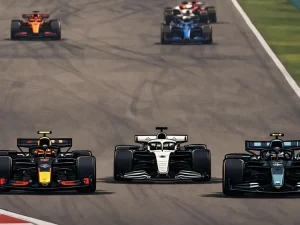
What complicates it further is the reset button everyone’s pressing this year. The chassis and engine regulations have changed for 2026, and the competitive order is the great unknown. McLaren’s hopes sit with the MCL40, but nobody outside the team truly knows whether it will begin the season as a title-ready weapon or something that needs time to grow.
That uncertainty matters for the intra-team battle as much as the championship itself. If McLaren starts fast again, the Norris-Piastri collision course becomes immediate: a reigning champion trying to establish dominance against a teammate with unfinished business and, potentially, the sharper edge over a single lap. If McLaren starts on the back foot, the fight changes shape — less about points arithmetic, more about who can drag performance out of an imperfect car and lead development. Either scenario is a test of authority.
For Piastri, the brief is straightforward and ruthless. He doesn’t need to “prove” he belongs in F1 — his junior record and the way he controlled long stretches of last year already did that. What he needs to prove is that he can close. That he can do the boring part as well as the spectacular part: bank the podium on an off weekend, avoid the small errors that become big point swings, and keep his floor high enough that a mid-season dip doesn’t become a championship obituary.
For Norris, the challenge is different. Winning 2025 should, in theory, remove a weight. But it also replaces it with a new one: now you have to demonstrate it wasn’t a one-off alignment of car and circumstance. Montoya’s “one or two more” line is harsh, but it captures the way F1’s respect economy works. Titles accumulate meaning. The second one tends to be the one that changes how the grid views you — and how your teammate approaches you.
And that’s why Coulthard’s point about Piastri’s consistency is so relevant. If Piastri becomes the metronome he threatened to be for the first half of 2025, Norris won’t just be fighting rivals from other teams; he’ll be fighting for air inside his own garage. The uncomfortable truth for any reigning champion is that the quickest route to making your life difficult is to have a teammate who learns fast and stops leaving weekends on the table.
Piastri now has the clearest benchmark in the sport sitting metres away: the reigning world champion, in identical machinery, with the same engineers and the same tools. If the championship fight doesn’t come to him immediately in 2026 because the new rules shuffle the deck, then beating Norris becomes the next best statement — the kind that doesn’t need a trophy to be heard.
For Norris, the message is equally simple: if he wants that “fear factor” to become real rather than a talking point, the cleanest way to earn it is to do what Montoya says and win again. The problem is the person most capable of stopping him might not be Verstappen this time. It might be the other McLaren.