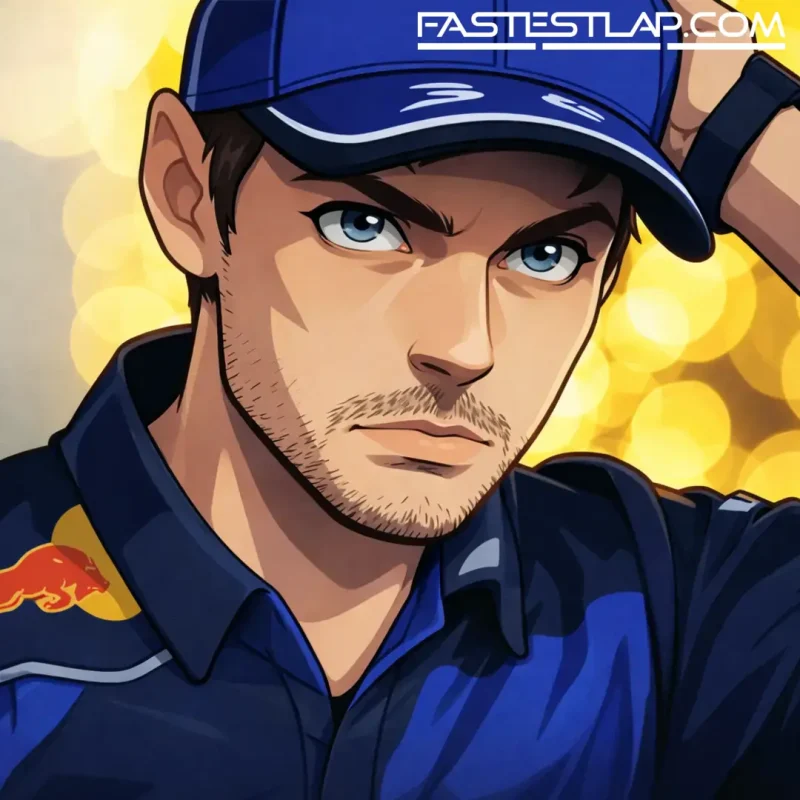
Max Verstappen picked his moment carefully in Melbourne. Fresh off the Australian Grand Prix, with the paddock still chewing over what “new era” racing is supposed to look like in 2026, the four-time world champion confirmed a plan that’s been circling for a while: he’ll race the Nürburgring 24 Hours in May.
It’s not a whim, either. Verstappen spent last year doing GT3 running at the Nürburgring with a clear intent — learn the place properly, understand the traffic, the rhythm, the weather swings and the particular brand of chaos that only the Nordschleife serves up at 3am. The 24 Hours isn’t something you dabble in, and Verstappen, for all the talk that inevitably follows him, generally doesn’t do dabbling.
For Red Bull, it’s a statement in a different direction: that their star isn’t just a points-harvesting instrument in a cost-capped, politically dense Formula 1 ecosystem. He’s a racing driver with a calendar, interests and leverage, and he’s comfortable exercising all three. And in a season where the sport has just turned the page on major regulations, it’s also a reminder that the grid’s biggest names are already looking for texture beyond the weekly grind — particularly when the on-track product is still finding its identity.
That identity question sat in the background of the weekend anyway. Albert Park delivered an early scrap between George Russell and Charles Leclerc that hinted at jeopardy and variety, but the broader reaction to the first proper taste of 2026 machinery was… muted. The cars are different, the rhetoric is big, but the immediate emotional hit wasn’t. That’s not unusual after regulation upheaval — it often takes a few races for the competitive picture to sharpen — yet the paddock is already asking whether this is “Formula Net Zero” in vibe as well as intent: cleaner, cleverer, and a little anaemic when you want it to snarl.
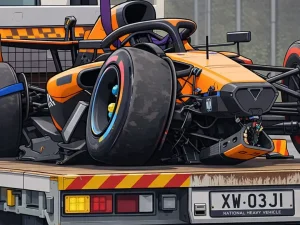
One team that didn’t need a think-piece to know where it stands is McLaren. Andrea Stella admitted the uncomfortable part out loud: they’re not exploiting the Mercedes power unit to the level Mercedes is, and that gap showed brutally in Melbourne. Lando Norris, the reigning world champion, finished close to a minute behind Russell’s winning Mercedes W17 — a margin that reads like an error in a spreadsheet, not a modern grand prix result.
Stella’s framing was telling. He described it as the first time since McLaren reunited with Mercedes ahead of 2021 that the team has really felt on the “back foot” as a customer. That’s a loaded phrase in a season where power unit integration and operational nuance will make fools of anyone who thinks the engine is simply a bolt-on commodity. McLaren’s won consecutive constructors’ titles in 2024 and 2025; this isn’t a group short on competence or confidence. But the reset has exposed an old truth: works teams hoard understanding in the fine print — deployment habits, cooling philosophies, packaging compromises — and customers spend a year paying to learn it.
And while McLaren searches for the missing pieces, the paddock’s most famous set of eyes was spotted doing what it always does: looking for shapes and ideas in other people’s work. Adrian Newey, now Aston Martin’s team principal, was seen inspecting Audi’s R26 on the grid at Albert Park, specifically around Nico Hülkenberg’s car.
Nobody in the pitlane finds that unusual. Newey has made a career out of curiosity sharpened into advantage, and there’s a reason rival engineers clock him when he’s wandering. The sightline to Audi is particularly interesting in 2026, with the manufacturer now fully in the mix on the new regulations and everyone still gauging how quickly it can translate big-company ambition into lap time. Newey doesn’t waste time admiring paintwork; if he’s staring, he’s filing something away.
Finally, away from the performance arguments and the aero voyeurism, the sport’s longest-running aftershock rumbled on. In the legal fight around Felipe Massa’s 2008 title claim, a report says Bernie Ecclestone, Formula One Management and the FIA have been ordered to cover £250,000 in legal fees after the case was allowed to proceed to trial. The reported order gives them 14 days to pay.
It’s another reminder that Formula 1’s past doesn’t stay neatly in the past — not when there are reputations, governance and a world championship at stake. Even as the series tries to sell a future-facing story in 2026, it’s still being tugged back toward the moments it never fully resolved.
So that was Monday in the wake of Melbourne: Verstappen lining up a Nürburgring adventure, Newey doing Newey things, McLaren conceding it has homework to do with Mercedes, and the 2008 saga refusing to quietly go away. The grid has changed. The noise around it hasn’t.