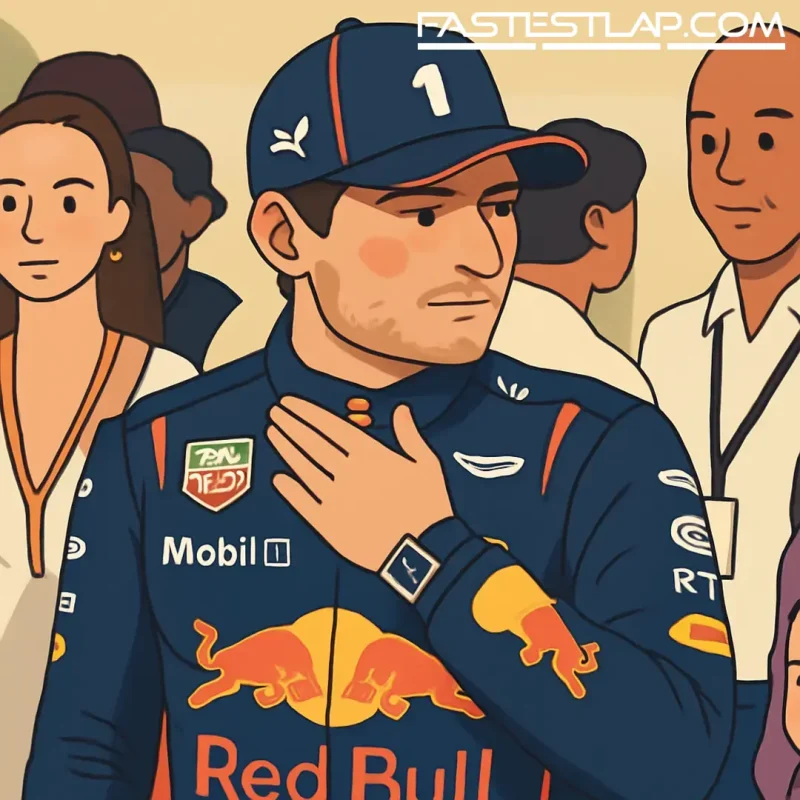
Max Verstappen has never been shy about calling it as he feels it, and on Red Bull’s Talking Bull podcast he put a number on the punishment F1’s ground-effect cars dished out to drivers: 9G. Not lateral, which is hard enough. Vertical.
“It’s the stiffness of the cars,” Verstappen said when asked what he won’t miss from the last rules cycle. “You had to run them very low to the ground and, for our backs and everything, it was quite tough.” On average, he explained, cornering loads were around 5.5G, but the real sting came on the bumpier tracks. Austin was the example he gave, where the combination of low ride height and a choppy surface meant the Red Bull occasionally slammed the floor. “I would hit, like, 9G vertical load,” he said. “That is really not nice for your spine and your neck… we trained for it, and I know it’s part of racing, but that, for me, it’s a little bit too extreme.”
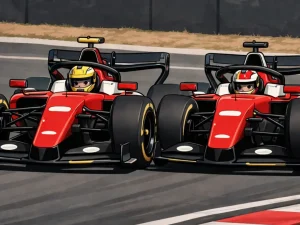
If you’ve followed the past few seasons, you know exactly the phenomenon he’s talking about. The return of ground effect in 2022 brought a new kind of speed — and a new kind of pain. With the majority of downforce generated under the floor, teams chased lap time by running lower and stiffer. The down side: porpoising and bottoming. The result: cars sparking like welding rigs and drivers absorbing repeated vertical hits.
Some squads got on top of it quickly; others bobbed along for months. Even Verstappen, in the most consistently rapid car of the era, wasn’t immune on the rougher layouts. The physics are simple and cruel: when a car that rigid meets a bump at 300 km/h, something’s got to give, and it won’t be the asphalt. Drivers like Pierre Gasly and Oliver Bearman have both talked about the cumulative toll — not just race-day discomfort, but what those impacts mean for longevity in a sport where millimetres matter and vertebrae aren’t replaceable.
Inside the paddock, there’s quiet acceptance that the spectacle came with a cost. Engineers loved the clean aero; drivers loved the grip — until the floor touched down. There’s a reason the FIA stepped in during the era with limits on allowable oscillations and tweaks to floor regulations. It wasn’t because anyone was bored.
Verstappen’s remarks land at an inflection point for the series. F1 is edging toward its next ruleset, where the brief — among other things — is to trim the excesses and make the cars less punishing over kerbs and bumps. Teams, meanwhile, have already nudged away from the “concrete plank” setups of 2022 as knowledge improved. The worst of the bouncing is largely gone, but the memory of those first two seasons lingers in the way drivers talk about their bodies now: with a mix of pride and wariness.
It’s also a reminder that raw pace only tells part of the story. The last cycle produced some of the fastest F1 cars ever, and Verstappen’s run at the front defined much of it. But while we tend to measure eras in wins and points — and he had plenty of both — the human side can be brutal in quieter ways. You don’t see 9G on a timing screen. You feel it in the small of your back on Monday morning.
So when Verstappen says he won’t miss that part of it, believe him. Yes, drivers are tough. Yes, they train for this. But there’s a line between demanding and punishing, and the sport has spent the past few years learning where it is. If the next generation of cars lets the best drivers in the world keep their spines a little happier while still lighting up the timing sheets, that’s not softness. That’s evolution.