Oscar Piastri didn’t even make it to the grid for his home opener in Melbourne, and McLaren boss Andrea Stella has pointed to a 2026 reality teams are still learning the hard way: the new power units can bite, quickly and without much warning.
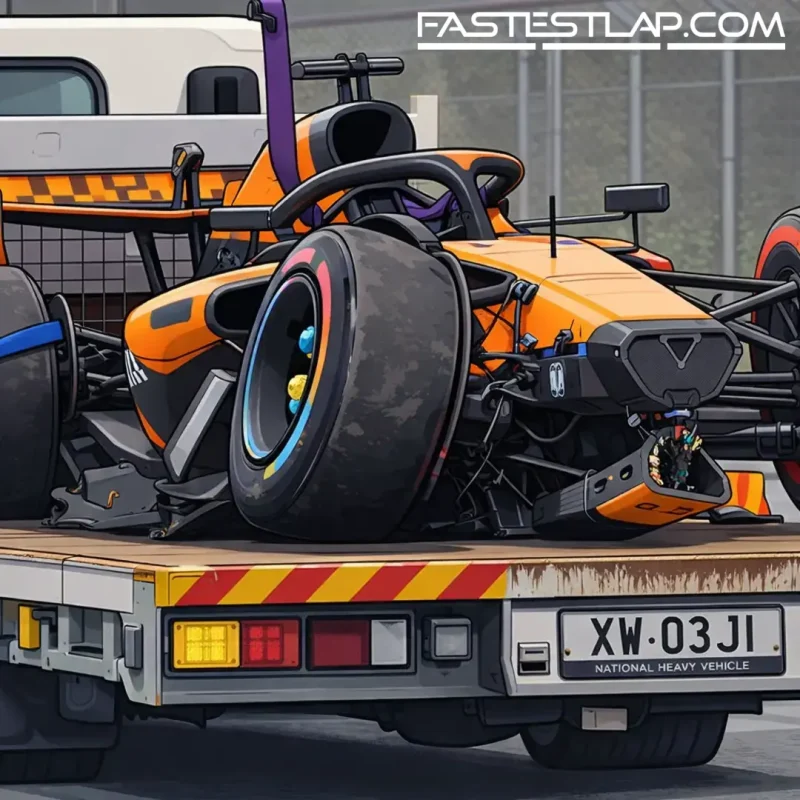
Piastri crashed on the way to the start after losing the rear on the exit kerb at Turn 4, sliding into the concrete wall that lines the circuit. He climbed out unhurt, but the sight of the local favourite trudging back through the paddock before the race had even begun landed with a thud in the grandstands — and in the McLaren garage.
When he faced the media, Piastri didn’t try to hide behind the circumstances. He owned the error, but he also described an extra layer that made the moment harder to swallow: an unexpected surge in power at exactly the wrong time.
“We had a couple of things going on,” Piastri said. “I think the first part I want to stress is that there is certainly a big element of that was me.
“Cold tyres. I have used that exit kerb every lap of the weekend, but I didn’t have to.
“At the same time, I had about 100 kilowatts extra power that I didn’t expect, which is not insignificant.”
That figure — roughly 134 horsepower — is the sort of swing drivers immediately feel in their right foot, particularly in a low-grip phase. Piastri’s point wasn’t that something “broke”, but that the behaviour he got was a product of how the 2026 package is obliged to operate.
“Everything was working normally,” he added. “It’s just the function of how the engines have to work with the rules… when you add in another factor like that it always is more difficult to take.”
Stella, speaking after the incident, framed it less as a one-off oddity and more as evidence the field hasn’t yet fully domesticated the new era. He stopped short of claiming every high-profile moment from the weekend had the same root cause — he acknowledged he was only working with McLaren’s own data — but he didn’t shy away from the wider implication: the sport needs to pay attention.
“There’s work to do,” Stella said, arguing the community should examine whether the regulations are inadvertently encouraging the kind of sharp, grip-sensitive torque events that can turn a routine out-lap into a wreck.
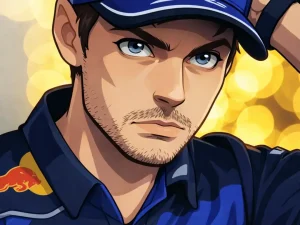
His caution about linking incidents was pointed. Max Verstappen’s qualifying crash at Turn 1 — an uncharacteristic mistake that left the Red Bull driver facing a back-of-the-grid start — may or may not have been power unit related, Stella said. But he did reference Mercedes rookie Kimi Antonelli’s FP3 shunt as a more plausible comparison, given where it happened: a corner phase where torque arrives while the car is still heavily loaded laterally.
The underlying theme from Stella was clear enough. With these cars, when the full hit arrives — and he referenced “1000 horsepower coming all together” — the margin for error shrinks dramatically if the tyres aren’t ready, the surface isn’t ideal, or the delivery isn’t perfectly progressive.
“Certainly, these power units can be quite aggressive when they release all the power,” Stella said. “When the tyres maybe a little bit on the cold side, or if this power comes in an unpredictable way, as it happened to Oscar, then it can become very tricky.”
McLaren’s internal breakdown of the Piastri crash is telling because it’s not a neat, single-cause story. Stella described three elements stacking on top of each other: cold tyres that “fall” rapidly once wheelspin begins; the fact Piastri was on a kerb (albeit one he’d used “pretty much every single lap”); and then the final complication — what Stella characterised as torque oscillations that can appear around shifts and grip-limited phases, driven by how teams must manage torque delivery under the 2026 requirements.
“In testing, we might have seen some similar circumstances,” Stella explained, “but we didn’t have the combination of cold tyres and the kerb, which aggravated the fact that you may have these inconsistencies from a power deployment point of view… I would say torque deployment in grip-limited phases.”
In other words, the cars can look broadly fine until the real-world messiness arrives: cooler track temperatures, less-than-perfect tyre prep, a kerb you normally ride without thinking, and then a torque event that turns a small slip into a snap. It’s a set of conditions drivers have always managed — but Stella’s point is that 2026 has changed how abruptly things can escalate.
For Piastri, the personal sting is obvious. A season opener is painful to throw away at the best of times; doing it in front of your own crowd, before the race has even started, is the kind of gut-punch that lingers. Stella, though, insisted his driver will convert the frustration into something useful quickly.
“Oscar was very unfortunate; it was definitely a tough moment for him in front of the Australian crowd,” Stella said. “He is a very tough guy mentally… He will use all this to get even more concentrated and determined, starting from China.”
McLaren’s wider challenge now is to make sure this doesn’t become a pattern — not by asking Piastri to drive timidly, but by reducing the number of “surprises” the car can serve up at low grip. In a grid this tight, the difference between a clean getaway and an expensive, morale-sapping crash can be as small as a tyre that’s two degrees short of its window — or, as Piastri found out, an extra 100 kilowatts you didn’t know was coming.