Eddie Irvine has never been one to soften the edges, and he’s certainly not starting now. Asked about Max Verstappen’s increasingly public disillusionment with Formula 1’s 2026 direction — and the idea the four-time world champion could walk away at the end of the season — Irvine’s answer landed with the subtlety of a wheel gun: the sport will cope.
“F1 doesn’t need Max; there are plenty of talented drivers,” Irvine said, while acknowledging the more persuasive counterargument is sitting in Verstappen’s bank account. As Irvine put it, there are “over 50 million good reasons to stay”.
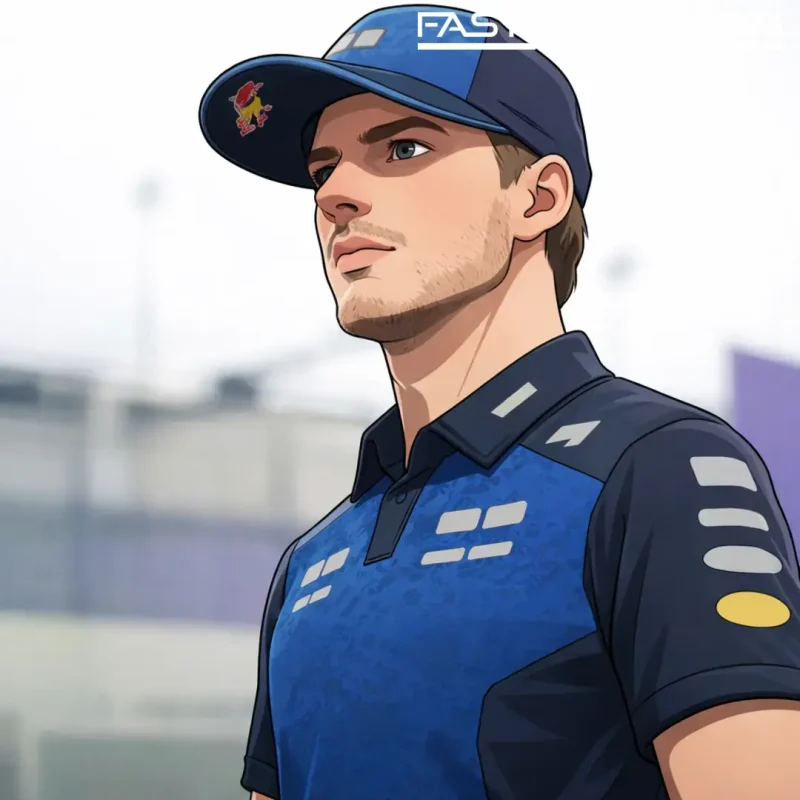
The timing is everything. Verstappen’s frustrations have been simmering for years, but they’ve boiled over now that the new rules are no longer a theoretical debate in a press conference — they’re the weekly reality. At Suzuka, Verstappen pushed his critique to its most pointed form yet, calling the battery-harvesting and deployment emphasis “anti-racing” and likening the driving experience to “Mario Kart”. He’s also spoken about reflecting on “life here” in the paddock and has confirmed he may leave Formula 1 after 2026.
Red Bull would love this to be filed away as heat-of-the-moment grumbling triggered by a tricky start. Verstappen, though, has been consistent on one key point: this isn’t primarily about Red Bull’s form, it’s about enjoyment. The results only make the message louder. After three rounds, he’s scored 12 points — a number that looks alien next to the standards he’s set over the past decade.
Irvine, for his part, doesn’t just sympathise with Verstappen’s mood — he shares it. He’s no fan of the new era and, importantly, his criticism cuts to the same nerve Verstappen keeps poking: that the competitive picture is being shaped too heavily by energy management.
“I don’t like them at all,” Irvine said of the 2026 regulations. “They definitely need to make some changes; it’s not right that everything comes down to how much charge is left in the battery.”
That line — “how much charge is left” — is what’s really driving this argument. The sport wanted a new technical identity and a louder sustainability story; what it’s wrestling with now is the perception that the racing product is being dictated by a dashboard. For drivers like Verstappen, it’s not simply that they have to manage — they’ve always managed — it’s the feeling that the management *is* the show.
Irvine went further, questioning the logic of pushing Formula 1 toward an eco-friendly message in the first place, while also raising an eyebrow at safety. “I love electric cars – I’ve got four of them – but it makes no sense to try and make the top-flight series eco-friendly. And these single-seaters are dangerous.”
Safety, inevitably, has become part of the 2026 story too. Suzuka was a grim reminder of how quickly a modern weekend can pivot from narrative to incident. Oliver Bearman’s 50G crash — from which he thankfully walked away without serious injury — came after he took avoiding action when closing rapidly on Franco Colapinto’s Alpine.
Irvine said the moment hit an uncomfortable personal note. “He was going much faster than Franco Colapinto and had to swerve to avoid him,” he explained. “It reminded me of the incident that cost Hitoshi Ogawa his life in Japanese Formula 3000. Fortunately, this time the cars didn’t make contact.”
Verstappen, meanwhile, isn’t the only one struggling to fall in love with the new world. Carlos Sainz has repeatedly raised safety concerns, while reigning world champion Lando Norris has also been vocal in his criticism. Lewis Hamilton, in contrast, has said he’s enjoying it — and it’s fair to note the rules have produced prolific overtaking at the front, which the sport will point to as proof that the formula is working.
But Verstappen isn’t measuring success in highlight reels. He’s measuring it in what it feels like from inside the cockpit — and whether the job still scratches the itch that made him Verstappen in the first place.
And then there’s the other ingredient Red Bull could have done without: instability on the pit wall. It emerged on Thursday that Gianpiero Lambiase is set to leave Red Bull for a new role at McLaren. Lambiase has been Verstappen’s race engineer since his 2016 promotion and is one of the few voices the Dutchman clearly trusts — the calm counterweight, the hard-nosed strategist, and, as fans know well, the other half of some of the sport’s most memorable radio exchanges.
In isolation, people move teams all the time. In combination — Verstappen’s sour relationship with the new regulations, a points tally that barely registers, and now the departure of a key ally — it reads less like background noise and more like a portrait of a driver looking around and asking what’s left here for him.
That’s where Irvine’s “F1 doesn’t need Max” line becomes both harsh and oddly revealing. On one level, he’s right: Formula 1 has always outlasted its stars, even the era-defining ones. On another, the sport can’t pretend it wouldn’t feel the loss. Verstappen isn’t just a front-runner; he’s the central character of the last stretch of F1 history, the benchmark everyone else calibrates against.
The bigger question is whether 2026 turns into a genuine crossroads — for Verstappen’s career, and for how Formula 1 responds when its most uncompromising winner starts sounding like he’s had enough. For now, the paddock has a familiar choice: dismiss it as theatre, or recognise it as a warning flare. Irvine has made his pick. Verstappen, increasingly, sounds like he’s still deciding.