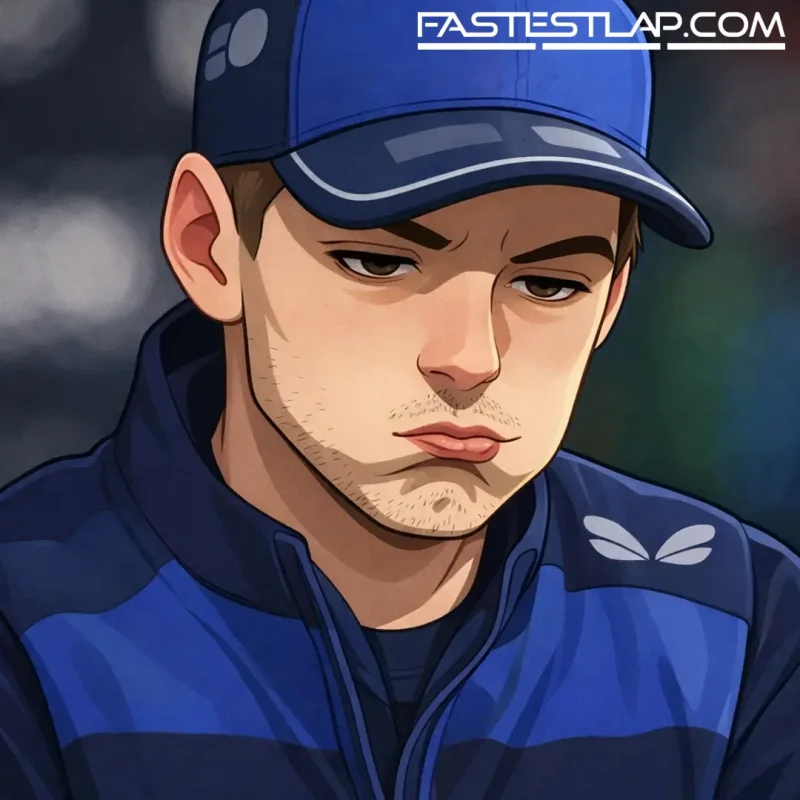
Max Verstappen has never been shy about telling Formula 1 when he thinks it’s got something wrong. The difference in 2026 is that the grumbling has started to sound less like a champion venting and more like a driver weighing up whether the whole thing is still worth the hassle.
Verstappen’s frustration with the new power-unit era has been a running theme since he first turned a wheel in Red Bull’s 2026 car. He’s repeatedly painted the regulations as a step away from what he considers “real” racing — the 50/50 split between electrical and battery power, the “super clipping” effect towards the end of the straights, and the knock-on impact on how overtakes are set up. His descriptions have been deliberately provocative: “anti-racing”, “Formula E on steroids”, even “Mario Kart”.
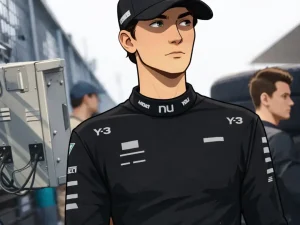
In Japan, after qualifying only 11th, Verstappen was notably flat when asked about it. No theatrics, no big speech — just the kind of exhausted shrug that tends to worry teams far more than a headline-grabbing outburst.
“I don’t get upset about it,” he said. “I don’t get disappointed or frustrated by it anymore with what’s going on. You know how I think about stuff, I don’t need to mention it again.”
Pressed on what, exactly, was on his mind, Verstappen offered two words that landed louder than any rant: “Life here.” And 24 hours later he pushed the point further, talking about thinking “about everything inside this paddock” and asking himself whether it’s worth it — or whether he’d rather be at home with family and friends if he isn’t enjoying the sport.
That’s the kind of comment that immediately triggers two reactions in the paddock. One camp takes it at face value: a four-time world champion, a new dad, and a driver who’s been in the F1 machine for long enough to know when the fun has drained out of it. The other suspects leverage — a public pressure campaign designed to force the FIA and the teams to revisit elements of the new formula.
Damon Hill, never one to dress up his view to spare feelings, has effectively told Verstappen he can’t have it both ways.
Hill’s first point is straightforward: if Verstappen genuinely isn’t happy, he should walk away. “If you’re not happy doing something, you should stop and do something else,” Hill said. “You’re not obliged to do it. Max doesn’t have to do this.
“He’s a new dad as well, and he’s been doing it [F1] for a long time. There does come a point where the chewing gum loses its flavour a bit. Maybe he needs a break.”
But Hill’s sharper message is aimed at the political side of Verstappen’s comments — the idea that repeatedly floating the possibility of quitting might move the rule-makers. Hill doesn’t buy that as a winning strategy.
“If he’s saying this in order to get some leverage on the way things are at the moment, I don’t think that will work,” he added. “People will just say ‘Max, go away, come back when you’ve had a think about it’. You can’t always get what you want.”
It’s an unusually blunt warning for an F1 champion to aim at another, but it reflects the reality of where the sport is right now. The FIA and the teams are set to meet on 9 April to discuss the new regulations, yet any meaningful in-season shift would require overwhelming support — unanimous agreement, or at worst a supermajority. In other words: even if Verstappen is trying to force the conversation, there are too many competing interests for one driver’s dissatisfaction to become a shortcut to change.
That doesn’t make Verstappen’s complaints irrelevant. Red Bull’s start to 2026 has already been described as troubled, and his results and body language have fed into the sense that this is a season he’s enduring rather than shaping. When a driver of Verstappen’s calibre starts talking about motivation instead of lap time, the sport listens — not because it panics, but because it understands how quickly the balance can tip from “I’m unhappy” to “I’m done”.
There’s also an uncomfortable subtext for F1: Verstappen is one of the era’s defining drivers, and when someone like that publicly questions whether the core product is still enjoyable, it creates a noise the championship would rather not have hanging over a new set of regulations.
Contractually, Red Bull will still feel protected. Verstappen’s deal runs through the end of 2028. But contracts don’t race cars, and they don’t always keep unhappy superstars in place if the relationship sours badly enough. What Red Bull — and F1 — will be looking for now is not a quote, but a trend: does Verstappen’s mood lift as teams get on top of the new requirements, or does this harden into a genuine desire to find satisfaction somewhere else?
One clue is where Verstappen’s excitement has been lately. Away from the grand prix weekends, it’s the Nürburgring that’s lit him up, and he’s set to contest May’s 24 Hours — an outing that could matter far beyond a single endurance result. For a driver already asking himself whether life in the F1 paddock is “worth it”, a taste of a different racing world can either scratch an itch… or become the start of a real exit plan.
Hill’s point, essentially, is that Verstappen should be honest about which fight he’s in. If this is about happiness, the door is open and nobody can force him to stay. If it’s about bending the sport to his preferences, history suggests the sport tends to blink last.