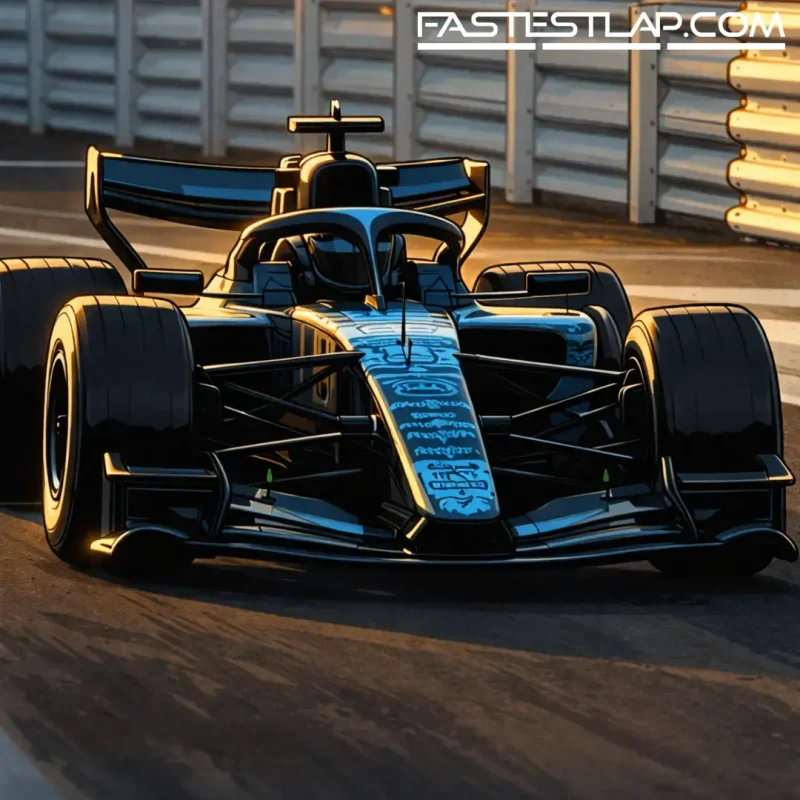
Williams have spent the winter selling a vision of 2026 as a proper reset — not a slogan, not a vague “project”, but an actual reordering of priorities around the new ruleset. So it was a little jarring to see every team bar one roll into Barcelona for the five-day private shakedown, while the FW48 stayed at home.
In a paddock that treats early mileage like oxygen, skipping the unofficial start of pre-season inevitably reads as either an alarm bell or a statement of intent. James Vowles, as ever, framed it as the latter — and, tellingly, he didn’t pretend there was no upside.
Not running in Barcelona, he confirmed, does ease the pressure on the cost cap. When asked whether Williams had effectively banked a financial gain by sitting out, Vowles didn’t dance around it.
“Hotels and travel is an excluded cost cap cost,” he explained. “Yes, you are correct. Not running on track gives you a healthy cost cap benefit. But I would much rather to be running on track, just to be clear, in that transition.”
That’s the key nuance. Williams aren’t skipping track time because they think track time is overrated. They’ve simply chosen to spend their limited resource — not just money, but manufacturing bandwidth and development attention — on getting the FW48 to Bahrain in a state they’re happier to stand behind.
It’s also a reminder that, under these regulations, even a “private shakedown” isn’t just a few cheeky laps for the cameras. The cars are new, systems are new, the to-do list is long, and every kilometre puts parts through the kind of stress you can’t fully replicate on a rig. If you go, you learn — but you also consume components, run support operations, and potentially uncover issues that require expensive fixes. The cost cap doesn’t just punish the slow; it punishes the wasteful.
Vowles has been consistent about this stuff since arriving: Williams are trying to build a team that behaves like a front-runner long before it scores like one. That means being less reactive to the paddock’s daily news cycle and more stubborn about internal milestones. In his words, the metric isn’t even race-by-race any more.
“The goals are that every part of our business needs to be stepping forward every single month,” he said. “So it’s not driven by racing anymore. It is literally month by month, hold ourselves to account, have we moved the business forward sufficiently in order to track relative to a championship-level team that’s also moving forward.
“I know those aren’t as interesting stats, but that’s how you drive success for a team.”
There’s an almost corporate coldness to that language — and it’s deliberate. Williams don’t want to be emotionally whipped around by the next qualifying session. They want repeatable processes: better design loops, cleaner manufacturing, sharper correlation, fewer frantic “why doesn’t it do what the wind tunnel said?” weekends. If that demands swallowing some noise about being the only absentee in Barcelona, Williams can live with it.
The other strand in Vowles’ answer was the one aimed squarely at the grandstand: the long-term pitch to drivers, partners, and staff that Williams are not dabbling, and that 2025’s compromises were made with 2026 in mind. Vowles pointed to the drivers’ own messaging — Carlos Sainz and Alex Albon buying into the idea that this is a journey, not a quick hit.
“Perhaps it’s even better if I use the words of Carlos and Alex, which is, they joined us, not for one year, not for one test, they joined us to be at the journey to win a World Championship with Williams,” he said. “Strong words. Not mine, theirs.
“That does not happen overnight, but what they can see is what we’re doing to invest to get ourselves there.”
That last line is doing a lot of work. Because the trade-off Williams have made is obvious: early track data versus more time to refine and finish what they’ll actually bring to the official test in Bahrain. If the FW48 turns up there with a tidier baseline, fewer niggles and a clearer platform for development, the Barcelona absence will be filed away as a sensible, slightly unglamorous decision.
If it doesn’t — if Bahrain reveals basic reliability problems or a car that’s simply undercooked — then the paddock will be less forgiving, and the “healthy cost cap benefit” will sound like a rationalisation rather than a strategy.
The reality is Williams are trying to climb in a year when nobody gets to stand still. The grid is too tight, the regulation change too large, and the cost cap too unforgiving for sentimental decisions. Vowles’ admission that missing Barcelona helps the numbers, paired with his insistence he’d still rather be on track, captures the tightrope: Williams are counting pennies because they have to, but they’re also trying not to act like a team that’s thinking small.
Bahrain, then, becomes more than just the FW48’s first public laps. It’s where Williams’ winter philosophy meets the stopwatch — and where we’ll learn whether this was a disciplined delay, or simply time they couldn’t afford to give away.