Damon Hill has seen enough rebuilds in Formula 1 to know the difference between a wobble and a proper rut — and Williams’ opening to 2026, in his words, has been “a little bit disheartening”.
The team arrived at Suzuka with just two points from the first three rounds of the new regulations era, a stark comedown after the momentum of 2025. Last season’s uptick — including two podiums delivered by Carlos Sainz — had encouraged a sense that Williams might finally be ready to graduate from “project” status. Instead, the first phase of 2026 has been an exercise in damage limitation, with the FW48 too often scrapping in the wrong half of the grid.
Hill, back with Williams this year in an ambassador role three decades on from his 1996 title, wasn’t dressing it up as something it isn’t. There’s pride in the badge, but there was also realism in the way he framed it on Channel 4’s Japanese Grand Prix coverage: progress is coming, yet it’s going to hurt.
“They are coming,” Hill said when asked if improvements were on the way. “You have to keep moving forward, otherwise you go backwards.”
That line will resonate inside Grove because it captures the trap teams can fall into at the start of a regulation reset. Everyone turns up with a baseline concept, and if you’re not in the right ballpark early, the development race becomes less about the glamorous stuff — aero maps, clever packaging, efficiency tricks — and more about dragging the car to a competitive starting point while rivals are already stacking performance on top.
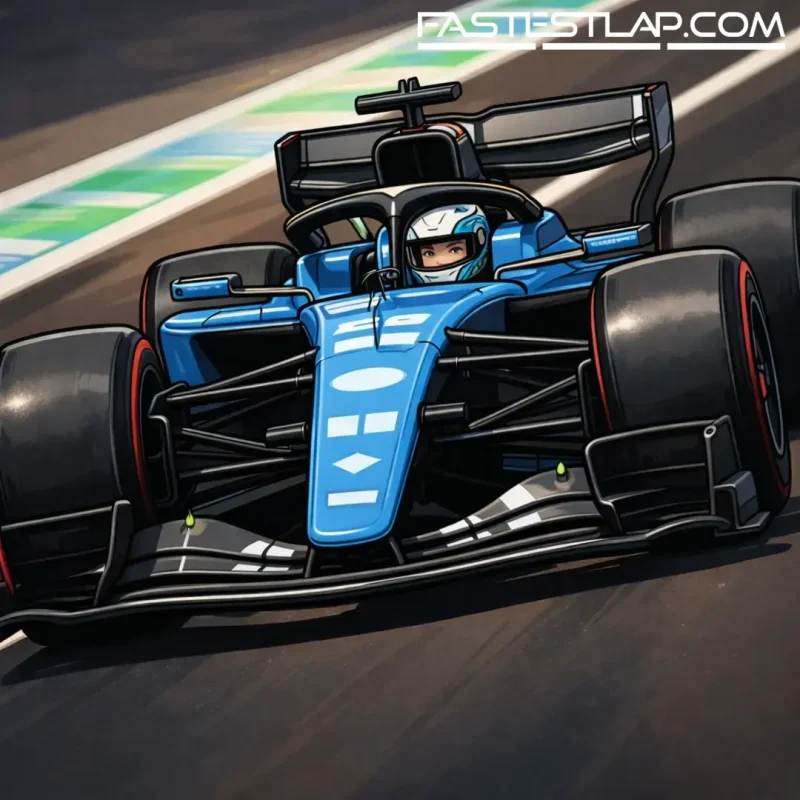
Williams’ specific headache is painfully straightforward: the FW48 is overweight. In a formula where margins are tight and the development curve is expected to be “fierce and unpredictable”, carrying extra mass is like arriving at a boxing match wearing a winter coat. Even if the car has underlying potential, the lap time you’re donating is immediate, non-negotiable, and it tends to infect everything else — tyre life, race flexibility, how aggressively you can run certain set-ups.
Hill didn’t need to spell out the technical knock-on effects. He went to the human one.
“They’re coming from a long way back, so they’ve got a lot of work to do this year,” he said. “It’s a little bit disheartening. They had such a great season last year. So they know that the job ahead is going to be tough, and they’ve got to crack on.
“They’ll get there. But it’s a work in progress at the moment.”
It’s also a reminder of what 2026 has done to the competitive order already. New eras don’t politely preserve last year’s hierarchy; they amplify small mistakes and punish any delay in understanding the car. Williams had been careful publicly, with team boss James Vowles regularly damping down expectations, but you didn’t need to be inside the garage to sense there was hope that 2025’s form might translate.
Instead, the first three races have made the to-do list uncomfortably long — and very immediate.
An unplanned April break has offered an unexpected breathing space before the championship resumes in Miami, and Vowles has been explicit about how ruthlessly Williams intends to use it. The theme isn’t reinvention so much as extraction: dig through the early-season data properly, choose what’s actually changeable, and accelerate production towards upgrades that deliver “bang for the buck”.
“Every single hour of that break we need in order to get ourselves back on the front foot by the time we come back to Miami,” Vowles said in a video posted by the team.
“Clearly, we haven’t started the season where we wanted to. So that period for us is about taking stock of what we actually really can change.
“Now, without attrition, we can count on the fact that production can be moved towards future performance, that some of that may come in Miami, some of that after that.
“It’s no secret that we’re overweight… the developments will be in that period of time, making sure that we’re able to reduce the mass in the car in a sensible fashion.”
There’s a notable steadiness to the way Vowles talks about it: less panic, more process. Williams will use the gap to trawl through “every single tiny bit of data” from the opening races — the kind of deep review you often don’t get time for when you’re bouncing between flyaways — while running the simulator “basically every single day” with the drivers back in the UK. Even the nuts-and-bolts basics are on the agenda, with pit-stop practice scheduled as well.
It all underlines how little romance there is in the early part of a comeback. The glossy narrative is “Williams returns”, but the reality is a heavy car, a development plan that has to be triaged, and a grid that won’t wait for you to get your house in order.
Still, Hill’s faith wasn’t performative. He’s watched Williams at its most ruthless and at its most vulnerable, and he knows recoveries aren’t linear. If the weight comes out sensibly — Vowles was careful to stress that part — and the early data leads them to the right upgrade priorities, a two-point start doesn’t have to define the season.
But the warning in Hill’s tone mattered: this is a tough road, and the sport’s new era isn’t offering anybody a gentle on-ramp. Williams doesn’t just need improvements. It needs them quickly, and it needs them to land cleanly, because 2026 is already moving on.