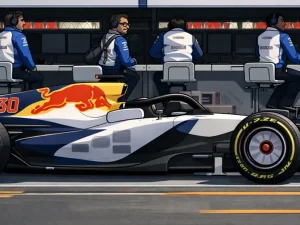
Williams insists it hasn’t lost a beat heading into the first official pre-season test in Bahrain, despite being the lone absentee from Formula 1’s behind-closed-doors shakedown in Barcelona.
The Grove team pulled out at short notice after delays in the FW48 build process, a move that immediately lit up the paddock rumour mill given how unforgiving the 2026 reset is on timing, mileage and integration work. But team principal James Vowles has been adamant the decision was calculated — and, in his view, necessary.
“It clearly wasn’t our plan, and it’s incredibly painful,” Vowles said, while framing the missed Barcelona running as a consequence of Williams leaning hard into the new regulations rather than a simple operational stumble. The message, in essence, was that you don’t transform at speed by playing it safe.
Vowles has spent his tenure talking about changing the fundamentals at Williams — process, tools, decision-making, the lot — and he’s now tying that rhetoric to the reality of a car that didn’t make the first collective outing. His argument is that pushing aggressively is the only way a team like Williams finds its weak points quickly enough to fix them, even if it means swallowing an uncomfortable headline or two in January.
That’s a bolder stance than you usually hear from a team that’s missed precious early running, and it’s clearly designed to reframe what could easily be portrayed as a red flag. In a season where everyone is building something new and unfamiliar, the last thing Williams needs is the paddock deciding its 2026 car is late because it’s broken, not because it’s ambitious.
The other paddock whisper Vowles was keen to shut down was the suggestion the FW48 hadn’t cleared mandatory FIA crash tests. He says it has.
“I’m pleased to say that we’ve passed all necessary tests, and we’re ready to run in Bahrain,” Vowles confirmed, adding that Williams will complete a promotional filming day before the test begins.
In the absence of Barcelona mileage, Williams has also been leaning heavily on what Vowles described as its VTT (virtual test track) programme — not a simulator exercise in the traditional sense, but a physical test that runs a large portion of the car’s systems in a controlled environment.
“It is really pretty much most of the physical car,” he explained. “You don’t have wings bolted to it, but you have the chassis, the engine, the gearbox… you test your braking systems at the same time… What you’re doing is characterising your cooling system, understanding where that is running, the engine, gearbox, etc, under load.”
That last part is where the nuance sits. Missing Barcelona means Williams hasn’t had the benefit of real track conditions and dynamic cornering loads — the stuff that reveals the nasty little interactions between aero platform, ride, tyres and systems. But Vowles’ point is that 2026 is as much an integration project as it is an aerodynamic one, and there’s value in being able to run power unit, gearbox, ECU and energy management code in a repeatable environment while rivals are dealing with the noise of a track session.
Williams has even been using the set-up to mimic variables like traffic conditions and ambient extremes — everything from Singapore-style heat to a four-degree Silverstone scenario — with the advantage of being able to compare software baselines against what others were running in Barcelona.
You can read that as reassurance, but it also hints at what Williams is prioritising right now: making sure the car is fundamentally healthy before it’s sent into the wild. The 2026 regulations have changed the game, and early testing time will disappear rapidly if you turn up with unresolved cooling, braking or control-system issues. The irony is that a “simple” systems problem can burn more of your programme than a slower-than-expected first aero package.
Still, Bahrain isn’t a gentle reintroduction. The first proper test is where teams start chaining together procedures and understanding: pit-stop routines with a new car, longer runs, correlation checks, and the first real sense of how stable the package is when it’s asked to do multiple things at once. Williams can talk up controlled learning all it wants — but it will need clean laps, consistent long runs and minimal garage time to avoid the feeling that it’s been chasing the schedule since day one.
Vowles, though, is projecting calm. He said he remains “confident” the call to skip Barcelona was the right one, not just for Bahrain but for the season start in Melbourne. That’s an assertive line to take when you’ve given up early mileage, and it sets a clear expectation: Williams believes it will arrive in Bahrain ready to work, not merely ready to appear.
Whether that confidence is vindicated will become obvious quickly. In modern F1, you can survive missing a shakedown. What you can’t survive — especially under a fresh set of rules — is missing the moment where your new car becomes a race car. Bahrain is that moment.