Fernando Alonso isn’t rushing to condemn 2026. While Lance Stroll has sounded less than thrilled after early simulator runs of F1’s next-generation cars, his Aston Martin teammate is keeping his powder dry — and hoping the new era ends up suiting them both.
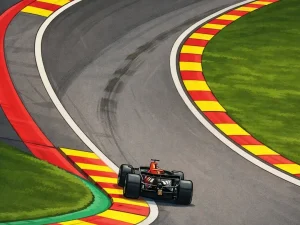
Stroll’s first take, shared with media at Spa, was blunt: a lot less downforce, a lot more straight-line speed, and not nearly the same thrill through high-speed corners like Spa or Suzuka. He called it a different kind of challenge — lighter on the body thanks to reduced Gs, heavier on the engineers as they chase performance under an all-new rulebook. “It’s going to be a hit in downforce, and we’re going to be sliding around more than what we are now,” he said, adding that excitement might be in short supply until teams unlock the window.
Alonso, asked about those remarks a week later in Hungary, wasn’t biting. “I only did one day in the simulator, and it was difficult to really take any conclusions,” he said, noting that sim sensations can diverge from reality. The two-time champion acknowledged the obvious — slower cornering rarely delights drivers — but added a racer’s punchline: if you’re fast, you’ll love it. “Hopefully Lance can enjoy next year,” he smiled.
Enjoyment in 2026 will be defined by a sweeping reset. The cars shrink and shed roughly 30 kilograms. DRS makes way for active aerodynamics. Pirelli will narrow the tyres by 25mm at the front and 30mm at the rear. Under the engine cover, the power units pivot to a 50/50 split between electrical and combustion power, with fully sustainable fuel feeding the ICE. It’s a philosophical shift as much as a technical one — more energy recovery, more strategic deployment, and a new envelope for chassis designers to exploit.
For Aston Martin, 2026 also marks the start of its Honda partnership. That alone changes the team’s trajectory. In 2025, Alonso and Stroll continue as teammates under the current rules, but everything they and their rivals are doing now is colored by what’s coming next. Simulator feedback is useful; correlation is king. And early impressions — even skeptical ones — can fade quickly once real cars hit real circuits.
Stroll’s point about relativity is also hard to argue with. If someone nails the new regs, their driver will be all smiles. That’s been true in every reset of the hybrid era. Alonso knows it, which explains the patience. He’s seen regulation changes turn doubters into believers before — usually the moment the stopwatch starts telling a happier story.
So yes, expect the first laps of 2026 to look and feel different. Less planted, more lively. The question that matters inside Aston Martin’s Silverstone campus is whether that liveliness comes with lap time. If it does, don’t be surprised if both green cars decide the future feels pretty exciting after all.