FIA presidency all but settled: statute quirk leaves Ben Sulayem unopposed for second term
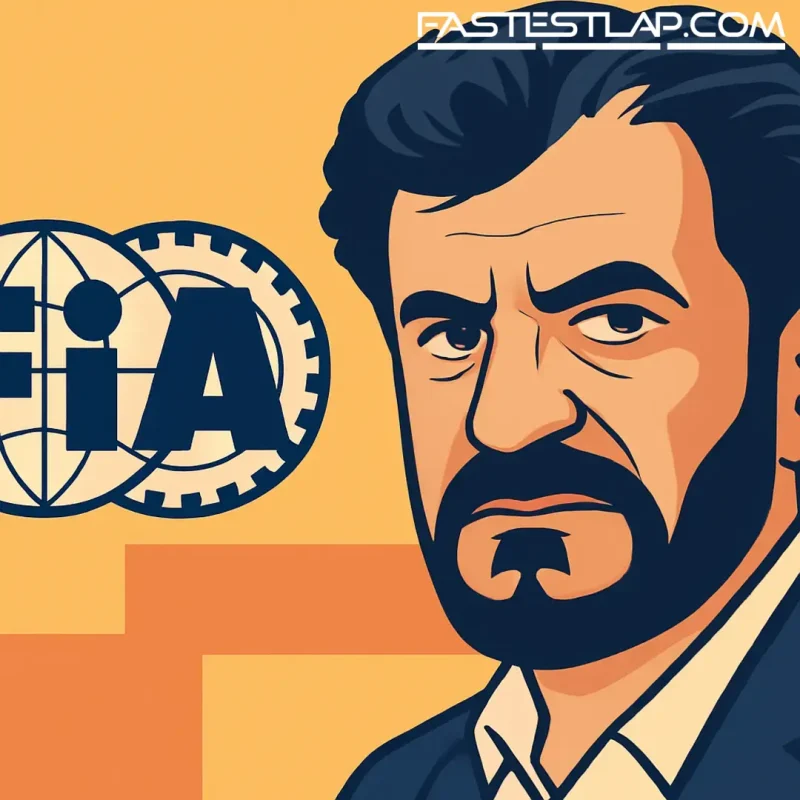
The FIA’s presidential election looks over before it begins. Mohammed Ben Sulayem is on course to be returned for a second term in December—not via a bruising political contest, but because the rulebook leaves only one viable ticket.
Here’s the nub. FIA presidential candidates must submit a full “List” of key officers, including seven sporting vice-presidents covering every region: Middle East/North Africa, Africa, North America, South America, Asia-Pacific, and two from Europe. Those names must be drawn from the pool of candidates nominated to the World Motor Sport Council (WMSC).
Nominations for the WMSC closed in September. And in South America—crucially—only one eligible nominee made it onto the list: Fabiana Ecclestone. With Ecclestone understood to be aligned with Ben Sulayem, every rival would-be president is left without a South American vice-president. No South American VP means no compliant List. No List means no place on the ballot.
That’s why, despite several names signaling interest—Tim Mayer, Laura Villars and Virginie Philippot among them—the field has effectively been reduced to one. The presidential List submission window runs until October 24, but unless another eligible South American candidate materializes (and the WMSC nominations are already locked), their entries won’t be accepted.
Ben Sulayem, for his part, declared his slate on September 10. His sporting vice-presidents: Fabiana Ecclestone (South America), Anna Nordkvist (Europe), Manuel Avino Roger (Europe), Lung-Nien Lee (Asia-Pacific), Rodrigo Ferreira Rocha (Africa), Shaikh Abdulla bin Isa Al Khalifa (MENA), and Daniel Coen (North America). All seven appear on the WMSC eligibility list for 2025.
It’s a technicality with real teeth. The statutes are clear: every region must be represented on a presidential ticket. In a normal cycle, that’s a robust way to ensure global balance. In this cycle, with only one eligible South American in the pool, it creates a bottleneck that funnels the election toward a single outcome.
Rival camps aren’t happy. Quietly, there have been mutterings about “democratic suppression” and a bit of sabre-rattling about possible legal recourse. But unless someone can show the process wasn’t followed, the rules are the rules.
The FIA, asked to clarify the mechanics, points to the timeline and transparency of the nomination process. Members and interested candidates had more than three months—from June 13 to September 19—to file WMSC applications, with documents posted on the FIA site and the administration on hand to assist. If a region ends up with one eligible nominee, that’s not a backroom stitch-up; it’s simply the result of who made the cut.
And there are filters. To be nominated to the WMSC, candidates must be put forward by a paid-up member club, meet fit-and-proper standards and be under 75 on election day. That last one, we’re told, has tripped up hopefuls before.
Still, the optics aren’t brilliant. The system, in practice, seems calibrated for a clean two-horse race. But by tethering presidential eligibility to the WMSC nomination slate—and mandating one VP per region—it only takes a single thinly populated region to turn a global vote into a coronation. No suggestion of foul play; just the statutes doing unintended damage.
There’s another political wrinkle baked in. Building a List means effectively naming your supporting countries and people before the vote. It’s a deterrent to fence-sitters—ASNs and ACNs may hesitate to back a challenger if it risks alienating the incumbent—and it raises the stakes for anyone considering a run. Combine that with no formal pre-registration filter, and you get two extremes: unserious attempts to build profile, and serious ones hamstrung by the regional nomination map.
If you’re looking for villains, you won’t find them in the fine print. If you’re looking for a fix, you’ll find it there. A tweak to the statutes could prevent a repeat—decouple the Lists from the WMSC slate, broaden regional eligibility, introduce contingency provisions, pick your medicine—but none of that can happen before December. The next realistic shot at reform would be ahead of 2029.
For now, the December vote is shaping up to be a formality. The incumbent has a complete, valid ticket. His opponents, however willing, don’t have the South American piece they’re required to show. In governance terms, that’s checkmate.
Whether you view it as smart politicking, bad luck or a structural flaw, the result’s the same: Mohammed Ben Sulayem is poised to continue in motorsport’s top job—this time not after a campaign, but after a process that left no room for one.