Sam Bird backs Hamilton’s call to limp home in Singapore as Alonso fumes over “unsafe” Ferrari
Lewis Hamilton nursed a dying Ferrari across the line in Singapore and straight into a debate that’ll run longer than a Marina Bay cool-down lap. Brake failure? Tick. Track limits? Plenty. Fernando Alonso on the radio? Positively volcanic.
The flashpoint arrived in the closing laps. Hamilton had pitted late for softs on lap 46 and been unleashed once Ferrari asked Charles Leclerc to move aside. He went hunting — Kimi Antonelli was the next target — before the charge abruptly turned into crisis. “I’m losing my brakes,” he told Riccardo Adami. Moments later: “I’ve lost my brakes, lost my left front.”
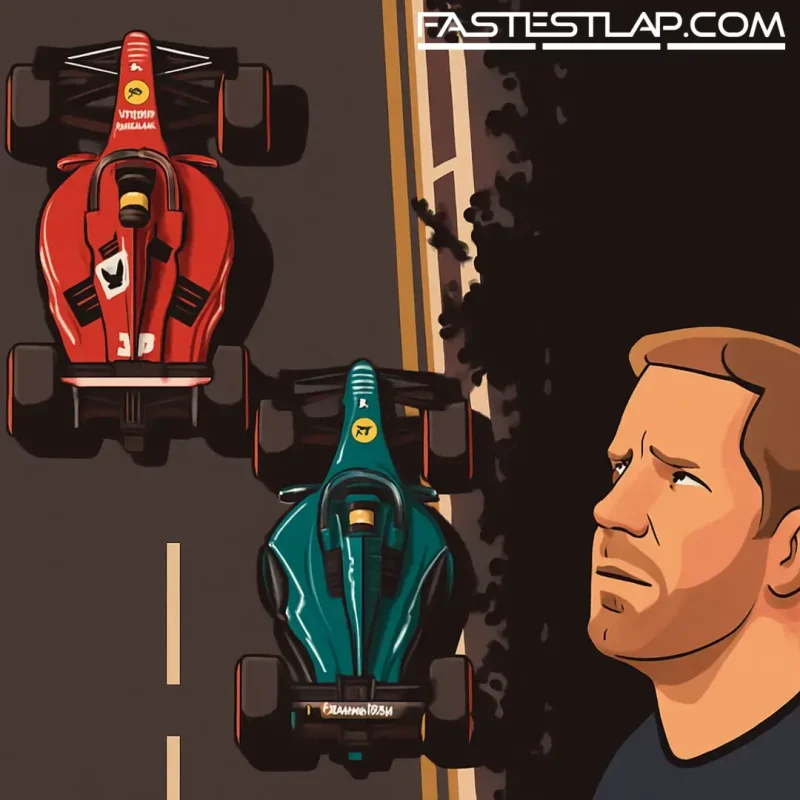
From there it was survival. Hamilton slowed dramatically, still half a minute up the road from Alonso with two to go, and chose to keep the SF-25 circulating to bag the points. What followed looked ugly: missed apexes, chicanes taken like bus stops, and track limit warnings racking up as Alonso reeled him in.
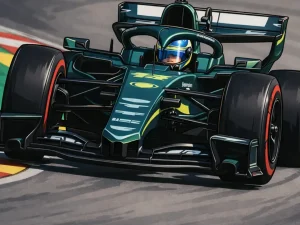
The Aston Martin driver needed no invitation to unload. “I cannot believe it. I cannot f***ing believe it,” Alonso raged over team radio. “Is it safe to drive with no brakes? Five seconds, minimum! For me, you cannot drive when the car is not safe, you know. Sometimes, they try to disqualify me with no mirror, and now you have no brakes, and everything is fine? I doubt it.”
Hamilton clung on for seventh at the flag, just four-tenths ahead of Alonso, then copped a five-second penalty for repeated track limits that dropped him to eighth.
Safe? Legal? Sporting? Depends who you ask.
Ferrari team boss Fred Vasseur insisted the car was not a hazard “because we adapted pace,” pointing to Hamilton’s cautious, crawling sector times as a mitigation. It’s a pragmatic reading of the rules: if a driver can control the car, even at a hobble, the stewards tend to leave it to the stopwatch and the penalty sheet.
Sam Bird, the former Formula E race winner and long-time Mercedes tester, landed on the same side. “Into Turn 16, with a few laps to go, you just saw a load of sparks from the inside of the rim on Hamilton’s front left. It didn’t look right,” Bird said on BBC’s Chequered Flag. “It definitely looks like that’s a disc failure. Lewis Hamilton then didn’t have any brakes for the last couple of laps.”
Bird’s verdict on the choice to continue was blunt. “The question is, should you continue if you’ve got no brakes? Is that deemed dangerous? Did Lewis do the right thing? I mean, I would continue with a lap to go. If I was in the same position, I’d continue and get across the line and let the stewards decide on what they want to do. So I think that Lewis did the right thing, but I can completely see why Fernando went irate.”
On pure driving instinct, Bird’s right — virtually no one parks a car while points are on the table and the mirrors are clear. Hamilton had a cushion, and he used every inch of legal tarmac and then a bit more to keep it. The stewards duly punished the excess, but not the decision to stay out.
Alonso’s argument is more philosophical, and not without merit: if a car can’t slow properly, doesn’t that make it a hazard by definition? In Singapore’s concrete canyon, that’s a serious claim. The trouble is, “unsafe” in F1 isn’t a feeling — it’s a threshold. If the driver can modulate pace, avoid contact, and bring the car home under his own control, the officials will usually let the clock and the penalties sort the rest. Hamilton did, just about.
If there was a line crossed, it was the aesthetic one. Watching a seven-time champion crab through corners with a front-left that had essentially checked out doesn’t look great. But the rules don’t demand elegance; they demand control. And Hamilton, nursing that Ferrari like it was made of glass, kept it on his terms.
Naturally, he couldn’t resist a parting shot. Hamilton went on Instagram with a clip of the “One Foot in the Grave” catchphrase — “I don’t believe it” on loop — captioned “18 years of…” A wink across the aisle to a rivalry that refuses to age, even as both keep adding to their highlight reels.
Strip the noise away and Singapore leaves F1 with a familiar conundrum. Should there be a hard “mechanical safety” black flag for components like brakes, comparable to the strictness we’ve seen on mirrors or loose bodywork? Or is the current, case-by-case approach — where pace management and penalties govern the grey — the right balance between safety and sporting jeopardy?
On Sunday night, the stewards chose the latter. Hamilton took the hit on track limits and still came away with points for Ferrari. Alonso left with steam pouring out of the helmet and one more grudge for the scrapbook. And everyone else was reminded that in this sport, the line between heroics and hazard is often about as wide as a street circuit curb.