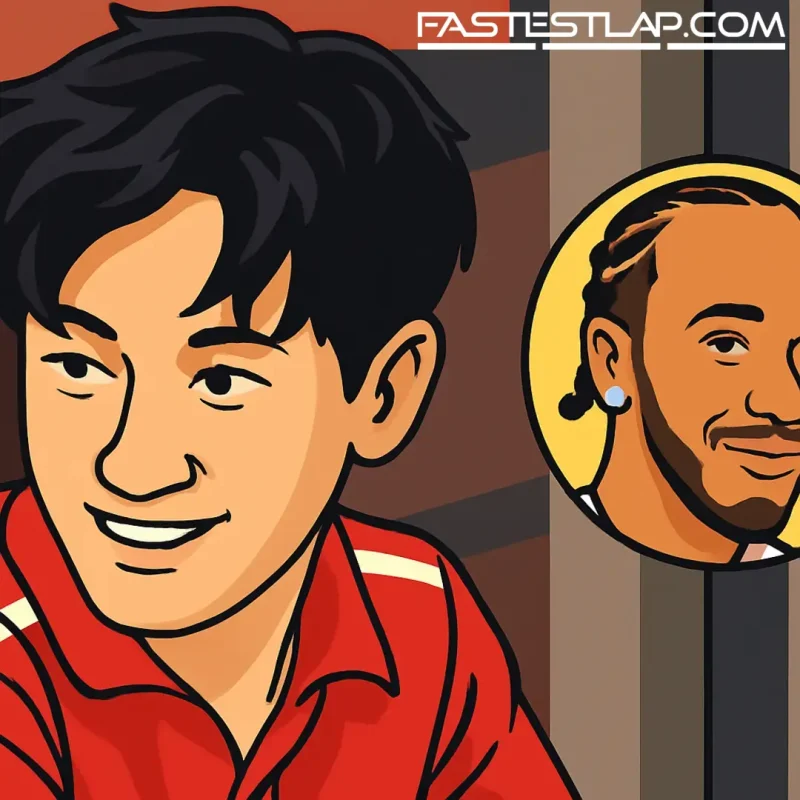
Zhou Guanyu has been living in the eye of the storm without turning a wheel on Sundays. Ferrari’s reserve driver has spent 2025 inside the Scuderia’s machine room, shadowing Lewis Hamilton’s first year in red and working alongside Charles Leclerc—soaking up the methods of two star operators while helping coax more from the SF-25 in the simulator and on test days.
What has he learned? More than anything, that winning drivers tend to work the same way—whether their names are Leclerc, Hamilton, or Valtteri Bottas.
“People like to think they’re all completely different,” Zhou says privately, “but the top guys share the same rhythm: detail, discipline, and consistency.” It’s a through-line he first picked up at Sauber with Bottas and has now seen up close at Ferrari. The nuance is there—every elite driver has their own quirks—but the blueprint doesn’t change much.
Zhou’s Ferrari year has felt like a reset after three bruising seasons at Hinwil. The Audi takeover made Sauber a moving target and, by his count, left him cycling through three race engineers in as many years while leadership changed at pace. You don’t need to have run an F1 team to know that’s no way to build a driver-engineer relationship. “We basically hit a brick wall,” is how he puts it. “You find momentum, then the faces change.”
Maranello, he says, has been the antidote: stable structures, ringfenced driver time, and a support cast that allows you to go deep without splitting focus. The difference has been stark. On race weekends he’s had “more than double” the time with his engineers compared to what he was used to, with a driver coach and dedicated performance eyes pulling at the threads. It’s the kind of environment that lets a driver refine feel, not firefight logistics.
That’s mattered for Hamilton too. Even a seven-time world champion needs bed-in time with a new squad, and Ferrari’s decision to keep his core crew nailed down has, in Zhou’s view, been crucial. “He came in fresh to this project,” Zhou notes, “and the team let him settle with the same people. That’s how you build rhythm.” It’s telling that his takeaway from Hamilton isn’t something mystical; it’s the relentless, methodical build-up we don’t always see from the outside.
Zhou’s 2025 has been heavy on the unglamorous but vital bits: long simulator blocks, correlation work, two-year-old car running under TPC rules, even a Pirelli tyre test before the summer. The mileage matters. Sitting out races isn’t easy for a competitor—he admits he misses the grid—but watching from just behind the curtain has sharpened his eye. Step back, see the whole picture, step back in better prepared. That’s the theory.
It also explains why he turned down race seats elsewhere. There were options, but he made a strategic call: stay in the F1 paddock, be present, be ready. If a door opens, he wants to be the person standing in the hallway—not a time zone away, locked into another series. If that door never opens? Then he’ll look around. For now, the patience play continues.
It helps that returning to Ferrari has felt like a homecoming. He knows half the building from his Ferrari Driver Academy days; this time, he’s inside the full grand machine. The contrast with his previous team has been eye-opening. At Sauber, he says, non-driving commitments often bled into performance time. At Ferrari, the schedule is engineered around the driving. It sounds trivial until you’ve lived the difference.
As for the on-track brains trust he’s shadowing, Zhou isn’t starstruck; he’s observant. Leclerc’s crisp clarity over one lap, Hamilton’s big-picture racecraft, Bottas’ calm infrastructure-building from their Mercedes days—it’s all part of the same toolkit. He’s been taking notes for years. Ferrari has simply given him a quieter room to rewrite them.
Where does that leave him? Realistically, the 2026 grid isn’t teeming with openings. Zhou knows it. But he also believes he’s a stronger, more rounded driver than the one who walked into Maranello last winter. Fewer distractions, more structure, better habits, clearer communication. Those aren’t headline grabbers. Inside a racing team, they’re everything.
And if his year as Ferrari’s reserve sounds like a slow burn, that’s because it is. The work rarely trends on social media. It shows up in a driver who jumps back in and feels like he never left. That’s been the assignment. Zhou’s been doing the homework. Now he waits for the exam.