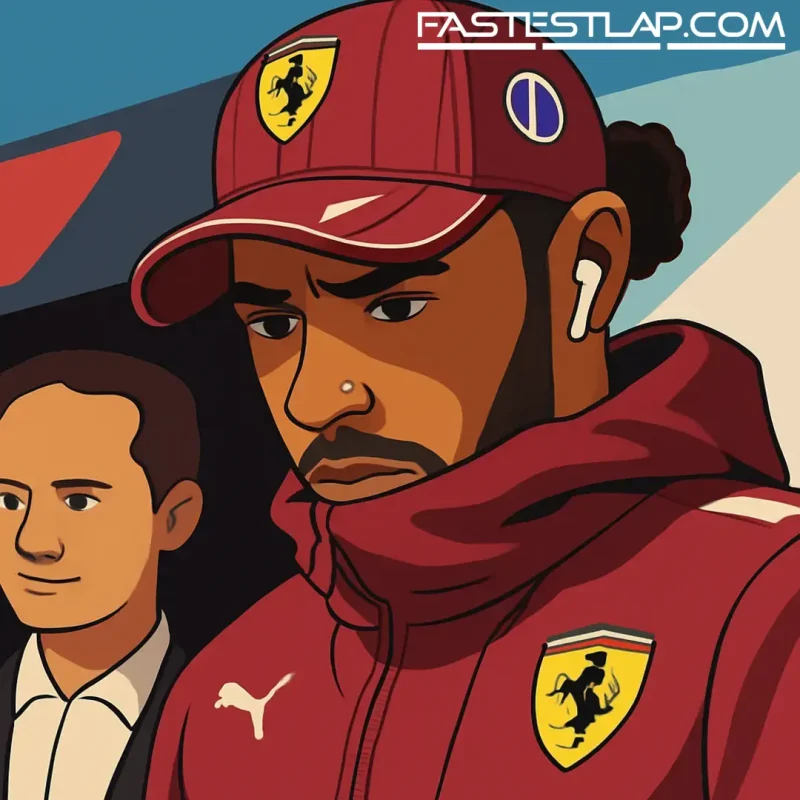
Montoya: Give Ferrari’s Hamilton the right car and he’ll be “unstoppable”
Ferrari don’t do soft landings. Days after a bruising Interlagos weekend ended in a double DNF, John Elkann cut through the noise with a line that echoed from Maranello to the paddock: the mechanics are nailing pit stops, the engineers are pushing the car, and the drivers should “focus on driving, talk less.”
It was a public nudge toward Charles Leclerc and Lewis Hamilton, and it landed with the weight only a Ferrari president’s words can carry.
For Juan Pablo Montoya, though, the story is simpler. Feed Hamilton the tools, back him to the hilt and the seven-time champion you used to dread seeing in your mirrors is still in there — waiting.
“If you give Lewis the right tools, he’ll be right at the top,” Montoya said in a recent interview. “When things click and the motivation is back, oh my god — Hamilton will be unstoppable.”
This first season in red hasn’t run to Hamilton’s script. Results have been lean by his standards, and within Ferrari the head-to-head has tilted Leclerc’s way more often than not. That dynamic, combined with the visibility of a Ferrari slump at a high-profile race, explains why Elkann’s line stung in public. In private, the message is understood for what it is: pressure applied with the intention of sharpening edges.
Montoya believes the friction is a symptom of Hamilton pouring himself into a project that’s still finding its feet around him. “His frustration is thinking he’s doing more than Ferrari are doing for him,” Montoya said. “He feels he’s putting a lot of effort to make things work, but the team aren’t matching that energy.”
That’s classic Lewis: when he feels the factory at full volume behind him, he tends to lift everyone with him. When he doesn’t, you hear it in the radio and see it in the body language. Ferrari’s job now is to turn the volume up, align the development needle to his feel, and let Hamilton run. The upside is obvious. The danger in not doing so is just as clear.
There’s also no hint, Montoya insists, of a driver easing toward the exit. “There’s no chance he’ll quit and retire any time soon,” he said. “He won’t want his legacy tarnished as the guy who didn’t make it.”
Hamilton himself has been characteristically direct. In a short message after Interlagos, he reinforced where he stands: “I back my team. I back myself. I will not give up. Not now, not then, not ever.”
That posture isn’t theatre. It’s how he’s always operated — a mix of stubborn confidence and relentless calibration. The key now is whether Ferrari can bottle that and turn it into lap time. That means quicker response to feedback, finding the ride-and-balance sweet spot he builds around, and removing the operational fumbles that have too often defined the team’s bad days.
It also means clarity with Leclerc. The Monegasque remains a benchmark over a single lap and, this year, has generally been the one converting opportunities. Ferrari don’t need a civil war; they need a united front that extracts both drivers’ strengths without tripping over each other — or the pit wall.
Montoya’s prescription is as old as the sport: listen to your lead voices. “The faster Ferrari’s team and engineers listen to Hamilton on how to make the car better, the better it will be for the team in the long term,” he said. That’s not a slight on Leclerc; it’s the recognition that Hamilton’s seen championship campaigns built from scratch, rescued mid-season, and defended in the heat. That experience is a resource you don’t leave untouched.
Elkann’s message, then, sets the scene. The factory’s already on notice. The drivers are, too. The next step is alignment, not argument — because if Ferrari align around Hamilton and Leclerc with a car they trust, the rest of the grid won’t need to be told twice. They’ll feel it on Sundays.