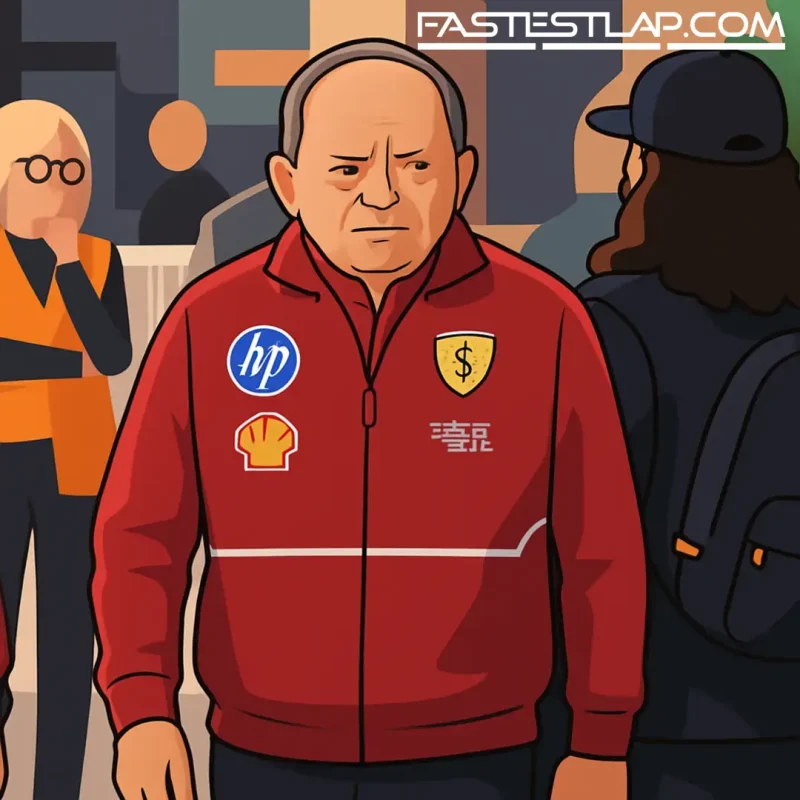
Vasseur warns: a Melbourne win in 2026 could be a trap, not a title omen
Ferrari may be counting down to the new era with the rest of the grid, but Fred Vasseur’s message is a cold splash of reality: don’t confuse the first punch with the knockout.
With Formula 1 about to flip the board in 2026 — new power units, active aero, lighter and narrower cars, and the end of DRS and the MGU-H — the Ferrari team principal isn’t buying the idea that whoever wins in Melbourne will automatically set the tone for the year.
“Whoever is ahead of everyone in Melbourne, at the first race, won’t necessarily have the winning car of the year,” Vasseur said, speaking to Italian media. That might sound like classic expectation management, but there’s hard logic behind it: the budget cap.
A new rules cycle is always a land grab. Be first with the concept, and you can rule the early months. But Vasseur’s warning is that, under the cap, the cost of going all-in on early upgrades — especially when you’re shipping complex floors and bodywork halfway around the world — can bite later. “If a team starts introducing four or five updates in the first races, or if – for example – they have to send a new underbody to a distant race like Japan or China, they’re burning through half their development budget at the start of the year. It will therefore be important to carefully evaluate step by step what to do, based on where we are.”
He’s not wrong. The 2026 regulations are designed to push teams into a constant trade-off between energy and aero. The power units move to an approximate 50/50 split between electric and internal combustion output, with overtake and boost modes replacing the DRS-assisted punch we’ve grown used to. Meanwhile, “active aero” will let drivers switch between configurations on straights and through corners. Minimum weight drops to 770kg, the cars get narrower, and the devil will live in software as much as in sculpted carbon.
In that context, the team that empties its upgrade clip in March might find itself throwing stones by Monza. Conversely, if someone nails a sweet-spot concept and is genuinely clear after round one, the onus might shift: spend less to defend, let everyone else torch their budget trying to catch up. It’s a knife-edge calculation — the kind technical directors now lose sleep over.
Ferrari will show its 2026 challenger on January 23, a few days before a behind-closed-doors shakedown at Barcelona. The name’s under wraps, as you’d expect. The form? Vasseur isn’t pretending he knows.
“I have no clue,” he admitted in Abu Dhabi at the close of last season. “All sport is a comparison. I can do a good job — if someone did a better job, I look stupid. We are focused on a project. We are developing the project, pushing at the limit, and trying to do the best. I don’t know if McLaren, Red Bull or Alpine is in front of us. This, nobody knows. The most important thing is not to spend time trying to understand if the others are in front or behind.”
That might read as cautious, but it’s an ethos Ferrari have increasingly adopted under Vasseur’s watch: fewer grand declarations, more iterative progress. In a rules reset as sweeping as 2026, restraint can be a competitive weapon. Get the architecture right, phase development sensibly, and stay nimble as the FIA and FOM inevitably tweak interpretations through the first half of the season.
The other quiet factor? Logistics. Shipping complex underfloors and re-profiled bodywork early in the year to long-haul races isn’t just expensive; it’s risky in a condensed production pipeline. One missed correlation, one batch that needs a rework, and you’re not only down on cap headroom, you’re behind on lead times with everyone watching.
None of this means Ferrari are aiming low. It means they don’t intend to win the first press release and lose the championship. With Red Bull, McLaren and Mercedes — plus hungry operators like Aston Martin and Alpine — all converging on the same blank sheet, the title may belong less to the team that sprints out of Melbourne and more to the one that times its second and third waves when the field converges.
For now, Ferrari’s focus is internal: get the car on track, validate the simulation, and resist the temptation to chase shadows. Melbourne will hand someone the trivia-night glory. The season, as Vasseur keeps reminding anyone who’ll listen, will be decided by how cleverly teams spend their money after they’ve unpacked the truck.