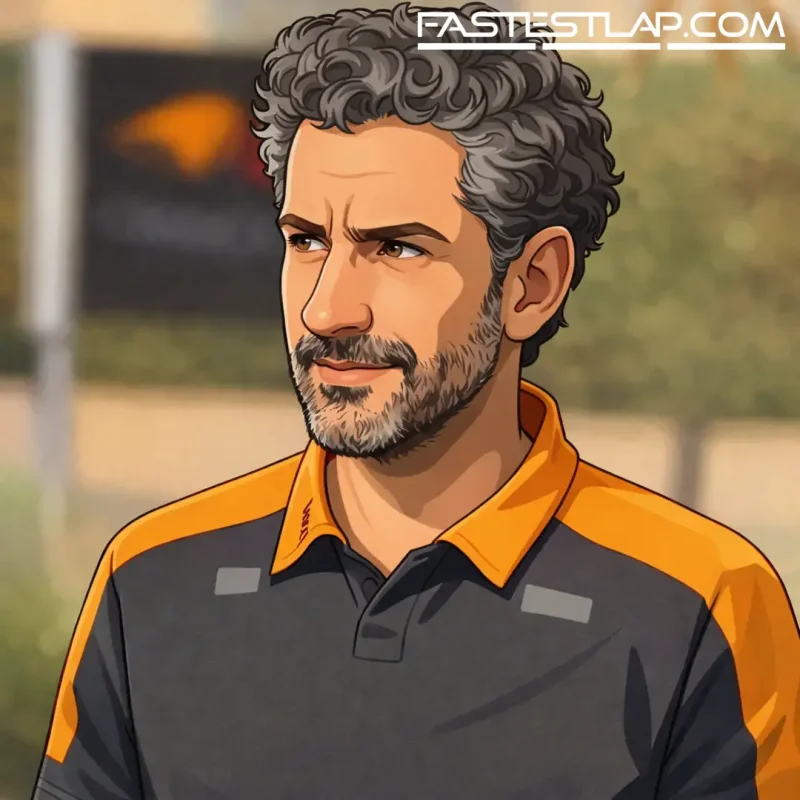
McLaren boss Andrea Stella has backed Formula 1’s push to tidy up the rough edges of its 2026 rules without turning it into another political knife-fight, insisting the paddock has a “sense of responsibility” to get any in-season tweaks right.
After the first few months of racing under the new regulations, team representatives have been in and out of meetings with the FIA and Formula One Management to evaluate what’s working — and what still feels a little too contrived behind the wheel. A final round of talks involving the teams, the FIA, FOM and the power unit manufacturers is scheduled for Monday, with April’s discussion cycle expected to produce the first concrete decisions.
The 2026 rule set, built around a new power unit split that effectively leans into a 50-50 balance between battery deployment and internal combustion, has delivered exactly what it promised on paper: a more complex energy picture and a very different set of constraints for drivers trying to string together a lap. The drivers can recover and deploy energy throughout the lap, but the early-season conversation has centred on whether the current framework is encouraging too much “management” — especially in qualifying — and creating moments where cars appear to hit an artificial ceiling at the end of straights.
One proposal on the table is to reduce the recharge limit per lap. That would slow lap times, but the attraction is obvious: it could make the driving feel less like a constant exercise in maximising the energy budget and more like a straightforward hunt for performance. Another option discussed is increasing the so-called super clipping harvesting rate to 350kW, aimed at reducing the duration of those end-of-straight speed bleeds that have been a visual talking point since the new cars hit the track.
Stella, speaking via McLaren’s official channels, framed the debate as something bigger than a squabble over lap time deltas. His point is that F1 has to remember why it picked this direction in the first place — and why it can’t afford to lose the plot now that the sport is living with the consequences.
He referenced recent reminders from F1 CEO Stefano Domenicali about the origins of the regulations and the role the new power unit architecture played in securing the participation of major manufacturers. In other words: whatever gets adjusted from here needs to respect the foundations that brought the sport’s engine partners to the table.
“The car regulations were then defined around this PU architecture,” Stella said, “with the aim of making the cars lighter and more manoeuvrable,” while keeping safety and racing quality as non-negotiables.
That’s the tightrope. These rules were always going to be a demanding concept — on the teams’ side in terms of development, on the drivers’ side in terms of execution, and on the fans’ side in terms of understanding why a car sometimes looks quick one moment and oddly constrained the next. Stella argued the sport shouldn’t duck that complexity, but it also shouldn’t pretend everything is perfect simply because the change was difficult.
And in an interesting twist, his tone wasn’t defensive. If anything, he sounded like someone who thinks the sport has earned the right to be pragmatic.
Stella pointed to the early indicators that, from F1’s perspective, the product is landing: fan approval ratings across the first three races were said to be higher than in 2025, with sell-outs in Melbourne, Shanghai and Suzuka, and TV audiences up by double-digit percentages — between 20 and 30% — according to figures shared with the teams.
But he also acknowledged what McLaren has been saying since testing: there are areas that can be improved. The key, in Stella’s view, is that the sport is trying to solve them collectively rather than letting the process collapse into factions.
Crucially, the drivers are in the loop. A recent meeting between the FIA and the driver group is understood to have been a positive step, and Stella made a point of calling them “the stars of this sport” — not a throwaway line in a year where the cockpit experience is shaping the conversation as much as the stopwatch.
His two priorities were telling. One was ensuring that “driving flat-out in qualifying” is properly rewarded — a nod to the suspicion that the current energy targets can incentivise preparation and compromise rather than pure commitment. The other was safety, specifically around starts and close racing, where any new performance envelope inevitably exposes new risk areas.
None of this points to wholesale changes mid-season, and nobody in the paddock is pretending the cars will suddenly be “fixed” with one tweak. But the direction of travel is clear: F1 wants to reduce the moments that look and feel manufactured, without ripping up the architecture that underpins the 2026 era.
Stella’s closing message was essentially a warning — softly delivered — that this only works if the sport behaves like an ecosystem rather than a collection of competing lobbyists.
“We will meet with the FIA and F1 to decide how to implement these potential adjustments,” he said. “In any case, the sense of responsibility and spirit of collaboration that everyone is demonstrating represent the best response that Formula 1 can give at this moment.”
Monday’s meeting won’t settle every argument, but it should tell us something important: whether 2026 becomes a year where the stakeholders protect the big idea and refine the details — or a year where the details become the story.