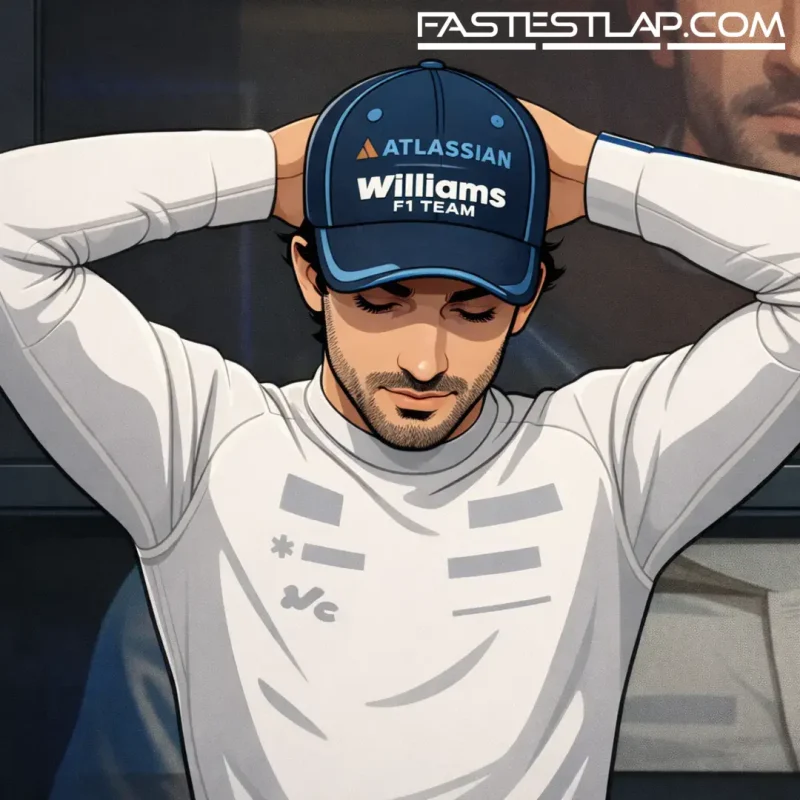
Carlos Sainz didn’t come to Williams for an easy ride, but even by his standards the first weeks of 2026 have landed with a thud.
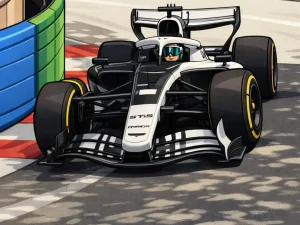
Three grands prix into Formula 1’s reset, Williams has just one top-10 to show for it. The FW48 has arrived overweight and short on downforce — the sort of twin hit that turns “we’ll develop into it” optimism into a triage exercise. And, inevitably, once a team starts a season chasing fundamentals rather than lap time, the paddock’s favourite game begins: who blinks first?
The line doing the rounds is simple enough. If Max Verstappen were to walk away from Red Bull, would Sainz be the obvious, experienced pair of hands to steady the ship? Former F1 driver Riccardo Patrese isn’t convinced it would be any kind of upgrade — and his warning is pointed: the move could “be maybe even worse” than what Sainz is living through at Grove.
It’s not hard to see why the idea has traction. Sainz has pedigree, he’s broadly admired inside teams for how he works, and he’s already proved at Williams that he can drag a project upwards. Last season — his first after being released by Ferrari to make room for Lewis Hamilton — Williams put together its second-best campaign since 2017, finishing fifth in the constructors’ standings on 137 points. It felt like a team with a plan, and a driver who could execute it.
That context matters, because 2026 was supposed to be the clean slate. Instead, Williams has stumbled out of the blocks despite running Mercedes power that had been talked up as the benchmark of the new era. The only points so far have come through Sainz’s ninth in China — a race that became a survival exercise, with four non-starters (including team-mate Alex Albon) and three more retirements during the grand prix.
Sainz has been frank about how abruptly the floor dropped away. Speaking in Japan, he admitted the competitiveness slump had been a “shock” not just for him but for the whole organisation — James Vowles included — and, tellingly, said he’d sensed trouble brewing long before the first lights went out.
“I could already smell it coming in December, January,” Sainz said, describing internal conversations around delays and missing targets. He talked about not arriving at the first test carrying too much weight — a brutally literal way to start a new rules cycle on the back foot. And while he’d expected a bump somewhere on Williams’ trajectory, he conceded this one has been “big, probably even bigger than what I expected.”
That’s the driver’s side. The career side is trickier, because the conversation around Sainz’s future tends to be framed as though an exit is a simple act of will. It rarely is.
Patrese’s take is that Sainz can be unhappy — even justified in being unhappy — and still find the market basically closed. Looking ahead to 2027, he sees no obvious openings at the current front-runners. Mercedes, Ferrari and McLaren are effectively locked in unless something genuinely unexpected happens. And while Red Bull is the romantic option in a Verstappen-shaped vacuum, Patrese questions whether it would be swapping one headache for another — or something worse.
His argument, in short: if Red Bull is in the middle of upheaval, and “losing all the key people”, why jump into that when Williams has at least shown recent evidence of a functioning rebuild?
It’s a blunt assessment, but it also speaks to the broader reality of modern F1: you don’t just choose the fastest car anymore — you choose the most stable organisation. And stability isn’t something Red Bull can be assumed to have if the Verstappen question ever becomes real. Losing the sport’s ultimate reference point in the cockpit would be destabilising enough. Combine that with any internal churn and you’re suddenly not picking between lap times; you’re picking between projects.
For Sainz, the irony is that he may have more leverage at Williams than he would in the heat of a Red Bull reshuffle. At Grove he is clearly central: he scored the points, he’s the most experienced benchmark, and he has the credibility to demand that the team “level up” because he’s already shown what he can add when the car gives him something to work with.
None of that makes the present any prettier. An overweight car is a season-long tax, and a lack of downforce is the kind of core performance deficit that doesn’t disappear with a clever rear wing tweak. Williams will insist it can recover once upgrades arrive and the enforced break has allowed them to regroup — Patrese himself hinted the end of the month would be revealing. But in the early phase of a new technical era, you can’t buy back time you’ve already spent.
Sainz, though, has never been a passenger in his own story. He’s too pragmatic for that, and he understands better than most that F1 careers aren’t defined by the bad months — they’re defined by what you do in them. Right now, the job is unglamorous: keep the team pointed at the right problems, turn frustration into direction, and make sure this “big bump” doesn’t become a dead end.
As for the Red Bull chatter, Patrese has offered the sort of advice that tends to get dismissed until it turns out to be right. In 2026, the grass isn’t just greener on the other side — sometimes it’s still being laid.