Formula 1 is heading back to Istanbul Park in 2027, with the championship confirming a five-year agreement that will keep the Turkish Grand Prix on the calendar through 2031.
It’s a return that’s been simmering in the background ever since Turkey’s brief, chaotic reappearance during the Covid-hit seasons of 2020 and 2021. Those events didn’t just fill gaps in a disrupted schedule — they reminded everyone what this place does when F1 turns up: it produces drama, usually the hard way.
Istanbul Park’s story in F1 has always been a bit untidy. The circuit arrived with a bang in the mid-2000s as one of Hermann Tilke’s standout designs, largely because Turn 8 quickly became a calling card — the kind of long, loaded corner drivers talk about with genuine enthusiasm rather than contractual obligation. But its original run didn’t last. Financial strain and finger-pointing between organisers and Formula One Management saw it fall off the calendar, with Turkey arguing the hosting fee was too steep and FOM countering that the race wasn’t being promoted well enough.
Then came 2020, when normal rules stopped applying across sport. Turkey stepped up as part of an expanded, improvised calendar — and promptly hosted one of the strangest modern grands prix weekends. A freshly resurfaced track and heavy rain turned the circuit into what was widely described as an “ice rink”. It was messy, unpredictable and, from a fan perspective, irresistible. The following year brought its own logistical chaos: travel restrictions meant the event was moved, then dropped, then added back again. Istanbul Park didn’t just rejoin the calendar; it kicked the door in.
That unpredictability is precisely why this deal feels significant. A one-off return is nostalgia. A five-year contract is intent.
The announcement was made jointly by Formula 1 and Türkiye’s president, Recep Tayyip Erdoğan, who framed the deal as a statement of national sporting ambition as much as a race promotion. “The return of the Turkish Grand Prix to the Formula 1 calendar is a victory for Türkiye’s passion and belief in sport,” Erdoğan said. “The Formula 1 races to be held at Istanbul Park for five years will support İstanbul’s leading position in the world.”
F1 CEO Stefano Domenicali and FIA president Mohammed Ben Sulayem were also present for the moment, underlining that this wasn’t just a calendar note buried in an end-of-season press release — it was a set-piece.
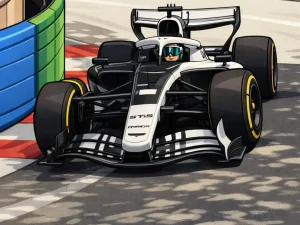
And like any modern set-piece, it came with tyres, noise and a crowd. There was a demo run from Yuki Tsunoda, with the Red Bull reserve driver taking his car away from the circuit itself and into the city, running between Galataport and Dolmabahçe along the Bosphorus line on the European side, through the stretch between Karaköy and Beşiktaş. Tsunoda’s run ended with him meeting Erdoğan, Domenicali and Ben Sulayem — an image that tells you everything about how hard Turkey is leaning into the return.
For F1, Istanbul Park’s appeal isn’t complicated. The racing can be properly demanding here, the layout has genuine character, and it offers a different sort of challenge to the polished, purpose-built venues that increasingly define the calendar. It’s also a circuit with a reputation: if the weather gets involved, or if track conditions change, it has form for turning strategy into guesswork and turning the competitive order on its head.
That doesn’t guarantee chaos every time, of course. But Istanbul Park has never been a place you pencil in as routine — and a long-term deal suggests F1 is happy to bank some of that edge.
The Turkish Grand Prix will next be staged in 2027. After that, it’s set to become a familiar fixture again — not as a last-minute stand-in, but as a planned stop with staying power.