Miami’s upgrade sheet always tells you two stories at once: who’s found something worth rushing onto the car, and who’s decided the best performance gain this weekend is simply not making a mess of what already works.
With the calendar throwing up an unexpected breather before the paddock rolled into Florida, most teams have used the extra factory time exactly as you’d expect. The Miami Grand Prix is a sprint weekend again, so there’s precious little meaningful track time to validate new parts — yet the list published ahead of the sole practice session is still packed. That alone hints at how aggressive the 2026 development race has already become.
McLaren has arrived with the sort of package that screams “this is a concept step, not a trim change”. Seven updates are declared, and the spine of it is a completely new floor. The team’s framing is familiar — more load, more efficiency, “across all conditions” — but the knock-on parts matter just as much: revised front and rear corner furniture, tweaks around the coke/engine cover furniture, and a redesigned sidepod inlet, all aimed at cleaning up and conditioning the flow the new floor wants to see. They’ve also brought a new rear wing with revised elements and endplate geometry for an overall gain in load and efficiency. Only one item is circuit-specific, a sidepod louvre option that can be opened up if Miami’s heat forces their hand on cooling.
Mercedes, still the reference point in the opening phase of the season, is travelling notably light. Two changes make the list. One is a tailpipe rotation away from the upper wing to sharpen local drag and downforce response — the sort of marginal gain that matters when your baseline is already strong. The other is on the front corner: an increased front drum lip chord intended to reduce local losses and improve flow quality to the rear. In other words, Mercedes is in “refinement, not reinvention” mode.
Red Bull sits closer to McLaren in volume, with six performance-focused updates plus a reliability-related revision on the front corner ducts. Aerodynamically, there’s a clear emphasis on flow conditioning: revised sidepod inlet and mirror support geometries, a new coke/engine cover with altered cooling exits, and a reworked floor aimed at extracting more load while keeping downstream stability — a key phrase when teams are fighting ride-height sensitivity and inconsistent balance. They’ve also touched the front wing, rear corner and rear wing for local load improvements, and the most eye-catching line item is the addition of a ‘Macarena’ wing in the Ferrari mould. It’s the kind of part that can look like a copycat in isolation, but in reality tends to be a sign that everyone is converging on similar solutions to the same regulation and packaging constraints.
Ferrari, though, is the team that’s swung the biggest hammer: 11 upgrades, the largest declared haul of the field. The wording in their submission reads like a coordinated aero re-optimisation rather than a scattergun parts drop. Updates to the front wing endplate and front corner are described as working “hand-in-hand” to stabilise flow features and manage front wheel wake across the operating envelope — essentially, trying to make the car less peaky. With that upstream tidied, Ferrari says it’s re-optimised the front floor geometry and devices for a net load gain, then developed the rear floor and diffuser for more load “across the full operating window”. There’s also a rear trackrod fairing update and rear tail devices intended to generate a favourable pressure gradient for the diffuser efficiently. Add in flow-conditioning changes around the front corner, front suspension and beam wing, plus a rear wing revision aimed at drag reduction while still increasing cornering load, and it’s clear Ferrari is trying to change the car’s behaviour, not just add downforce.
Williams has quietly put together one of the more comprehensive packages: seven performance upgrades that touch almost every external surface group. The floor gets refined contours and updated edge/interface details, the sidepod inlet and internal transitions are reshaped to suit new packaging, and the engine cover/coke region and cooling exits are revised for updated internal routing. Mirrors are reshaped and repositioned to match new hardpoints, there’s a new bracket behind the tailpipe within the permitted volume, and there are revisions around the rear impact structure fairings and brace interfaces. The declared aim is a three-pronged gain: floor aero, cooling capability, and rear flow quality. That’s the sort of “infrastructure” update that can pay off over multiple races if the correlation is right.
Racing Bulls has six changes, mainly flow-conditioning items around the rear corner, suspension and endplate. Their rear wing gets new mainplane and flap profiles to increase load through camber and incidence changes, tuned for Miami’s demands. There’s also a circuit-specific front wing option — a shorter chord flap that allows a lower aero balance range — which sounds like an attempt to keep the car in its sweet spot without forcing an uncomfortable setup compromise.
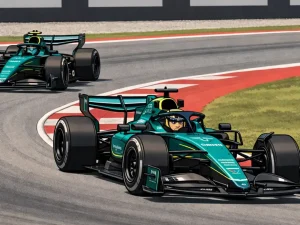
Aston Martin is the outlier: no updates declared at all. On a weekend where even the front-runners have tinkered, bringing nothing is a statement in itself — whether that’s discipline, delay, or simply a team choosing not to spend tokens of confidence on a sprint-format roll of the dice.
Haas has a single upgrade, a floor winglet device designed to increase local downforce by altering pressure distribution and flow behaviour around the element. It’s small on paper, but those targeted floor changes can be surprisingly valuable if the car has a specific weakness in a particular phase of the corner.
Audi has two updates: a front suspension change featuring a new front brake duct and suspension leg covers to improve flow conditions, and a new floor edge and diffuser shape to increase efficient rear aero load. That’s a neat, classic pairing — tidy the front, cash it in at the back.
Alpine lists six aero changes across front camera, rear suspension, rear impact structure, rear wing and endplate, with an interesting detail: an adjustment to the nose camera mount specifically to improve local flow management. More significantly, Alpine has also introduced a new chassis for Franco Colapinto as part of its intended development programme, and accelerated a new rear wing by one race thanks to the calendar gap — though only one example of that wing is available in Miami, shipped from Enstone midweek. Pierre Gasly is set to run and test it in Friday’s extended FP1.
And then there’s Cadillac. F1’s newest team isn’t tiptoeing: nine upgrades aimed at flow conditioning and local load, including front wing endplate and flap changes, mirror relocation to help rear load, floor updates and revised diffuser geometry to increase rear floor load and reduce ride-height sensitivity. They’ve also improved the rear spine and corner to raise flow quality, plus an exhaust geometry revision intended to improve local aero load and the characteristics of rear load. That’s an ambitious checklist — the kind of push you make when you’re still defining what your “normal” performance level looks like week to week.
Miami, with its sprint constraints and its unforgiving habit of exposing balance quirks, isn’t always the cleanest place to debut big aero swings. But the paddock has spoken with its CAD departments: in 2026, standing still for even one fortnight already looks like the bigger risk.