Miami weekend tends to do strange things to the Formula 1 news cycle. Between the heat, the hype and the paddock’s habit of talking about anything except what’s actually happening on track, Saturday’s headlines landed in that familiar sweet spot: a little bit of politics, a little bit of paddock gossip, and a reminder that the wider motorsport world doesn’t pause just because F1’s in town.
Start with Juan Pablo Montoya, who’s never been short of an opinion and isn’t about to soften with age. While plenty of drivers and fans are still side-eyeing the 2026 rule reset, Montoya has come out swinging in favour of it — and he’s done it by taking a pretty blunt run at one of the sport’s most mythologised periods.
With the FIA president talking up a potential return to V8s with far less electrical contribution, Montoya’s view is that nostalgia’s doing a lot of heavy lifting. His verdict on the old V8 era? “So boring.” That’ll irritate some, but it’s also classic Montoya: he’s not interested in the romance of engine notes if the racing itself doesn’t deliver. And in a week where the debate around 2026 has drifted from engineering detail into something closer to culture war, his point cuts through — maybe the question isn’t what the cars sounded like, but whether the racing product moved forward.
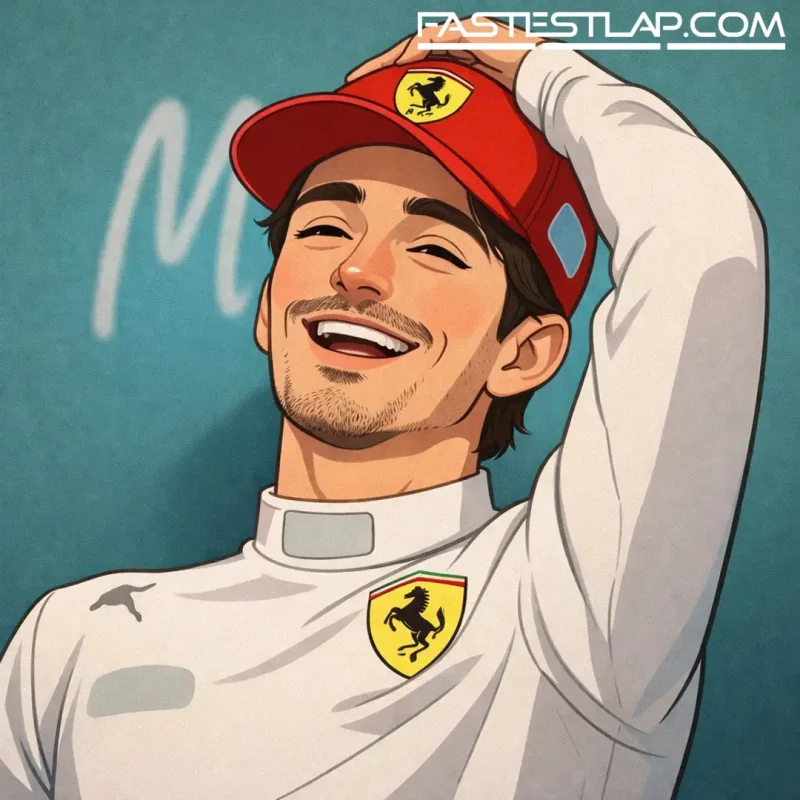
If Montoya was lighting a match under the regulations discussion, Charles Leclerc was doing what F1 drivers do when the cameras aren’t on the debrief room: living a life that only makes sense if you’re used to measuring purchases in seven figures.
Leclerc, still very much one of Ferrari’s centrepieces in 2026, has reportedly decided one yacht simply doesn’t cover the brief, splashing out on a second one for an eye-watering €11 million. It’s an almost comically Miami story — the sort of thing that makes its way around the paddock with a raised eyebrow, then gets shrugged off because, well, it’s Monaco in a Ferrari contract. There’s no deeper sporting meaning here, but it does underline the strange duality of modern F1: the same weekend everyone is fretting about electrical deployment and power unit philosophy, one of the grid’s biggest names is casually expanding a floating portfolio.
Away from the South Beach bubble, Mick Schumacher offered a reminder that careers don’t neatly end when F1 moves on. Over in IndyCar at Indianapolis, Schumacher’s practice lap of 1:10.7904 quickly drew attention — not just because it was quick, but because the number instantly sparked comparisons to a lap his father Michael set at the venue back in 2002.
Any Schumacher-at-Indy stat line was always going to trigger the sport’s memory banks, and you can bet the comparison did the rounds within minutes. The useful takeaway, though, isn’t the romance of the family name; it’s that Mick continues to look increasingly settled in a series that asks very different questions of a driver. IndyCar is unforgiving, the margins are tight, and the cars don’t flatter you. A headline lap time won’t define his season, but it’s another marker that he’s building something rather than just auditioning for attention.
Back in F1-land, the Verstappen speculation refuses to die — and if anything, the paddock’s favourite parlour game has just gained an unexpected twist. David Coulthard has weighed in on where Max Verstappen might go if he ever decides Red Bull is no longer the move, and he’s suggested Ferrari would make more sense than Mercedes.
That’s the kind of comment that lands because it’s both provocative and, in its own way, logical. Mercedes is the neat, corporate fit; Ferrari is the one with the gravitational pull. If you’re Verstappen and you’re thinking about legacy rather than simply the next contract cycle, the idea of doing it in red will always carry a different weight — even if it comes with the unavoidable baggage of expectation, politics and the fact that Ferrari never really feels like it belongs to any one driver for long.
And then there’s McLaren quietly tending to its future. Leonardo Fornaroli, currently their reserve, has been described as a “hidden gem” by his former Invicta Formula 2 boss James Robinson — praise that carries extra punch because Fornaroli did something that still turns heads in the junior ladder: winning the F2 title as a rookie. Robinson has made it clear he’d love to see him on the 2027 F1 grid, and it’s easy to understand why McLaren would want to keep that kind of asset warm.
The subtext, as ever, is that McLaren’s driver decisions are rarely about talent alone. Timing matters. Seats are scarce. And the team has been ruthless in the past about choosing the line that best serves its competitive cycle. But if you’re a young driver looking for the next opening, this is how the groundwork gets laid: the right people start talking about you in the right way, long before the contracts are even on the table.
Put it all together and you get a very 2026 Saturday: the rules debate getting spicier, the silly season humming in the background, a Ferrari driver buying something absurd, and a reminder that F1’s orbit is wider than the 20 cars that line up on Sunday. In Miami, that somehow counts as a quiet day.