Max Verstappen’s opening-lap moment at the 2026 Miami Grand Prix lasted a couple of seconds, but the argument it’s sparked has had rather more staying power.
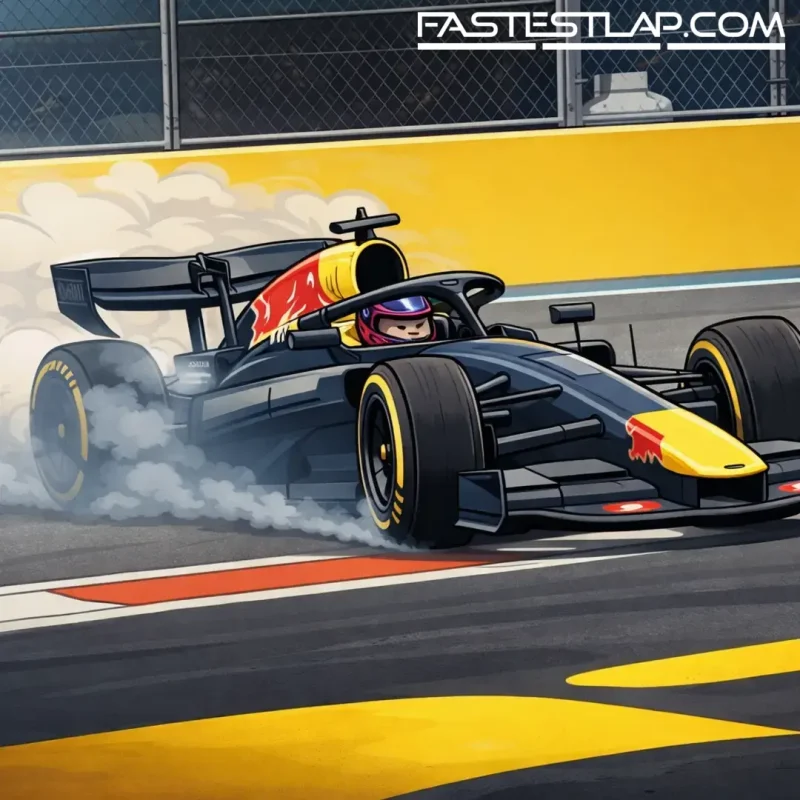
Pinned between Kimi Antonelli and Charles Leclerc on the run to Turn 1, Verstappen ended up riding the kerb, lighting up the rear and rotating through a full 360. The Red Bull didn’t spear into traffic, didn’t collect anyone, and — crucially — ended up pointing the right way with enough momentum to keep him in the thick of it. By the end of the first lap he was still inside the top 10. In a race where track position and tyre age would become everything, that mattered.
It also became a neat litmus test for how people read Verstappen: as a driver who can bend chaos to his will, or as someone who occasionally gets away with one and makes it look inevitable after the fact.
Martin Brundle falls firmly into the first camp. In his post-race column, Brundle framed the incident as an uncharacteristic error followed by a very characteristic recovery — the quick hands and the calmer-than-it-looks modulation that separates “spin” from “career-limiting accident” when you’re in the middle of a pack.
Brundle’s point is simple: in a modern F1 car, heavy with fuel at the start and with the rear tyres not yet fully in their operating window, a rotation like that is usually the prelude to a pirouette into the path of someone who has absolutely nowhere to go. Saving it isn’t just about catching a slide; it’s about managing the car’s rotation so it doesn’t *stop* in the wrong place. The outcome — still rolling, still aligned, still racing — is the whole story.
Juan Pablo Montoya isn’t buying it. On the BBC Chequered Flag podcast, he labelled the recovery “pure luck”, essentially arguing that the aesthetics of a clean 360 are being mistaken for control. There’s a fair provocation buried in there: motorsport has always been guilty of myth-making, of upgrading survival into intent because it looks good at full speed.
But Miami’s first lap wasn’t an isolated GIF; it was the opening scene of Verstappen’s entire afternoon.
After an early safety car, Verstappen pitted and, through the reshuffle, found himself leading for a spell. It didn’t last. Antonelli and Lando Norris arrived with fresher rubber and more pace, and they both got through despite Verstappen doing what Verstappen does: making the other guy finish the move properly, from a long way back, with no half-measures accepted.
Later, Oscar Piastri, Leclerc and George Russell also passed him as the race wore on. Verstappen kept fighting, even as the situation turned against him. One Turn 1 exchange with Russell ended in contact and front-wing damage for the Mercedes driver. The stewards reviewed it and decided no further action was required — a verdict that, depending on your view of Verstappen’s racecraft, either underlined hard-but-fair combat or confirmed the sport’s tolerance for elbows-out defence.
Norris was blunt afterwards, suggesting Verstappen “ruined his own race” by defending so aggressively on older tyres. Montoya, again, zoomed out to the strategic consequence rather than the moral one: once you’re on a tyre offset and the faster cars are arriving in pairs, every extra corner you spend in a battle invites the next car into DRS range. At that point, the heroic defence becomes self-harm — not because it’s wrong, but because it’s expensive.
That’s the more interesting subtext to the Brundle vs Montoya split. They aren’t really arguing about whether Verstappen’s hands were quick enough to tidy a spin. They’re arguing about whether Verstappen’s way of racing is a net gain when the car isn’t the class of the field.
In previous seasons, Verstappen’s stubbornness often came with a safety net: raw pace. In Miami 2026, Red Bull didn’t look like it had that luxury. Verstappen still dragged the car to fifth — his and Red Bull’s best result of the season so far — but it came via a day of improvisation, defence, and damage limitation rather than dominance.
And that’s why the Turn 1 spin has become such a talking point. If you believe Brundle, it was a flash of genius that kept Verstappen’s race alive. If you lean towards Montoya, it was fortune smiling — and the bigger story is what came after, when Verstappen’s refusal to yield politely to faster cars arguably cost him the chance to consolidate something better.
Either way, Miami offered a reminder that Verstappen remains F1’s great disruptor. Even on a day when he spins, even on a day when the car can’t simply drive away, he still sets the terms of engagement. The paddock can keep debating whether the 360 was artistry or accident — the grid, as ever, still has to deal with him.