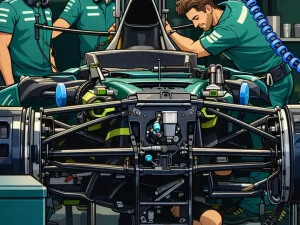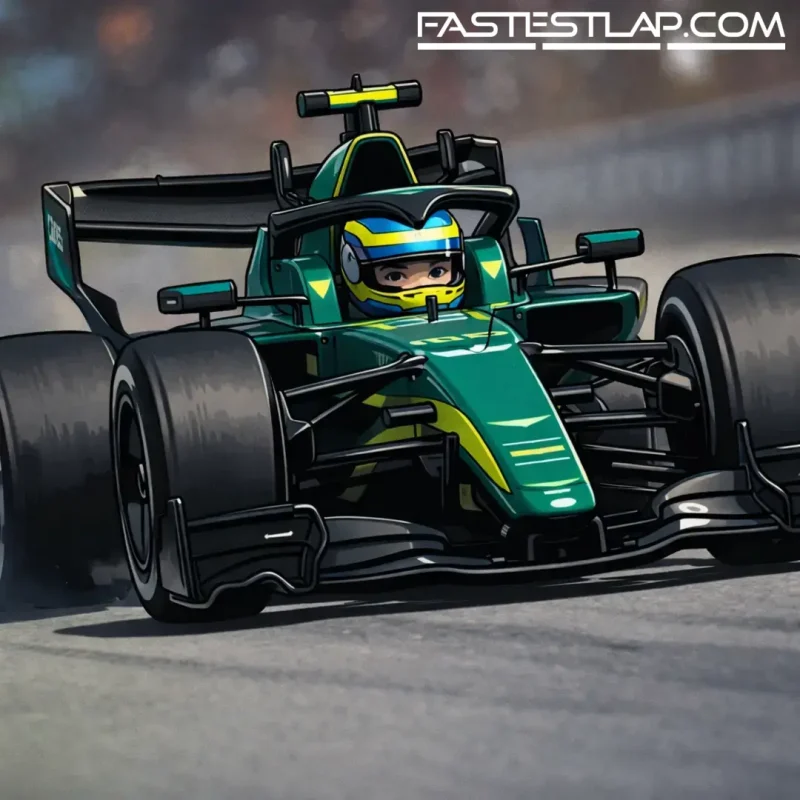
Aston Martin’s 2026 season has quickly become a study in how painful a new-era marriage can be when you’re trying to build everything at once: a car concept, a power unit integration philosophy, and a working culture between two organisations that haven’t had to solve problems together in real time for years.
Honda is planning to bring an internal combustion engine upgrade for Aston Martin at some point over the summer, but the message from Tokyo is clear: don’t expect a miracle lap time injection that flips the pecking order overnight. Honda Racing Corporation president Koji Watanabe has been unusually blunt about it, warning that the update “will not dramatically change the situation overnight” and stressing that the approach remains long-term.
That realism is probably healthy, because the scoreboard is ugly. After the opening stretch of the new regulations, Aston Martin has just a single point to show for it — Fernando Alonso’s Monaco result — and Barcelona was a low point, with the team ending the weekend as the slowest outfit on pure pace. The car has looked nervous and underwhelming across a range of conditions, and the team has been forced into the kind of damage limitation weekends that drain confidence as quickly as they drain tyre life.
What’s made Aston Martin’s predicament even more intriguing is that it’s been, to a degree, self-inflicted — at least in the short term. The team has chosen to resist the temptation to sprinkle small upgrades onto the AMR26, instead committing resources to a major package timed for later in the season. It’s a big swing, and it’s a decision tied closely to Adrian Newey’s influence. The logic is familiar: if the baseline isn’t good enough, you don’t waste precious windtunnel runs and development hours polishing the wrong concept.
The trouble is that this is 2026, a regulation reset where everyone is learning, and the new power unit landscape is unforgiving. Honda’s own explanations point to just how much has changed. The current rules demand a near 50/50 split between electrical and internal combustion power, and Watanabe described it as a “difficult” regulation set — the kind where gains are not simply about bolting on more performance, but about orchestrating systems to behave as one.
And for Honda, it’s not just the rulebook that’s different. Watanabe has pointed out that this Aston Martin project is “fundamentally different” to the Red Bull relationship that delivered two constructors’ championships and four drivers’ titles for Max Verstappen. That’s not a throwaway line. With Red Bull, Honda spent years building a rhythm of decision-making, escalation paths, and shared understanding about what matters on a race weekend. Aston Martin is still trying to form that muscle memory.
There’s also an unmistakable undertone of rebuilding on Honda’s side. Watanabe acknowledged that the company’s previous withdrawal from F1 left a mark: recovering from that delay “has taken time”, and a late development start — plus the task of rebuilding capacity and pulling back key talent — has been a “significant factor”.
That context matters when you look at the FIA’s new ADUO system (Additional Development Upgrade Opportunities), which governs what manufacturers are allowed to change. Honda has qualified for the maximum two ICE upgrade opportunities after the first assessment, and it’s one of the few tangible signs that there is headroom to claw back. But headroom doesn’t guarantee headline numbers, and Watanabe’s comments read like an attempt to protect the partnership from the worst instinct in Formula 1: to believe that one update can cure structural problems.
Aston Martin, meanwhile, is dealing with the uncomfortable optics of a team that talked up its future, hired the sport’s most famous designer, moved into a state-of-the-art facility, and yet has started a new era on the back foot. Even within the organisation, there’s been an admission of surprise. At the season-opening Australian Grand Prix, Newey said the team hadn’t fully appreciated Honda’s struggles — and what he framed as a reduction in F1 experience — until a meeting in Tokyo last November. That sort of comment doesn’t come out unless the early integration has been rough.
Still, both sides are publicly committed to riding out the turbulence. Watanabe described the partnership as “quite new” and said it takes time to build strength. He also highlighted regular communication with Lawrence Stroll, calling the dialogue “honest” and suggesting it’s helping reinforce confidence rather than erode it. Given the scale of Stroll’s investment — a new factory, simulator and windtunnel among the headline projects — the politics of reassurance matter. This isn’t a customer team arrangement where you shrug and wait for the next engine spec; Aston Martin’s whole identity for this era is built around the idea that it’s finally become a proper works operation.
Inside the team, there’s an effort to keep the Newey gamble insulated from the week-to-week misery. Mike Krack has recently reiterated that Aston Martin still backs the approach and described Newey as a “strong leader”. That’s the party line, but it’s also a signal: the team knows the easy narrative is that Newey arrived and things got worse. The harder truth is that the AMR26 and the new Honda package are part of a wider reset, and the pain was always most likely to show up early, before the big pieces start to align.
The summer, then, is shaping up as Aston Martin’s first real referendum on its strategy. If Honda’s ICE upgrade lands around the same time as the car’s major chassis package, it could at least change the team’s weekends from survival exercises into something more purposeful — not a leap to the front, but a return to the midfield fight where development feedback becomes cleaner and morale stops fraying.
But Watanabe is right to keep expectations grounded. In this era, the gains aren’t just in the shiny new parts; they’re in the calibration, the operational sharpness, and the shared language between Brackley and Sakura. Aston Martin and Honda are still learning how to finish each other’s sentences. Until they do, no upgrade — however important — is going to feel like a reset button.