If you want a neat snapshot of where Formula 1 is in 2026, you could do worse than Tuesday’s scattershot of headlines: a $11.7m hypercar in Monaco, a supposedly “soul destroying” upgrade debrief at Ferrari, and two separate world champions openly pining for something the current cars aren’t giving them.
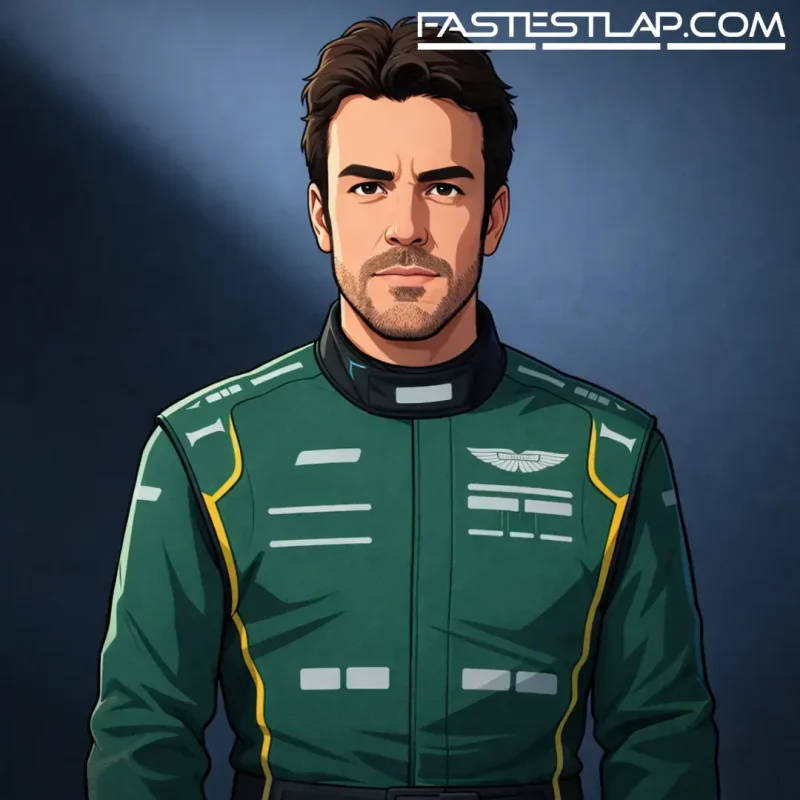
Start with Fernando Alonso, because of course it starts with Alonso. The Aston Martin driver — now deep into his fourth full season at the team — was spotted in Monaco in a Pagani Zonda Roadster Diamante Verde with a reported price tag of $11.7m. It’s the sort of purchase that doubles as a reminder: Alonso remains one of F1’s most enduring characters, still present, still relevant, and still operating on his own wavelength as he edges toward his 45th birthday in July.
There was an extra sting in the date, too. May 12 marked 13 years since Alonso’s last grand prix win, the 2013 Spanish GP for Ferrari. In any other era that would read like a closing chapter; in this one it’s more like a strange footnote to an ongoing career that refuses to behave as expected.
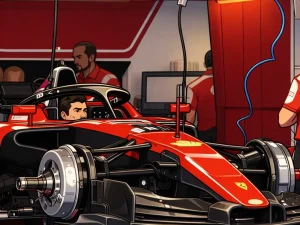
Ferrari, meanwhile, had less room for romance. Rob Smedley, who knows the Scuderia’s internal temperature better than most after his time there, described the mood around Ferrari’s Miami upgrade package as “slightly soul destroying”. That’s a pointed choice of words — not catastrophic, not terminal, but the kind that hints at a team bracing itself for the grim work of understanding why a big swing didn’t land.
The raw facts are uncomfortable enough. Ferrari arrived in Miami with no fewer than 11 new parts and still failed to reach the podium for the first time in 2026. Lewis Hamilton finished sixth, while Charles Leclerc ended up classified eighth after a post-race penalty. When you bring that much hardware and walk away with that little reward, the disappointment isn’t just in the points — it’s in what it does to belief, especially in a season where the margins are already tight and the top teams are constantly trading blows.
Miami also delivered one of those moments that only modern F1 can produce: Jimmy Fallon on the grid, first race, first taste of the circus, and somehow ending up biting Martin Brundle’s Sky F1 microphone. Fallon was there as a guest of Red Bull and Ford, filming content with Max Verstappen and Isack Hadjar, and Verstappen — never one to leave a straight line unpunched — apparently had a quip ready when Fallon played around with his surname. It’s not consequential, but it does underline how much of the sport’s public-facing identity now lives in these viral collisions between celebrity and competition.
More revealing, though, was the lingering theme of drivers searching for “fun” in places that aren’t their day job.
Lando Norris, the reigning world champion, called a recent Nürburgring outing in a McLaren 750S “the most fun I’ve had all year” — which lands as a joke only because the subtext is so obvious. Norris hasn’t hidden his discomfort with the 2026 regulations, even saying earlier this season it hurt his “soul” to find that the new cars reduced the challenge of Suzuka. Miami at least provided a sporting lift: his best result of the season so far, finishing second behind Kimi Antonelli’s race-winning Mercedes. But the bigger point is this: even when the results tick upward, Norris still sounds like a driver who doesn’t quite love what he’s driving.
That dissatisfaction isn’t isolated to one garage. George Russell also took a swipe — this time at the direction of F1’s engineering philosophy — by putting a return to V8s and lighter cars at the top of his wishlist for the next rules cycle. He’s hardly the first to argue that F1 has strayed too far into heavyweight complexity, but the timing matters because FIA president Mohammed Ben Sulayem has already hinted that V8 engines could be back as soon as 2030. The last time F1 used V8s was 2006-2013, before the switch to V6 hybrids reshaped everything from packaging to racecraft.
Russell’s comments read less like nostalgia and more like a statement about what drivers feel they’re missing: responsiveness, simplicity, and a car that rewards commitment rather than compliance. Put Norris’s Nürburgring line next to Russell’s V8 wish list and you get a pattern that should make F1 uneasy. When the grid’s biggest names are publicly daydreaming about different machinery — even as they’re fighting for wins in this one — it’s a sign the sport may need to think harder about the feel of what it’s selling, not just the numbers.
And that, ultimately, is Tuesday’s takeaway. Alonso can buy a one-off Pagani and still be the same relentless competitor he was a decade ago. Ferrari can bring 11 new parts and still leave a weekend feeling like it’s pushed the rock uphill for nothing. Verstappen can turn a grid-side comedy bit into a punchline. Norris can finish second and still sound like he’d rather be somewhere else driving something else. Russell can look down the road to 2030 and ask for the past to come back.
In 2026, the paddock is busy — but it’s also restless.