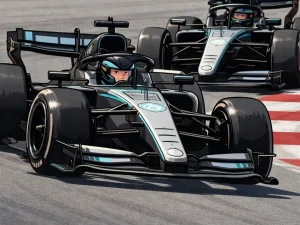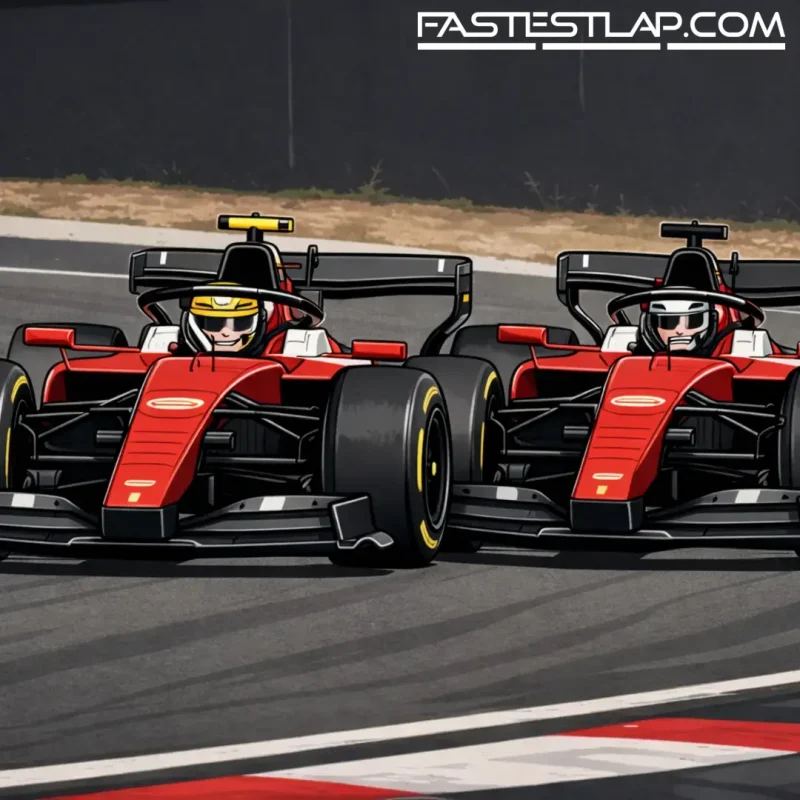
Ferrari’s early-2026 story has been sold as a chase: a famous newcomer, a homegrown talisman, and a car that’s quick enough to matter without quite being the benchmark. Four rounds in, though, the sub-plot is louder than the results sheet. Lewis Hamilton and Charles Leclerc aren’t just “pushing each other” in the polite, PR-friendly sense — they’ve already leaned on one another twice, and it’s starting to feel less like healthy competition and more like a warning light flickering on the dash.
Hamilton called the first contact in China “just a kiss”, the sort of throwaway line drivers use when they want to move the conversation on without conceding anything. It did, at least, end with a tangible upside for Ferrari: Hamilton emerged from that exchange and went on to take his first grand prix podium since joining the team last season.
Japan was sharper. Leclerc went at Hamilton for third, Hamilton came back at him, and the two cars made contact again. “We were very close,” Leclerc admitted afterwards, adding that he’d been scared of a puncture. Nothing terminal happened, which in Formula 1 often gets filed under “all good, then”. But that’s only true until the day it isn’t.
Fred Vasseur, publicly at least, has been relaxed about it. He’s praised both drivers’ professionalism and insisted it “makes sense” to let them race, even while acknowledging the obvious: the same decision can look “completely stupid half an hour later”. That’s a team boss talking like someone who knows exactly where this can go, but also knows Ferrari can’t afford to put either of them in a cage this early. The car isn’t dominant; the team needs points; and, perhaps most importantly, it needs belief.
The question is what happens when the stakes rise from a podium squabble to an honest-to-goodness title swing.
That was the theme on the F1 Nation podcast, where Tom Clarkson suggested the Hamilton-Leclerc pairing is the intra-team battle most likely to boil over. His reasoning wasn’t that Hamilton is reckless — “I’m not saying he’s dirty in any way” — but that his competitiveness is so relentless it can drag any situation towards the cliff edge if the margins are tight enough.
Jolyon Palmer didn’t just agree. He went a step further and aimed the spotlight at the pit wall rather than the cockpit: if Ferrari ever gives these two the fastest car, Palmer doubts Vasseur can actually contain what follows.
“There’s a bit of ego there as well,” Palmer said, pointing out the mindset required at the front. A seven-time champion alongside “a generational talent that hasn’t yet won one” isn’t merely a line-up, it’s a collision of self-image. Neither man is at Ferrari to be told he’s the supporting act. And neither will accept second place within the same garage if a title is on the table.
Palmer’s underlying point was blunt: team principals can talk about consequences, but they’re mostly theoretical once you’re in the fight. He reached back to Hamilton’s old Mercedes partnership with Nico Rosberg as the reference — a pairing that, famously, didn’t need external enemies to generate drama. After their 2016 Barcelona crash, there were musings about harsh punishments, even talk of benching drivers for a race. Palmer’s take is that these threats rarely survive contact with reality.
Because what, exactly, is the credible deterrent? You can’t rotate one driver out without detonating the other half of the garage. You can’t “make an example” when contracts, championships, sponsors and basic competitive sense all pull in the opposite direction. Once a team is genuinely in position to win, the levers a boss can pull are fewer than fans like to imagine.
For now, Ferrari can still frame this as constructive aggression. The SF-xx — whatever label you want to slap on the car — has been the second-best package behind Mercedes in the opening stretch, and that context matters. When you’re chasing rather than controlling, it’s easier to sell the idea that you’re letting your drivers scrap because you need every point you can steal. It’s also easier to convince yourself that small touches are simply the cost of racing hard in tight company.
But there’s a different dynamic brewing underneath. Leclerc is third in the standings after four rounds, 41 points behind championship leader Kimi Antonelli. Hamilton sits fifth, a further eight points back from Leclerc. That gap to the top gives Ferrari a shared target — for now. If Mercedes remains the class of the field, the internal fight can be tolerated as long as it doesn’t become self-harm.
The uncomfortable part for Vasseur is that the “for now” is doing a lot of work.
If Ferrari closes up to Mercedes, or if a run of tracks flips the competitive order, those China and Japan moments stop looking like harmless early-season exuberance and start reading like the trailer for a much messier film. Hamilton didn’t come to Maranello to play the experienced mentor, and Leclerc has spent too many seasons as Ferrari’s future to happily become anyone’s present-day number two. They’re both capable of insisting — in different ways — that the team should revolve around them.
Vasseur can talk about “building up a team” through open racing, and there’s logic in that: drivers who feel trusted tend to deliver. But trust is a fragile currency when the same two cars keep arriving at the same apex. Ferrari have had two “kisses” already. If the championship dream becomes more than just a slogan, the next one might not be so subtle.