McLaren CEO Zak Brown has gone straight to the top of the FIA with a request that’s as political as it is philosophical: Formula 1, he argues, needs to shut the door on any future scenarios where one ownership group can hold stakes across multiple teams — and it needs to take a harder look at the “strategic alliances” that can make competitors look a little too cooperative when it suits.
Brown has written to FIA President Mohammed Ben Sulayem urging formal discussions on how the sport can legislate against common ownership structures. The thrust isn’t presented as an attack on any single outfit, but it’s also not difficult to see why the issue has flared up again in 2026.
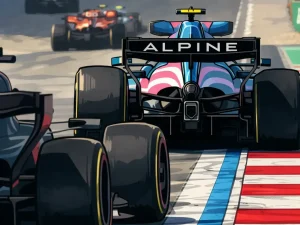
The backdrop is Mercedes’ interest in buying the 24 per cent stake in Alpine currently held by Otro Capital. Were that move to go through, it would inevitably amplify the perception of Alpine drifting into “satellite team” territory — particularly now that the Enstone squad is already a Mercedes power unit customer this season. Toto Wolff, for his part, has pushed back on that reading, insisting Mercedes has no desire to run a junior operation.
Still, Brown’s complaint isn’t really about labels. It’s about incentives — and the grey areas that open up when the competitive and commercial interests of two teams start to overlap.
He’s been consistent on this for years, and he didn’t soften his tone when asked recently about the Mercedes/Alpine talks.
“It applies to anybody and everybody… A/B teams, co-ownership… regardless of who it is, I frown upon it,” Brown said. “I don’t think it’s healthy for the sport. I think A/B teams, we need to get away from as much as possible, as quickly as possible.”
F1’s uncomfortable truth is that it already lives with an example of multi-team ownership. Red Bull’s complete control of both Red Bull Racing and Racing Bulls is long “grandfathered” in, a legacy from a very different era in the sport’s governance. That precedent is exactly why any new case would trigger a fresh round of arguments: once one new exception is tolerated, the dam is effectively breached.
Brown’s letter is understood to have highlighted where he believes integrity can be strained — not just in theory, but in practical race-weekend terms. He’s pointed to perceived moments of aligned interests: a driver from one team being used, intentionally or otherwise, to influence the outcome for another; the steady flow of staff between sister organisations; and the ease with which knowledge can migrate when two structures are closely tied.
In public, Brown has leaned on examples that have annoyed him for some time. Speaking last month, he referenced Daniel Ricciardo taking a fastest lap point away from McLaren while driving for Racing Bulls at the 2024 Singapore Grand Prix — a moment that fed the suspicion that “Team B” can end up shaping the points table in ways that don’t happen when ten truly independent operations are left to fight it out.
He’s also complained about the competitive asymmetry created by staff movement. When teams are unrelated, senior hires can be delayed by lengthy gardening leave, time that can blunt the impact of a poaching raid. In a tight alliance or shared-ownership scenario, Brown argues, the practical barriers look very different — and the cost-cap knock-on effects matter too.
Behind all that sits an anxiety that F1’s regulatory architecture isn’t built for “controlled competition”. The sport has always relied on a fairly simple premise: each entrant will act in its own self-interest across sporting, financial and technical domains. Start blurring those interests, and you don’t just invite suspicion — you invite lawyers, politics, and the sort of behind-the-scenes bargaining that can poison rule-making.
Brown, according to those familiar with the letter, wants two things. First, a prohibition on future co-ownership arrangements. Second, a more aggressive regulatory framework around existing alliances, with the explicit aim of stamping out A/B dynamics even when outright ownership links don’t exist.
It’s notable, too, that the Alpine situation carries brand baggage beyond the paddock. A Mercedes stake, coupled with Alpine now buying Mercedes power after Renault shut down its Viry-Chatillon power unit facility, risks reinforcing the narrative that the project has stepped away from being a full manufacturer effort — a story Renault and Alpine may not love hearing in the wider automotive marketplace.
Alpine executive Flavio Briatore confirmed during the Chinese Grand Prix weekend that negotiations between Mercedes and Otro Capital are happening. And Mercedes isn’t the only name circling the stake: former Red Bull boss Christian Horner is also believed to be interested as he plots a route back into the sport.
Ben Sulayem has, at least rhetorically, shown sympathy with the principle Brown is pushing. In Miami, the FIA president acknowledged the interest in the Otro stake is widespread and admitted multi-team ownership sits uncomfortably with him — even if the regulatory reality is messy.
He suggested there may be circumstances where it can be justified, but drew a line around motivations like blocking rivals from buying in or acquiring extra voting influence on regulations. Ultimately, Ben Sulayem framed it as a “sporting side” issue: lose the sporting spirit, and the support goes with it.
That’s the tension Brown is trying to force into the open. F1 has never been shy about pragmatism — it’s how the grid survives economic cycles — but it also sells itself on purity of competition. The more ownership and alliances start to look like a web, the harder it becomes to ask fans, rivals and sponsors to trust that every on-track decision is made for only one team’s benefit.
What Brown is really doing here is challenging F1’s leadership to decide what it wants the championship to be in the long run: a marketplace of independent competitors, or a managed ecosystem where some teams naturally orbit others. Either model can function. Trying to pretend you can have both is where it gets ugly.