Christian Horner might be out of the Red Bull pitwall seat, but he’s not exactly doing the post-F1 disappearing act.
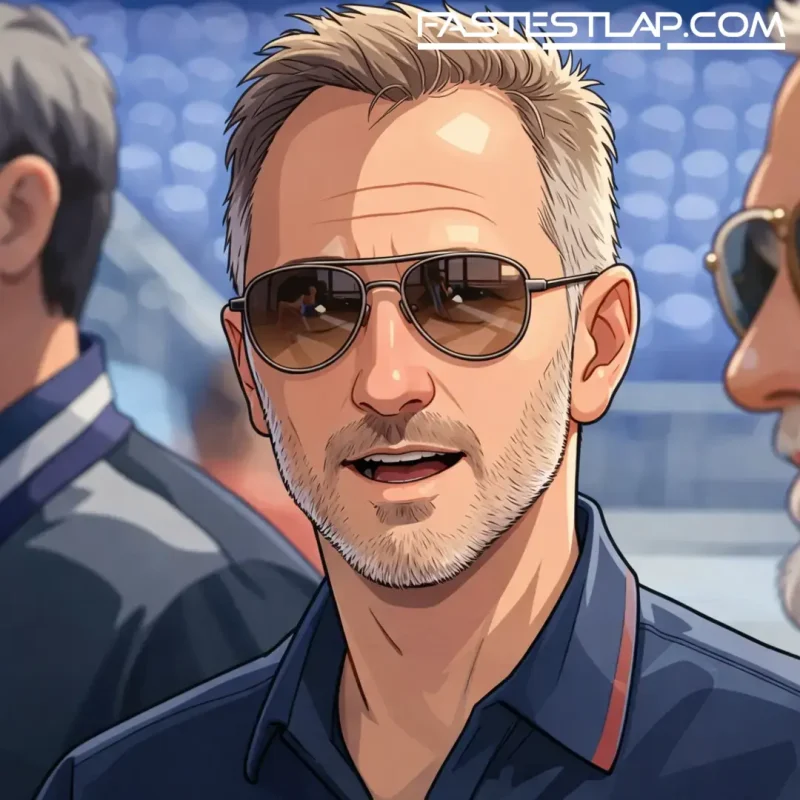
Spotted in the Monaco Formula E paddock this week—sunglasses on, looking more like a man on a scouting mission than a tourist—the former Red Bull team principal has quietly lined up his next gig while the sport continues to speculate about when, and where, he’ll re-emerge in Formula 1.
For now, Horner has teamed up with private equity firm Oakley Capital in an advisory role, focused on investments in what’s being described as “premium sports”. It’s not a pivot away from racing so much as a neat extension of the part of Horner’s reputation that’s easy to overlook if you only frame him as the guy barking into a radio on Sundays: he’s always been a builder of structures as much as a builder of cars.
Horner was famously the youngest team principal in F1 when Red Bull handed him the keys in 2005. What followed was the transformation of a still-finding-its-feet outfit into one of the most aggressively successful teams of the modern era: 124 grand prix wins, eight drivers’ championships split between Sebastian Vettel and Max Verstappen, and six constructors’ titles. That record is the obvious legacy, but the wider business story is just as telling—especially now that he’s stepping into an investment-facing role.
His time at Red Bull wasn’t only about race engineering and driver management. He was central to the creation of Red Bull Powertrains, the project that moved the company closer to owning its destiny in the power unit game, and he also had a hand in the growth of Red Bull Advanced Technologies. The commercial side mattered too: during Horner’s tenure, the team reportedly generated more than $3bn in revenue through partnerships and sponsorship. That’s the sort of line on a CV that makes private equity people pick up the phone.
Horner, in comments released alongside the announcement, pitched the move as a bet on sport’s momentum beyond the track.
“Sports businesses are benefitting from growing global audiences and participation rates as more people embrace healthier, active lifestyles,” he said. “I have known and respected Peter and the Oakley team for many years and have always admired their approach to building ambitious, founder-led businesses.
“Oakley Capital has established a strong reputation across the sports and consumer landscape and I look forward to working together in the future and sharing my experience to help support the next generation of standout sports businesses.”
Oakley Capital founder and managing partner Peter Dubens was equally direct about why Horner is a valuable addition: not as a ceremonial name on a slide deck, but as someone with a feel for how sport, brand and performance can be scaled together.
“Christian Horner is widely recognised as a highly successful leader in global sport,” Dubens said. “His track record, expertise and commercial instinct will be invaluable as we continue to scale our sports portfolio.
“We are increasingly drawn to businesses in this space that share the hallmarks of a typical Oakley investment: founder-led, high-growth and supported by resilient revenues, or under-commercialised ‘scarce’ assets with significant untapped potential. We look forward to working with Christian in order to unlock these opportunities.”
In the paddock, none of this will quiet the main question: what’s next in F1?
Horner parted ways with Red Bull last season, and his name has been repeatedly linked with a return to the grid—either with Alpine or with a potential 12th entry involving Chinese manufacturer BYD. The fact he’s turning up at high-profile race events, even outside F1, will only keep the rumour mill spinning. In this sport, visibility is rarely accidental.
But the Oakley Capital move is interesting precisely because it hints at how Horner sees himself: not merely as a team boss waiting for another garage to open up, but as an operator whose currency is building organisations—commercially, politically, and competitively.
There’s also an obvious practicality to it. The F1 grid may or may not offer him the next role he wants on his timeline. An advisory position like this keeps him in the elite sport ecosystem, keeps his network warm, and keeps his instincts sharp. If the right F1 project does materialise—be it a rebuild job at an existing team or the politics-heavy grind of launching a new entry—he’ll arrive having stayed in the deal-making world that increasingly underpins modern grand prix racing.
And if he doesn’t? Horner has just reminded everyone that, in 2026, there are plenty of ways to remain influential in motorsport without wearing a headset on the pitwall.