
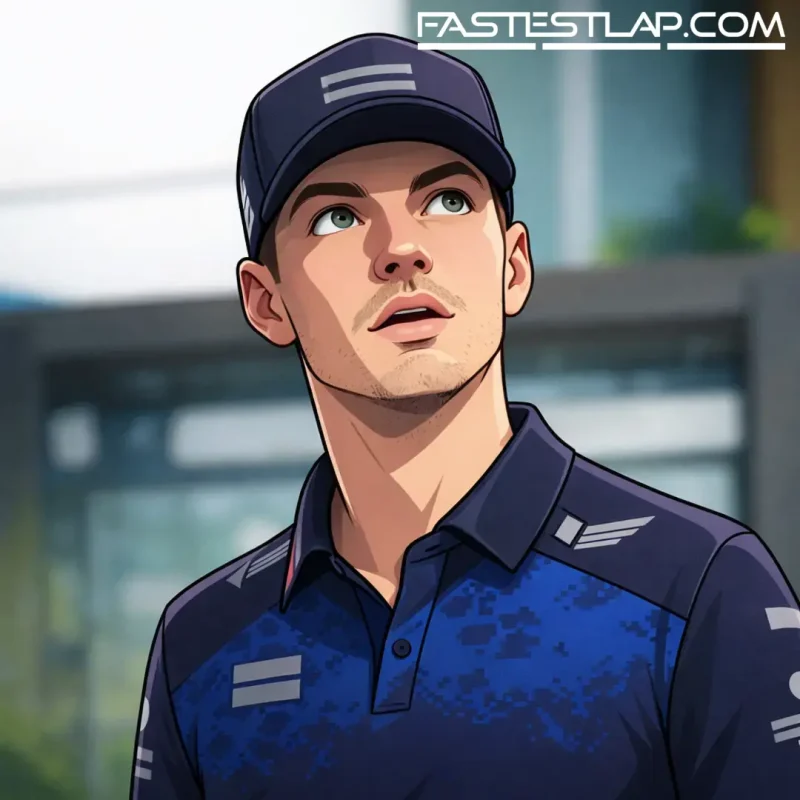
Max Verstappen doesn’t usually waste breath on hypotheticals, but in Montreal he sounded like a driver looking at the sport’s next fork in the road and not liking either direction.
In the wake of qualifying for the Canadian Grand Prix, Verstappen backed the proposed power unit tweaks slated for 2027 — and made it clear that if Formula 1 doesn’t follow through, the season ahead could become a grind he has little appetite for. The current plan, agreed in principle, would rebalance how the cars deploy power by shifting to a 60–40 split in favour of the internal combustion engine over the electrical component. It still needs to be formally voted through, and that uncertainty is exactly what Verstappen is pushing against.
He’s been one of the most consistent critics of the 2026 regulations, particularly the energy management demands that come with the new power units. The line coming out of his camp has never really been about nostalgia or resisting change; it’s about whether the racing product ends up being compromised by the amount of nursing and strategising required just to get the car to the end of a lap in the right mode.
And in Canada, he didn’t dress it up.
“If it stays like this, it’s going to be a long year next year, which I don’t want,” Verstappen said. “I can tell you, if it stays like this, it’s just mentally not doable.”
That’s a sharper choice of words than the usual “we’ll see” that drivers deploy when they don’t want to light a fuse. Verstappen is effectively saying the issue isn’t only technical — it’s psychological. Living in constant management mode, running races with one eye on the battery state and another on the steering wheel, isn’t the version of top-level racing he wants to sign up for.
What adds bite is that his warning comes with context. Verstappen has been stretching his legs outside the F1 bubble lately, getting involved in GT3 activities, and while he’s previously played down the idea of leaving, he’s also been candid that the right regulatory direction matters if F1 wants to keep him fully invested.
Asked if he’d consider stepping away if the 2027 adjustments don’t happen, Verstappen paused — and didn’t exactly sound like someone bluffing.
“There’s a lot of other fun things out there,” he said, before pivoting back to a more diplomatic frame: “Let’s stay on the positive side. We’re still, I think, looking towards making those changes… if the FIA is strong, and also from the FOM side, they just need to do it. It would be better for the sport as a whole.”
There’s a familiar paddock dynamic lurking beneath that: the tension between what’s good for the show and what’s good for those currently holding an edge. Verstappen all but said as much, noting that “some people that at the moment maybe have a bit of an advantage will try to be difficult about it”.
The split in opinion over timing underlines the politics. Red Bull and Mercedes are understood to be in favour of the 2027 hardware changes. Other parties, however, are believed to want the adjustments delayed until 2028. That’s not a minor scheduling disagreement; it’s a classic F1 power play, because changing the rules earlier or later can reshape development cycles, spending plans, and competitive pecking order.
Verstappen, for his part, didn’t pretend to enjoy that side of the sport.
“It’s a shame” that behind-the-scenes manoeuvring is part of it, he said — then shrugged at the inevitability: “It’s simply like that.”
The urgency in his tone is notable given his contract situation. Verstappen is tied to Red Bull through the end of 2028, having signed a seven-year deal after his first title in 2021. On paper, that should take the oxygen out of any “will he, won’t he” speculation. In reality, the last few seasons have shown that contracts in F1 are only as immovable as the will of the people who want to enforce them — and only as comforting as the environment that surrounds the driver.
But even without reading it as a contractual shot across the bow, Verstappen’s comments land as something more immediate: a driver with little patience for a concept he thinks risks making racing feel like homework.
The sport now has a simple choice to make, even if the mechanics of getting there aren’t simple at all. If the stakeholders can align and the governance bodies are willing to take the heat, 2027 becomes a chance to smooth off the rough edges of the new era quickly. If not, Verstappen is warning that the grid may be heading into a season where one of its biggest names is no longer merely frustrated — but actively questioning whether it’s worth the mental load.
For Formula 1, that’s not noise. That’s a siren.









