Aston Martin turns up to Budapest this week with the sort of urgency you can feel in the garage. The team’s 2026 reset with Honda hasn’t just been about learning a new rulebook — it’s been about surviving the early bruises long enough to get the real car on track. Hungary is where that fightback is supposed to start looking like something more than a promise.
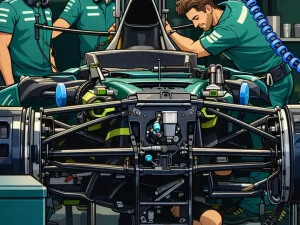
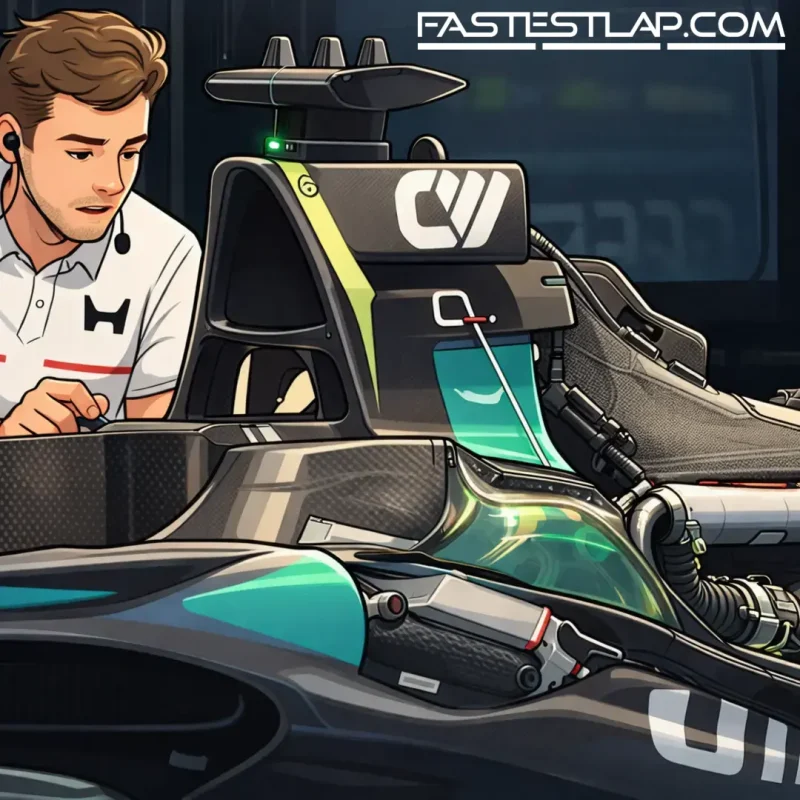
The headline change is the B-spec AMR26 chassis, due to debut at the Hungarian Grand Prix. Aston Martin expects both Fernando Alonso and Lance Stroll to be running the updated package from FP1, which tells you this isn’t a gentle “one car first” evaluation. It’s a line in the sand: the team needs clarity, quickly, on whether its major overhaul has put it on a healthier trajectory.
And this is only the first half of the planned reboot. Honda’s upgraded power unit — previously targeted for introduction at Zandvoort, the first race after the summer break — is now set to get its first on-track outing at a Hungaroring filming day next week. That’s a meaningful shift in momentum. It doesn’t put the new engine in the race this weekend, but it moves the timeline forward in the one way teams actually care about: track time. If the filming day runs cleanly, it brings Honda’s revised package one step closer to competitive debut, and gives Aston Martin a chance to do some early correlation work before the circus rolls to the Netherlands.
The context matters, because Aston Martin-Honda’s recent trips to faster venues have been unforgiving. Silverstone and Spa exposed the project in a way that left little room for spin, with Spa in particular brutal as the calendar’s longest lap amplified every weakness. The result was a gap that left Aston Martin flirting with the wrong end of qualifying, and looking, at moments, like it was fighting a different championship to the midfield around it.
Hungary, though, is a different kind of test — and that’s precisely why the team’s chosen this weekend to roll out a major chassis revision. The Hungaroring is notoriously light on the power sensitivity scale, and heavy on the sort of low-speed efficiency and compliance that can make or break a car’s underlying concept. If your platform isn’t behaving, Budapest will show it. If your aero map is inconsistent, those long, loaded corners will find it.
Honda’s Shintaro Orihara was candid about the shift in emphasis when speaking ahead of the weekend, effectively framing Hungary as a cleaner chassis read than Spa was ever going to be.
“Hungary is a less sensitive track on the power side,” Orihara said. “I would say in Belgium, we lost a lot of the time from the power unit side, but here, Hungary, much less than Belgium.
“We will see how fast the chassis is in corners. I would say it’s a good track to evaluate how good the chassis is.”
That’s an important admission because it underlines the two-track plan Aston Martin and Honda are trying to execute: isolate the chassis variable first, then layer in the power unit upgrade once the team has a clearer sense of what the car is doing mechanically and aerodynamically. In other words, if Hungary looks better, it strengthens the case that the B-spec is delivering; if it doesn’t, it becomes harder to pin the entire deficit on power.
There’s another, quieter subplot here too: reliability and integration. Honda has been confident the revised chassis won’t kick up fresh vibration issues of the kind that surfaced earlier in the season once the power unit is installed — a nod to the sort of teething troubles that can derail an upgrade cycle before it even begins. With a new engine spec coming and a car already undergoing a substantial rethink, Aston Martin can’t afford a repeat of the “solve one problem, uncover three more” loop that haunts big technical transitions.
For Alonso and Stroll, the immediate question is less about lap time headline numbers and more about whether the AMR26’s behaviour finally gives them something stable to lean on. Budapest is a track that rewards confidence: if the rear isn’t predictable on entry, if the car won’t rotate consistently through the middle phase, you’re dead. The stopwatch will tell one story, but the drivers’ first comments about balance and repeatability will tell another — often the more revealing one when a team is trying to dig itself out of a hole.
Aston Martin doesn’t need Hungary to be a miracle. It needs it to be coherent. A clear step, a direction that makes sense, and evidence that the project’s pain has a payoff. Because if the chassis upgrade shows signs of life here, and Honda’s revised power unit completes its filming-day shakedown as planned, Zandvoort suddenly becomes more than a calendar marker after the break — it becomes the moment this partnership finally starts racing the season it thought it was going to have.