Montreal didn’t just give Mercedes a one-two — it gave the team a glimpse of what the next few months could look like if this title fight keeps tightening: two cars quick enough to control a race, and two drivers stubborn enough to refuse to.
The Canadian Grand Prix turned on weather, tyre calls and a bit of early chaos, but once the noise settled the story was painfully clear. The fastest package on the grid is currently painted silver, and the biggest threat to Mercedes is increasingly coming from inside its own garage.
Even before the lights, the grid looked wrong in that very Montreal way — dry and intermediate tyres split across the top four, a strategic fork in the road that made certainty impossible. McLaren, it quickly transpired, had picked the wrong path and paid for it immediately, their podium fight effectively over before it had properly started. Lando Norris did at least make the opening metres interesting with a sharp launch, but the real momentum shift came from Kimi Antonelli finally nailing a getaway and muscling past George Russell into Turn 1.
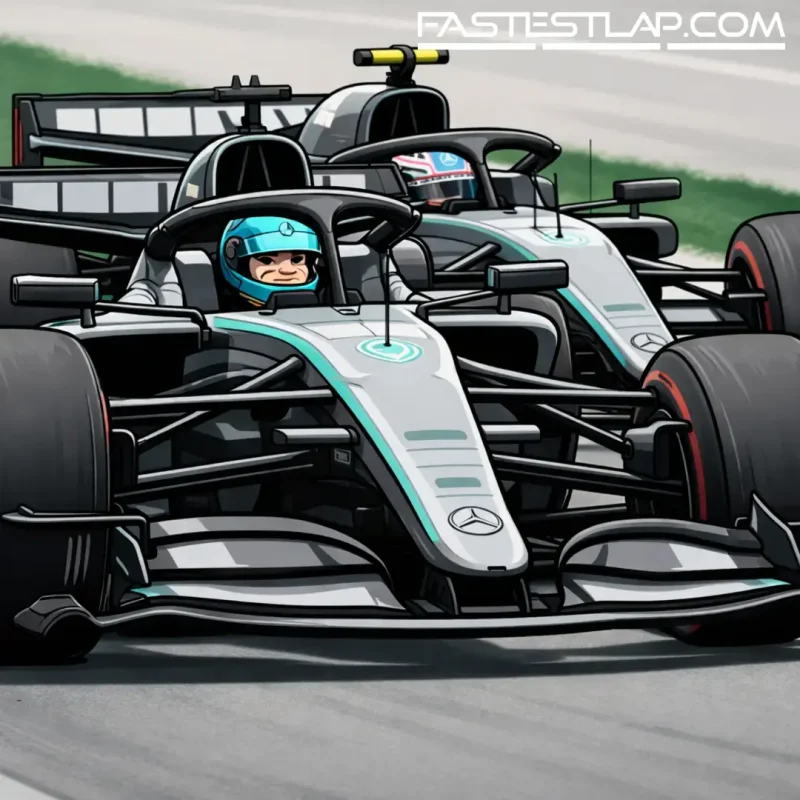
That mattered, because once Norris peeled off for his tyre change, the race lead became a straight scrap between the two Mercedes. No buffer, no “manage the gap”, no convenient external threat to justify caution. Just teammates, a fast car, and the sort of restless confidence that makes engineers nervous.
The first decisive flashpoint arrived on Lap 6. Russell, stronger out of the hairpin, got the job done on the straight and took the lead — but the move didn’t end the exchange so much as light the fuse. Antonelli, suddenly in the wake and on the limit into Turn 13, locked the fronts and ran on. It was a small mistake in terms of damage, but the kind that tells you a driver has been surprised by the speed at which the picture changes when you’re fighting your own teammate in clean air.
There was a tactical texture to it too. Russell’s run down the straight looked like a classic case of controlled deployment: building speed progressively before dropping it sharply, suggesting he was playing the harvest-and-release game at exactly the moment Antonelli expected a more static approach. Combine that with the abrupt punch of slipstream and you’ve got the ingredients for an overreaction at the end of the straight. Antonelli did what young, quick drivers often do in that situation — he tried to win the corner back with his right foot and his bravery. Montreal punished him for it.
A brief yellow and subsequent Virtual Safety Car pressed pause on the duel, but nobody at the front bit on an early “cheap” stop. The soft tyre was hanging on thanks to cold track temperatures, and the leaders didn’t fancy trading track position for theory.
When the race resumed, the errors swung the other way — and, crucially, they came from Russell. Twice at Turn 10 he flirted with losing control of the situation. On Lap 17 there was a front-wheel lock under braking that didn’t quite open the door, but it did bring Antonelli right back into the conversation. A few laps later, Russell made an almost carbon copy of the mistake — only this time the circumstances made it costlier.
A Cadillac ahead became an unwilling accomplice in the fight. Russell’s approach was compromised, his line pinched, and he had to lift earlier than he wanted. Antonelli read it instantly, using the traffic as a moving barrier to disrupt Russell’s rhythm and prevent him from recovering the usual entry speed. It was subtle, sharp racecraft: not an overtake completed with a lunge, but a position won by forcing the leader into a compromised phase of driving and then cashing the time loss. In modern F1, that’s often the cleanest way to do it.
That sequence, plus a strong following lap, stretched Antonelli’s advantage out to around a second — the sort of gap that should settle a teammate fight into “hold station” territory. But nobody had told them that.
Almost immediately, Antonelli handed Russell the invitation back. Another Turn 10 lock-up, this one more straightforwardly on the driver: braking later than on his own previous clean lap and asking the front-left to do too much. Russell didn’t need a second look. He reclaimed the lead and, for a moment, it felt like the contest might finally calm into a sustainable rhythm.
Instead, Montreal delivered the cruelest punchline. On Lap 30, Russell’s race ended with a technical problem related to the battery. One moment he was managing the front; the next he was a passenger to retirement, the sort that empties the cockpit of adrenaline and fills it with that dead, silent frustration only a leading driver knows.
From there, Antonelli’s job was far more straightforward than the preceding fireworks suggested. With the W17 operating in its own performance bracket, the remaining laps became an exercise in control. The more revealing detail was what had happened *before* Russell stopped: even while fighting wheel-to-wheel, even while trading lock-ups and running wide, the Mercedes pair were still edging away from Max Verstappen and Lewis Hamilton behind. That’s the kind of margin that doesn’t just win races — it rewrites how everyone approaches a season.
And that’s where the Canadian Grand Prix really lands for Mercedes. If rivals don’t unlock something quickly, this could slide into one-team dominance. Yet dominance doesn’t guarantee peace. If anything, it raises the internal stakes, because points left on the table don’t just help the opposition — they arm your teammate.
Antonelli now carries the championship lead with a hefty 43-point cushion, an advantage that looks comfortable on paper and feels suffocating when you’re the one expected to protect it. Russell was blunt about that dynamic: at this stage, Antonelli is the man with the title to lose.
Canada suggested the answer to what comes next isn’t purely about speed. Mercedes already has that. It’s about composure — who can keep the judgement clean when the car is good enough to make every tiny mistake matter, and when the only driver consistently capable of beating you is parked in the adjacent garage.
Montreal gave us the trailer. The season’s main feature is still to come.