Martin Brundle has made a career out of finding the one person on a grid who’d rather not be asked the obvious question. In Montreal, that person was Juan Pablo Montoya — and the obvious question was the one hovering over his recent spat with Max Verstappen and the wider grumbling about Formula 1’s 2026 rules.
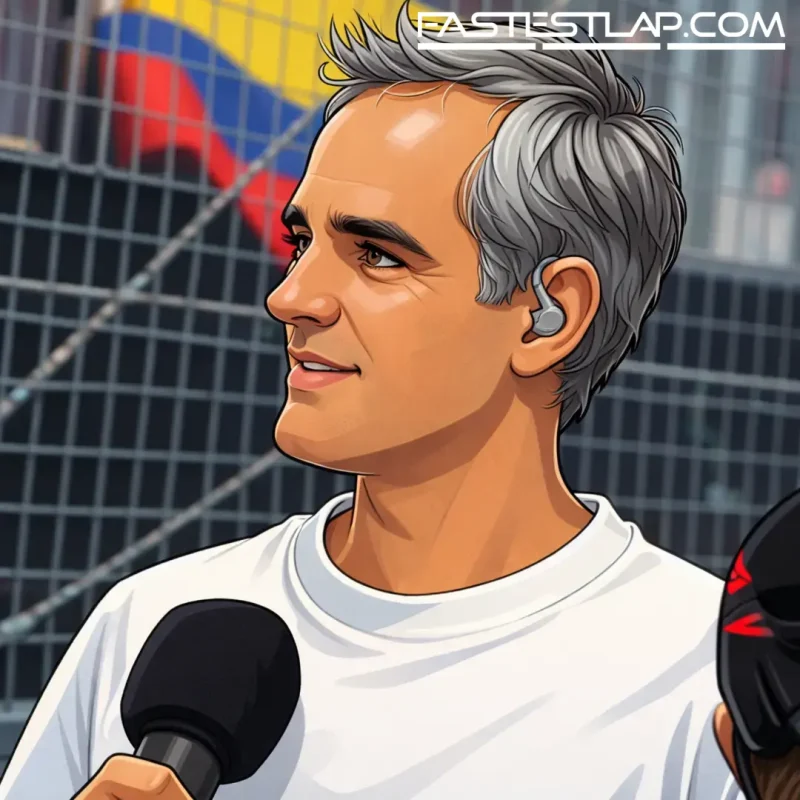
Brundle, working his familiar pre-race walk for Sky, bumped into Montoya and went straight for it. He told him, in so many words, that he’d upset the Verstappens. Montoya barely blinked.
“Anything new there?” was the reply.
If you’re looking for a tidy resolution, you won’t get one. What you get instead is a neat snapshot of how quickly a throwaway line about “respect” and “consequences” can turn into a paddock mini-feud, particularly when it involves a current superstar who doesn’t mind swinging back and a former grand prix winner who hasn’t built his post-driving life around soft edges.
Verstappen’s side of it is already on the record. When asked about Montoya’s suggestion that drivers who criticise the 2026 regulations should be punished — even to the point of a race ban — Verstappen didn’t dress it up. He questioned why F1 would “associate itself” with Montoya, dismissed his comments as “rubbish”, and suggested he was doing it to stay relevant. That jab, aimed at Montoya’s role as an F1TV pundit, told you everything about how personally Verstappen had taken it.
Montoya, for his part, has been trying to drag the conversation back to where he says it started: not Verstappen, not one driver, but a broader point about how drivers talk about the sport that pays them.
He insists his words were taken out of context from a Miami appearance on the BBC’s Chequered Flag podcast, where the topic was the controversy surrounding the 2026 regulations. Montoya’s position, as he frames it now, was that any driver publicly “talking sh*t” about F1 ought to face consequences — penalty points or even a one-race ban — because, in his view, there’s a line between voicing concerns and undermining the championship itself.
“You’ve got to respect the sport,” he said at the time, adding that while not liking regulations is one thing, the way some drivers were speaking about “what you’re living off and your own sport” should carry consequences.
The Verstappen angle, Montoya argues, arrived only because Damon Hill pushed the conversation in that direction. Hill interrupted with a specific example — “like fining Max” for negativity — and only then did Montoya produce the memorable phrase: “park him”, and a Super Licence points-type deterrent.
So yes, Montoya did say it. No, he says it wasn’t aimed solely at Verstappen, even if Verstappen was the name put to him in the moment. Montoya has also made a point of saying that, in person, he and Verstappen exchange greetings on race weekends and “get on really well”.
That nuance hasn’t done much to cool the temperature, partly because Verstappen’s frustration isn’t really about nuance. It’s about the principle of being told to shut up — and being told it by someone he clearly believes shouldn’t be policing today’s drivers.
Then there’s Brundle, who didn’t cause this argument but knows exactly how to keep it ticking over in public. Montoya’s read on that was blunt afterwards, saying Brundle “never liked me” and that the feeling is mutual. Speaking to a gambling platform, Montoya described being “got” on the grid, recounting Brundle’s line — “I see you have p***ed off Max” — and his own answer: “Nothing new there.”
It’s hard not to see why Montoya would view it that way. Grid walks aren’t about context; they’re about moments. Brundle’s job is to turn whatever’s swirling that weekend into a 15-second exchange that lands with the audience before the anthem finishes. If Montoya wanted to talk in paragraphs about the difference between criticising a rule set and disrespecting the sport, the Montreal grid was never going to be the place.
And yet, there’s something revealing in how quickly this spiralled into personal dislike — Montoya vs Verstappen, Montoya vs Brundle — when the original issue is one the sport is going to face all the way into 2026: how drivers publicly sell (or don’t sell) a new era they’re not fully sold on.
F1 has always relied on its stars to legitimise change. Drivers are expected to question the details in private and market the product in public. The tension now is that the modern top driver has far more power, far more platform, and far less appetite for pretending. Verstappen, especially, has never been shy about saying what he thinks the moment he thinks it.
Montoya’s essentially arguing for an old-school code: don’t trash the show. Verstappen’s response suggests a newer reality: don’t threaten the drivers for speaking their mind. Brundle’s cameo in Montreal simply underlined that, in F1, none of these debates stay theoretical for long — not when there’s a microphone, a camera, and a grid full of people with something to prove.
For now, nobody’s backing down. Montoya doesn’t sound remotely interested in smoothing it over, Verstappen has already made his view of Montoya clear, and Brundle will keep wandering into the middle of it because that’s what Brundle does.
The only certainty is that the closer F1 gets to 2026, the louder the arguments will get — and the less patience anyone will have for being told to keep those arguments to themselves.