If you want a neat snapshot of where Formula 1 is heading in 2026, you could do worse than look at today’s scattergun of stories: the sport’s rule-makers are tightening the screws on how the cars can race, a brand-new manufacturer team is already having to swat away driver-market noise, and Mercedes is being reminded — brutally — that the hybrid age still bites when you least expect it.
Start with Monaco, because it’s the one that’ll land hardest with drivers and engineers alike. The FIA has confirmed Straight Mode won’t be available at next weekend’s race, meaning Monaco becomes the first grand prix weekend since the DRS era began in 2011 where the moveable rear-wing concept is simply taken off the table. The principality’s single activation area on the pit straight had always been more token than transformative, but the symbolism matters: when the governing body is prepared to delete a core overtaking tool for the calendar’s most track-position-sensitive event, it’s sending a message about how it wants active aero to be used — and, crucially, where it doesn’t.
In practical terms, it’s also an admission of something everyone in the paddock knows but rarely says out loud: active aero doesn’t magically “fix” Monaco. If anything, it can distort what the place is supposed to be about. Monaco has always been a qualifying circuit that happens to have a race attached; removing Straight Mode leans into that identity, and it’ll put even more emphasis on tyre preparation, out-lap execution and how bravely teams are willing to trim downforce without turning the car into a passenger through the Swimming Pool.
Away from the rulebook, the most pointed piece of team politics today sits in the expanding “who’s coming next?” conversation. Christian Horner’s talks with BYD have become the kind of paddock whisper that stops being a whisper. A series of meetings with BYD vice president Stella Li — most recently in Cannes — has put the spotlight on what any prospective new entrant would actually be buying into. The timing is awkward, too, because the FIA has been openly discussing a longer-term move away from the current power unit formula and back towards V8s.
That’s the crux: any manufacturer weighing up an entry wants certainty, and F1 doesn’t do certainty right now. If the championship’s technical direction is potentially pivoting again, an OEM’s boardroom will ask the obvious question: are we joining a stable platform, or funding a stop-gap? If Horner is indeed advising or shaping those conversations, it reads less like a vanity project and more like a cold assessment of where the next leverage point in F1’s political economy might sit — especially with the value of entry slots and the commercial upside now so clear.
On the grid, Cadillac is getting an early education in what being an F1 team actually entails. Team principal Graeme Lowdon has issued a flat denial over rumours that Valtteri Bottas could be replaced ahead of Monaco, calling the speculation baseless. The interesting part isn’t the denial — that’s standard — it’s what sits behind it. Sources indicate Bottas’s experience has been central to Cadillac’s respectable start to its debut season, which rings true in the way only a debut campaign can. When you’re building operational habits and a performance culture from scratch, you don’t casually discard a driver who can tell you what “normal” looks like in F1.
It also feels like a line in the sand early in a relationship. New teams often talk about “long-term projects” right up until the moment they don’t; being publicly emphatic about Bottas now is as much about calming the internal environment as it is about rebutting the outside noise. Monaco, with its premium on precision and confidence, is exactly the kind of weekend where you don’t want a driver reading headlines about his own seat.
Over at Mercedes, there’s a more immediate problem: things melting. Technical director James Allison has explained that heat damage played a role in George Russell’s “catastrophic” battery failure in Canada, which ended Russell’s race after 29 laps and concluded an increasingly spicy fight with team-mate Kimi Antonelli. It was Russell’s first retirement of the 2026 season, and in a championship context it’s already costly — he’s now 43 points behind Antonelli.
The key word there is “catastrophic”, because hybrid failures aren’t gentle. They’re rarely the kind of thing you manage to nurse to the flag; they arrive like a switch being flicked. Canada can be deceptively punishing on temperatures and energy management, but Mercedes will be more concerned by the “why now?” element. Modern F1 reliability is supposed to fail quietly, or at least predictably; a battery going away in dramatic fashion is exactly the sort of episode that forces an uncomfortable audit of cooling assumptions, duty cycles and the thin margins teams are living on with these cars.
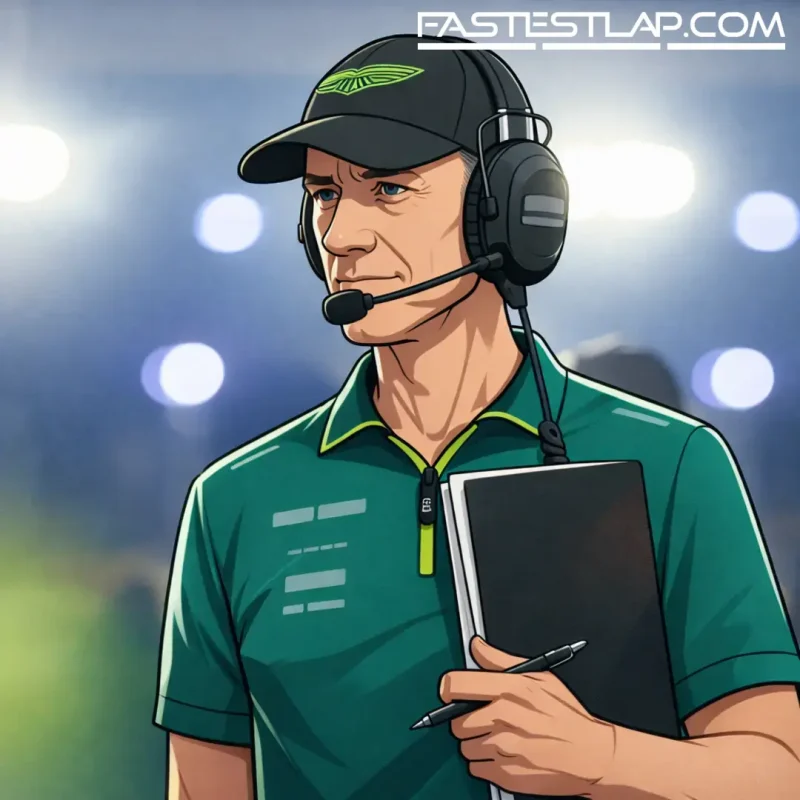
And then there’s a story that cuts through the day’s usual churn in a more human way. Adrian Newey, now Aston Martin team principal, has donated £10,000 to a fundraiser set up for driver coach Rob Wilson, who is facing a life-saving kidney transplant. Wilson’s influence on the grid has long been one of the sport’s quieter through-lines — the kind of name that drivers mention with genuine respect because his work sits underneath the public story, not alongside it. The donation list includes Bottas and Sergio Perez, as well as McLaren CEO Zak Brown.
Newey is often presented as the sport’s ultimate technician, the man with the notebook and the eye for airflow. But moments like this remind you that F1 is still a small world behind the motorhomes: people remember who helped them, who shaped them, who gave them tools that didn’t show up on a stopwatch until years later.
Monaco will dominate the conversation soon enough. Straight Mode being removed will be analysed to death, and the race will still be Monaco — glorious, infuriating, decisive. But in the background, the direction of the sport remains the bigger story: regulation tweaks with philosophical weight, new manufacturers sniffing around the edge of the tent, and the top teams still one heat-soaked component away from a weekend collapsing. That’s Formula 1 in 2026: the margins are tiny, and the consequences aren’t.