Mercedes has walked away from the race to buy Otro Capital’s 24% stake in Alpine, and it’s hard to read it as anything other than a cold valuation call.
Multiple sources familiar with the discussions say Mercedes and Renault have ended talks over the minority holding currently owned by the New York-based investment firm. The timing is telling: bids are understood to have gone in this week, and Mercedes’ interest effectively stopped once the numbers on the table moved beyond what it was prepared to justify.
The figure doing the rounds is punchy. The BBC reported Otro Capital is seeking $720 million for its slice of the team — a price that would imply an Alpine valuation of around $3 billion. That’s a long way from the $215 million investment it made in mid-2023, and it’s also a step beyond recent valuation estimates that would put the stake closer to $620 million on a $2.6 billion team valuation. In other words, this isn’t just “market forces”; it’s a seller trying to extract an extra ~$100 million on top of already healthy growth.
Mercedes’ decision to step out looks less like a strategic retreat and more like an unwillingness to be the party that validates that uplift.
There’s also a structural wrinkle that complicates any deal before money even changes hands. Company documents filed in the UK show Otro Capital cannot freely transfer its 24% holding until September 2026. Until then, Renault is believed to retain rights over any potential transaction — including approval of the buyer. That means anyone bidding now isn’t simply negotiating price; they’re negotiating through a governance funnel where Renault still holds the cards.
Renault’s own priorities matter here. Those close to the process suggest the group isn’t just chasing the highest offer; it wants an incoming shareholder whose values align with where it wants Alpine to go — a “true racing partner” rather than a passive investor. That framing naturally narrows the field to bidders with F1 DNA, and two names have dominated the conversation: Mercedes, and Christian Horner.
With Mercedes now out, the immediate landscape shifts in a way that’s difficult to ignore. Horner’s bid — revealed earlier this year and understood to have been in a similar range to Mercedes’ — suddenly looks like the last heavyweight offer with obvious sporting logic attached. His public line about “unfinished business” in F1 since his Red Bull exit was never going to be satisfied by a consultancy role. An ownership stake is the point.
And if Alpine is the target, Horner’s personal relationships don’t hurt. He’s known to be close to Flavio Briatore, the de facto powerbroker at Enstone even if his official title remains executive advisor to Renault CEO Francois Provost. The two have been seen together recently at the Monaco Formula E event, and there’s long been a professional ease between them that tends to shorten corridors in this sport.
That said, nothing is straightforward before September. The BBC has reported Renault has vetoed any bid involving Horner; that claim couldn’t be independently verified at the time of writing. But the mere existence of that report underlines the political reality: Renault can still shape the outcome, and not solely on financial grounds, for several more months.
After September 2026, Otro Capital’s position strengthens. With fewer constraints on transferring its shares, it could have greater freedom to prioritise exit value over partner profile — and that’s where the door creaks open for more “F1-adjacent” money to become credible. Ironically, that could make bids rooted in paddock credibility less decisive than they are right now.
For Mercedes, the move also quietly defuses a parallel controversy that had started to bubble up again in recent weeks. McLaren CEO Zak Brown has long railed against common ownership structures in F1, and the prospect — even theoretical — of Mercedes taking a meaningful stake in another team reopened the argument in noisy fashion. Brown went as far as writing to FIA president Mohammed Ben Sulayem to push for rule changes that would curb the model, wary of any new interpretation of “satellite” dynamics.
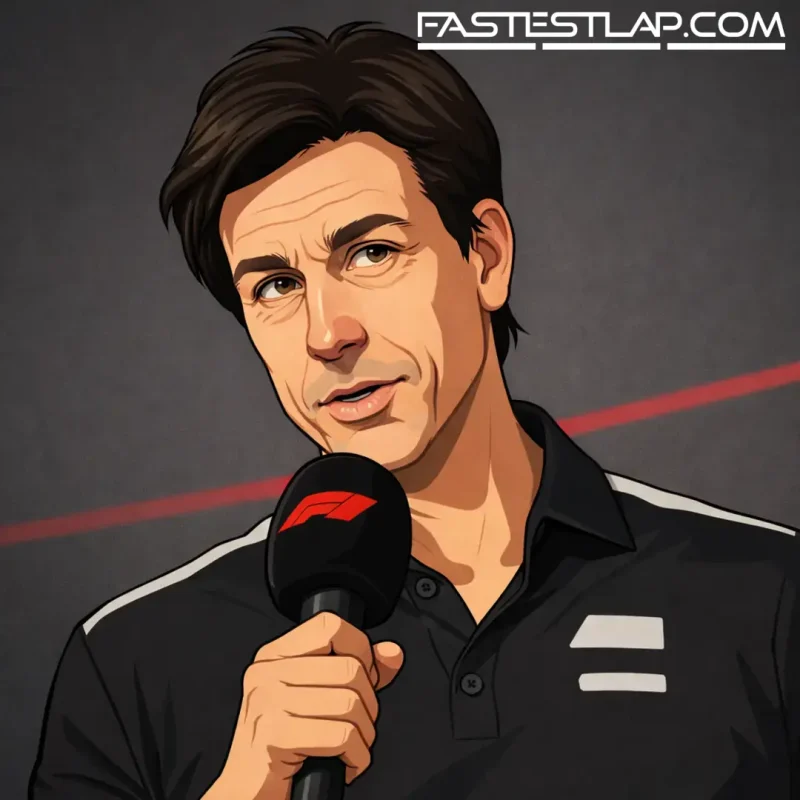
Toto Wolff had already batted away the more dramatic claims, insisting that even if Mercedes did buy in, Alpine would not become a Mercedes B-team. But with Mercedes now gone, Brown’s immediate flashpoint disappears — at least until the next structure tests the sport’s definitions.
Where this leaves Alpine is a familiar place for the modern midfield: valuable enough to attract big-money attention, complicated enough that the seller can’t simply name a price and move on, and politically sensitive enough that every bidder comes with baggage.
It also leaves Horner with leverage and optionality. Alpine is one route back; it’s not the only one. There have already been discussions involving BYD vice-president Stella Li over the possibility of a 12th team entry, giving Horner a second chessboard if the Enstone path becomes blocked.
Mercedes declined to comment when approached. But the message of its withdrawal is clear enough without a statement: it’s not going to be the benchmark that resets the price of Alpine upward — and it’s not going to pay a premium simply to be involved.
Now the question is whether anyone else will.