Gilles Villeneuve’s legend has never needed help, but the memorabilia market has just put a staggering number on it anyway.
The helmet Villeneuve wore for the 1982 San Marino Grand Prix has sold for $1.25m (£930,000), becoming the first Formula 1 driver helmet to break the $1m barrier at auction. In a collecting world that’s been steadily inflating for years, this one still lands with a jolt — not least because it doesn’t just edge the previous record, it clears it with room to spare.
That earlier benchmark belonged to Ayrton Senna: his 1992 Belgian Grand Prix helmet fetched £720,000 (around $966,000). Villeneuve’s sale rewrites the scale, and it’s hard to read it as anything other than a statement about what the sport’s most emotionally loaded artefacts are now worth when they’re both authentic and genuinely scarce.
This particular helmet had largely been out of view, sitting in a private collection until it was released to market. The news was shared by Darren Jack, CEO of the Hall of Fame Collection in Canada, who underlined why collectors were always going to treat it as a once-in-a-generation opportunity rather than just another piece of painted carbon and foam.
“The GPA helmet itself is an extremely rare helmet model in the collecting world,” Jack told CBC. “Also, this is one of only five, maybe, that exist ever of Gilles Villeneuve race helmets.”
There’s also the specificity of the moment attached to it. Villeneuve wore it at Imola in 1982 — a weekend that remains etched into Ferrari folklore — and it was one of only two helmets he used during that season. It was his race helmet through the early part of the campaign, up to and including that San Marino Grand Prix where he finished second.
For Ferrari devotees, and frankly for plenty of people who never even saw Villeneuve race live, the appeal is obvious. His driving style was never about neatness; it was about defiance. He carried speed where it didn’t seem available, made races feel unstable in the best way, and turned risk into theatre. That’s why his number 27 still gets spoken about like a proper noun. That’s why he’s remained a Ferrari icon despite never winning a world championship.
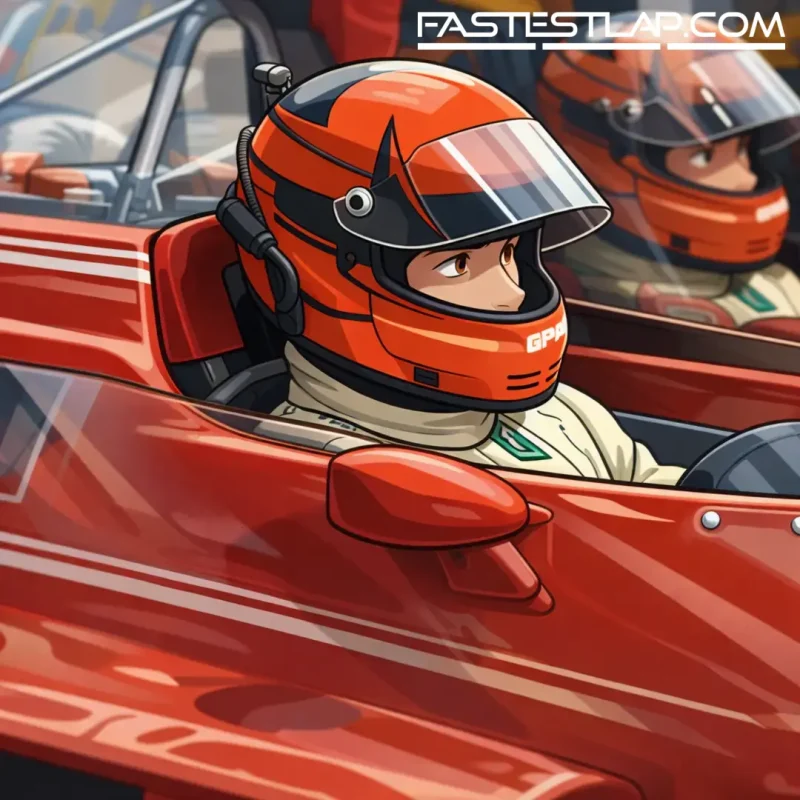
Even the helmet design is part of the mythology: black base, the stylised red ‘V’ motif — instantly recognisable decades later. It’s telling that Charles Leclerc ran a tribute version at the 2023 Canadian Grand Prix; modern Ferrari drivers don’t borrow that imagery lightly because they know what it means to the tifosi.
Villeneuve’s daughter, Melanie, framed the sale less as a victory lap for collectors and more as proof that the story still has cultural weight beyond F1’s bubble.
“It makes you think that maybe his story has something super valuable for our general culture,” she said. “So where did he come from, why was he able to achieve what he achieved with so little means. It’s such passion, so there’s a human story to it that is very valuable.”
It’s a poignant detail, too, that this was not the helmet worn in Villeneuve’s final accident. He died after a high-speed crash during qualifying for the 1982 Belgian Grand Prix at Zolder, aged 32, wearing a different helmet. In a market that can sometimes drift uncomfortably close to fetishising tragedy, the distinction matters: this piece is tethered to the racer Villeneuve was — and the aura he built — rather than the moment Formula 1 lost him.
A $1.25m helmet sale isn’t just a record, then. It’s another reminder that certain names in this sport don’t fade into nostalgia; they harden into something closer to legend, and the world keeps finding new ways to measure that in real time.