Montreal has a habit of turning small moments into big stories, and the aftermath of the Canadian Grand Prix has been less about lap charts and more about how teams and drivers manage the fallout when things get messy.
McLaren, for one, isn’t dressing anything up. Andrea Stella has conceded Oscar Piastri’s 10-second penalty for the collision with Alex Albon at the hairpin was fair game, a blunt admission that tells you two things: the stewards’ view was hard to argue, and McLaren didn’t see any upside in spinning it.
The incident itself was ugly in consequence even if it wasn’t born from the usual overtake-or-crash impatience. Piastri tagged Albon at the hairpin, and the Williams was done on the spot. Piastri, notably, wasn’t even framing it as a botched lunge; he said he wasn’t trying to pass Albon at the time. That makes it feel more like a breakdown in judgement and management in a high-pressure phase than the more familiar “sent it from too far back” miscalculation.
There was a detail that will prick up ears inside every strategy room: Piastri had been warned about high rear-brake temperatures just moments earlier. Overheated rears can change the car’s behaviour dramatically into a slow corner like that — stability, rotation, even how the car decelerates — and when you’re arriving at a tight hairpin in traffic, the margin is basically nothing. None of that absolves contact, and McLaren isn’t asking it to, but it’s the kind of contextual clue teams quietly file away because it speaks to operational sharpness, not just driver error.
If McLaren’s line was refreshingly straightforward, Mercedes’ latest internal dynamic is heading the other way — not explosive, not toxic, just unmistakably tense around the edges in a way that only shows up when both cars are regularly in the fight.
George Russell and Kimi Antonelli have apparently gone to management with a joint request: trust us to race. That comes after a Sprint close call in Montreal where Antonelli was heard calling for a penalty for Russell over the radio. Mercedes deputy team principal Bradley Lord has now revealed the pair asked for “trust” in a post-race meeting.
That’s a fascinating little snapshot of a modern top team trying to run two ambitious drivers without turning every marginal moment into an HR incident. When drivers feel the need to explicitly ask to be trusted to keep it clean, it’s rarely because everything is calm. It’s because both know the consequences if the next near-miss becomes carbon fibre confetti.
It’s also the sort of conversation that tends to happen when a team senses a bigger prize is possible. Nobody asks for “trust” in June if they’re trundling around for seventh. Whether it’s truly a 2026 title fight shaping their thinking or just the internal belief that they should behave like contenders, Mercedes is clearly managing a pairing that’s already pushing into the same pieces of track at the same time.
Elsewhere, the Verstappen family once again proved they don’t do quiet diplomacy. Jos Verstappen aimed a sharp shot at Guenther Steiner after Steiner suggested Max Verstappen would “be really happy” with the 2026 rules — but only if Red Bull were winning under them. Jos’ response on social media didn’t bother with nuance: “Hi Guenther. I understand why you not a F1 team boss anymore. The way you talk.”
It’s a very 2026 kind of exchange: a soundbite about regulations and competitive self-interest meets an immediate, personal clapback. Whatever you think of it, it’s part of the ecosystem now — and a reminder that reputations in this paddock are debated in public, in real time, often by people with skin in the game.
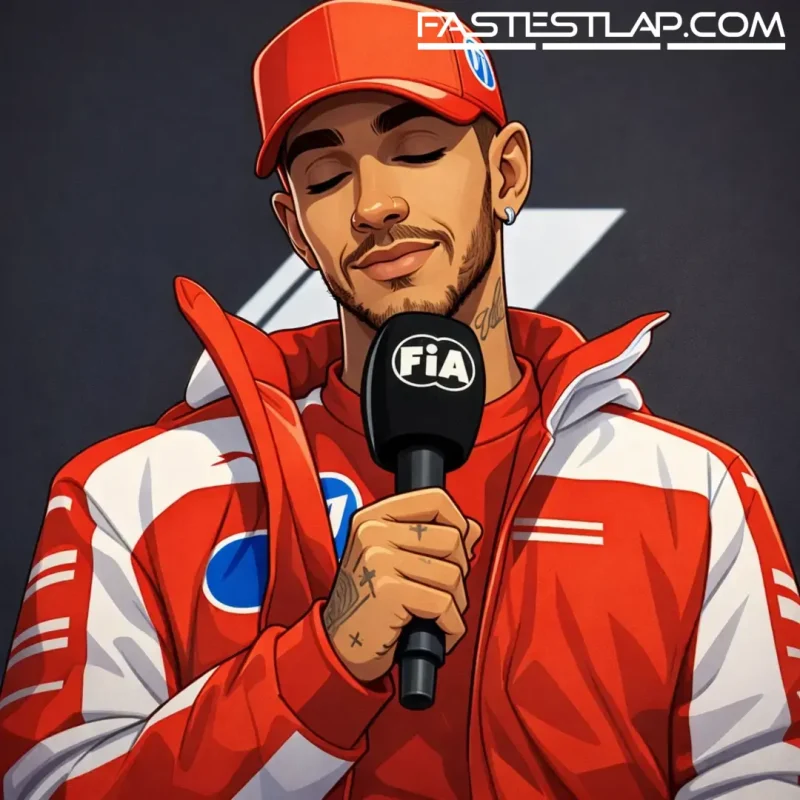
Then there’s Ferrari, where the story isn’t lap time but identity. Lewis Hamilton has defended the new all-electric Ferrari Luce road car as “very Ferrari” amid loud criticism, including from former chairman Luca di Montezemolo, who argued the Luce “risks destroying a legend” and even floated the idea that the Ferrari logo should be removed to protect heritage.
Hamilton’s intervention matters because it’s not just a celebrity endorsement; it’s the most visible driver in the sport attaching himself to Ferrari’s future-facing message at a moment when some of the brand’s traditionalists are digging their heels in. There’s a familiar tension here between legacy and evolution, but it lands differently when it’s Ferrari, and when the criticism comes from a figure as embedded in the mythology as di Montezemolo.
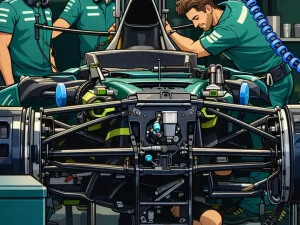
Finally, Cadillac has moved to close the loop on one of Canada’s more startling visuals: Sergio Perez’s front-right suspension failure on the way into the pit lane. Team principal Graeme Lowdon says the team “fully understands” what caused it after an investigation, and he’s claimed a failure had already occurred before Perez hit the brakes — meaning it looked “significantly more dramatic” than it actually was in mechanical terms.
That’s not just a reassurance for Perez; it’s an important message to the wider paddock that Cadillac’s processes are robust enough to diagnose and contain a high-profile failure quickly. In a year where every new or evolving operation is judged ruthlessly on competence, “we understand it” is the minimum acceptable standard — but saying it publicly is still a statement.
One weekend, five very different controversies, and the common thread is control: McLaren choosing accountability over argument, Mercedes trying to prevent friction before it becomes fracture, Ferrari navigating what its own badge is supposed to mean in a changing world, and Cadillac insisting it’s on top of the engineering reality behind a heart-stopping moment.
In modern Formula 1, that’s often the real race on Monday.