
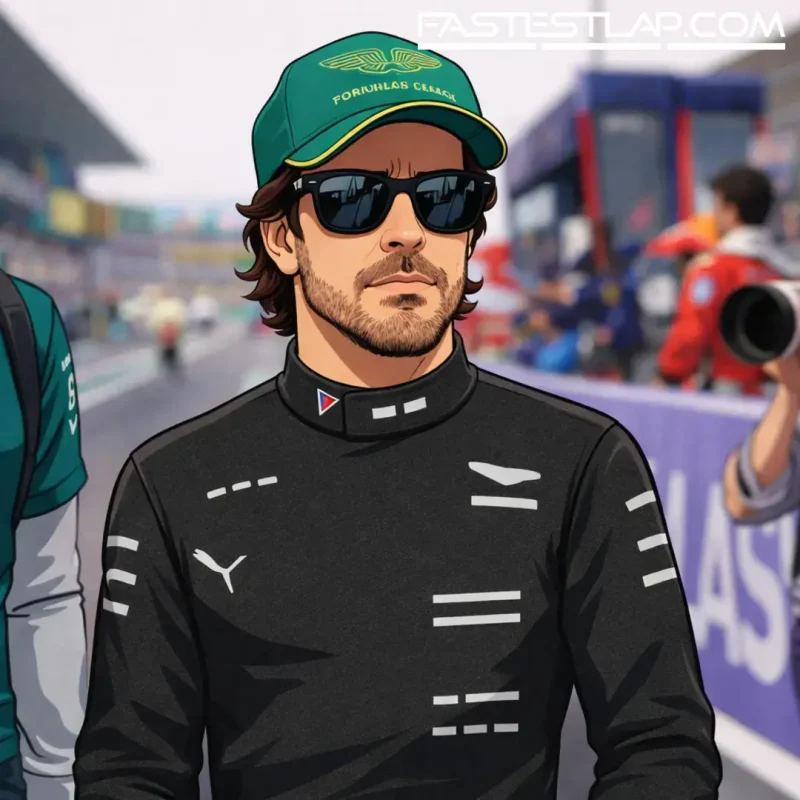
Fernando Alonso’s Montreal weekend managed to sum up Aston Martin’s 2026 season in a single opening lap.
From 19th on the grid he threaded his way to 10th with the kind of opportunism that still makes him a nuisance when chaos breaks out ahead. For a few laps he was there, on the fringes of the points, forcing faster cars to deal with him rather than simply driving past. Then the familiar gravity took hold: the Aston began bleeding positions at a steady rate until it arrived, as Alonso put it, at its “natural position at the back”.
It didn’t even get to finish the story properly. Alonso ultimately parked the AMR26 mid-race because of a seat issue that was making him “more and more uncomfortable” as the stint went on — a small, almost mundane problem on paper, but one that underlined how little margin this team currently has. Aston Martin’s chief trackside officer Mike Krack didn’t dress it up afterwards, warning the team “needs to get its act together” in certain areas.
The more interesting part, though, was Alonso’s blunt acceptance that nothing fundamental is likely to change before the summer break has come and gone. Not “we’ll see”, not “we’re pushing hard”, but the kind of resigned clarity you usually only hear when a driver’s been around long enough to recognise when development reality has set in.
“This is the situation and it will be like this until after summer,” Alonso said. “So we accept it… but we are relaxed with this.”
Relaxed, perhaps, in the specific Alonso sense of the word: he’s not going to waste emotional energy pretending the car is something it isn’t. But that doesn’t mean he’s stopped taking notes. His explanation of where Aston can actually find time was refreshingly direct, and it points to why this season has become an exercise in damage limitation as much as development.
Alonso’s view is that the headline deficit — he cited roughly three seconds to the front — isn’t coming out through clever set-up tweaks or minor trackside fixes. It’s going to require more power from the Honda engine and more downforce from the aero package. In other words: the big-ticket items, the ones that need manufacturing lead time and proper validation, not a late-night turn of the screwdriver.
That lines up with what Honda’s trackside general manager Shintaro Orihara has indicated internally, with gains targeted for after July’s Hungarian Grand Prix. Alonso is effectively setting expectations accordingly: at least another six races spent fighting at the wrong end of the timing screens, with the occasional flattering moment when the lights go out and the field bunches.
In the meantime Aston Martin is trying to chip away where it can. Alonso pointed to the team’s qualifying picture as a small but tangible sign of progress: the gap needed to escape Q1 has narrowed from over a second in Miami to around three tenths in Canada. That’s not a transformation — and it’s certainly not a ticket to the sharp end — but in the midfield’s knife fight it’s the difference between being anonymous and at least being in the conversation.
He also offered a rare glimpse into the kind of under-the-skin work that tends to go unnoticed when you’re staring at lap time deficits. Gearbox behaviour, gear synchronisation, downshifting — the unglamorous stuff that can make a car feel less hostile and a little more consistent even if it doesn’t suddenly jump up the order.
“From Miami to [Canada], we improved a lot… the gear sync, the downshifting,” Alonso said. “So how that translates into lap time is difficult to quantify, but definitely we were faster here than Miami with exactly the same car, just because we fine-tuned things.”
That’s the reality of where Aston Martin is living right now: optimising its way around a “fundamental problem” it can’t engineer out in a fortnight. Alonso expects “a lot of small things” between now and Monaco, and hopefully “another step forward”, but he’s clear the real laptime will only arrive with the bigger second-half-of-the-year push.
There’s also something else in Alonso’s candour: a quiet acknowledgement that the early-season narrative has shifted from “when will Aston unlock this car?” to “how does Aston endure this phase without turning every weekend into a crisis?” That’s why a seat issue in Canada becomes more than a footnote. When you’re already three seconds down, you can’t afford self-inflicted wounds — whether that’s operational sharpness, reliability, or basic cockpit comfort.
Aston Martin has hinted for a while that a more significant upgrade package is planned later in the season, backed up by incremental updates in the meantime. Alonso’s comments give that plan a firmer timeline and, crucially, a clearer diagnosis. If the AMR26 is going to stop doing that familiar trick — the great start, the brief illusion, the slow slide — it’ll be because Aston has finally added the two things it’s currently short of: grunt and grip.
Until then, Alonso will keep doing what he did in Montreal: taking any opening the race offers, making the car look better than it is for as long as physics allows, and then watching the stopwatch restore order.









