The FIA has quietly bent its own working-hours rules for Monaco this week, trimming three hours off the overnight curfew — but only for the small group of mechanics responsible for tyre work.
It’s a narrow concession, aimed at smoothing out the kind of operational bottlenecks Monaco seems to produce every year. Even by street-race standards, Monte Carlo is awkward: the circuit infrastructure is squeezed into a living city, and much of the track space returns to public use at the end of each day. Teams can’t just treat it like a conventional venue where you roll in, lock the gates and run a clean 24/7 schedule from build to pack-down.
Normally, the sport’s “Restricted Period” rules keep operational staff out of the circuit for set windows before first practice. The FIA defines two blocks: Restricted Period 1 runs from 42 hours before FP1 until 29 hours before FP1, and Restricted Period 2 runs from 18 hours before FP1 until four hours before FP1. During those periods, teams aren’t allowed to have operational personnel inside the circuit.
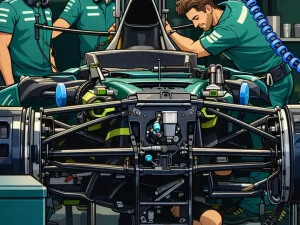
For Monaco, the FIA says it will shorten the curfew by three hours on Wednesday, Thursday and Friday — but exclusively for up to six staff members per team, and strictly for tyre preparation work once the tyre supplier has fitted them.
“Due to the unique logistical challenges presented by the Monaco GP the following concessions will be made,” the FIA statement read. “On the Wednesday, Thursday, and Friday, for this Competition only, the curfew period will be reduced by a period of three (3) hours for a maximum of six (6) operational personnel for the sole purpose of tyre preparations post tyre fitting from the tyre supplier.
“Teams must nominate the six operational personnel, informing the FIA in writing by email, no later than the start of curfew on the appropriate day.”
It’s a very Monaco solution: hyper-specific, tightly policed, and clearly designed to avoid opening the door to a broader “if you can do it, why can’t we?” debate at the next race. The fact it applies only to tyre fitting personnel tells you where the pinch point is — and it’s not hard to see why. When access windows are shorter and the paddock footprint is compromised, any delay in the tyre process quickly becomes a knock-on effect for the rest of the garage rhythm: checks, set-up changes, and the endless choreography that has to happen before cars can even roll for FP1.
There’s also a second, more sporting tweak that will catch the eye: Monaco won’t have a Straight Mode zone at all.
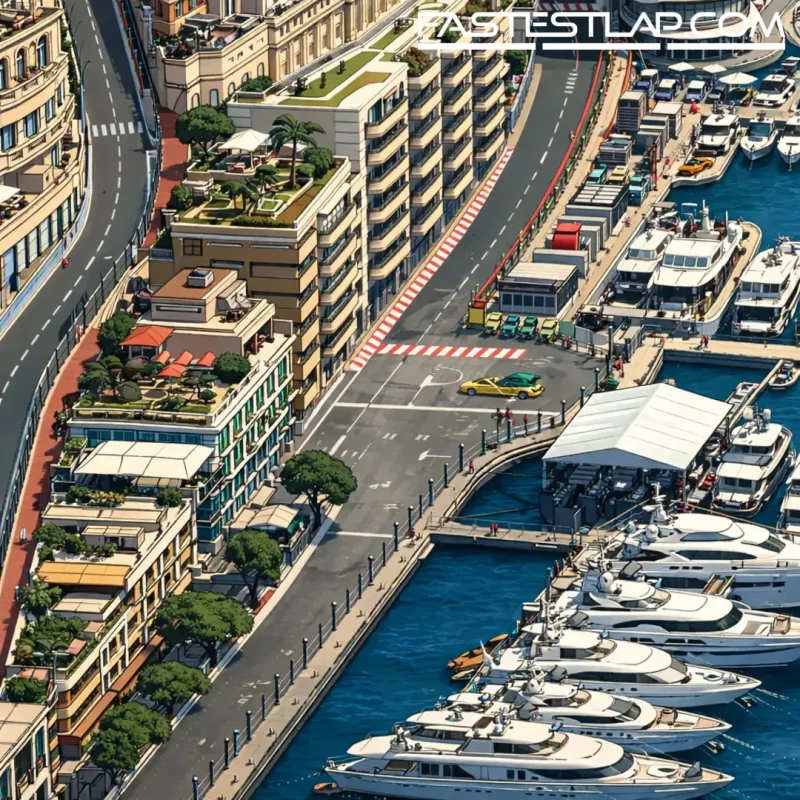
In the previous era, the start/finish straight — the brief squirt from Anthony Noghes to Sainte Devote — was Monaco’s DRS strip, more out of obligation than expectation. Straight Mode has since taken over from DRS as the standard straight-line aid, but the FIA has decided it won’t be used around Monte Carlo’s confines this weekend.
Drivers will still be allowed to use Overtake Mode when they’re within one second of the car ahead in that same part of the lap, but the absence of Straight Mode removes one of the few “manufactured” opportunities to offset how track position-centric Monaco already is.
Put those two decisions together and you get a very familiar Monaco pattern: the FIA is trying to make the event function smoothly behind the scenes, while doing little to soften the hard racing reality out on track. More hours for the tyre crew helps teams hit their marks operationally; fewer tools for attacking keeps Sunday’s pecking order even more dependent on Saturday execution and strategic discipline.
Monaco, as ever, is demanding its own rulebook — just not the kind that makes overtaking easier.