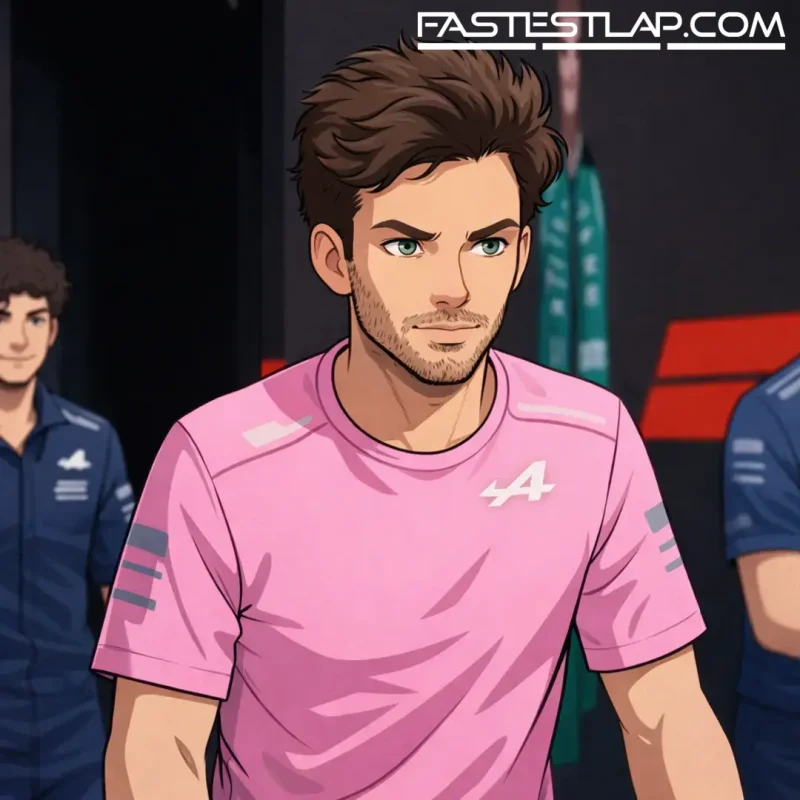
Pierre Gasly arrived in Barcelona still wearing Monaco like a bruise.
The Alpine driver has called the pit-lane speeding penalties that stripped him of a podium in the Principality the hardest sporting moment of his Formula 1 career — and, crucially, he’s biting his tongue while the team tries to turn frustration into something more concrete: a Right of Review with the FIA.
Alpine fronted up to the stewards on Thursday at the Circuit de Barcelona-Catalunya, aiming to present what it believes is fresh evidence that Gasly wasn’t at fault for the Monaco infractions. The bar for even reopening the case is high: the team has to show a “significant and relevant new element” that wasn’t available when the original decision was made. Only then does the conversation move from permission to proceed to the substance of the review itself.
In the meantime, Gasly is keeping his cards close.
“Let’s say I don’t want to say too much until you know the hearing is done, until the team has the conversation with the FIA,” he said when pressed in Spain. “I think they’ve worked really hard… to bring the new evidence. For now… I don’t want to share too much until then.”
What is clear is the scale of the swing Monaco delivered. Gasly was hit twice with five-second penalties for pit-lane speeding. The FIA stated he was recorded at 60.1 km/h for the first offence and 60.4 km/h for the second. He wasn’t alone — five drivers were penalised — but circumstances made the punishment wildly uneven across the field. For some, the sanction was irritating but survivable. For Gasly, it was catastrophic.
He’d effectively driven himself onto what looked like a rare, earned podium. He left Monaco classified seventh instead of third.
That’s the detail that gives this story its bite: not the decimal points on a speed trace, but the scarcity of the opportunity. Gasly wasn’t arguing about a fourth becoming a fifth. He was talking about a career-defining result in the sport’s most symbolic venue, wrenched away in a way that’s hard to emotionally file under “just one of those things”.
“I think to me it’s fair to say this was the hardest day I’ve ever had in F1 and in my sport career,” Gasly said. “Sporting-wise… it was definitely the hardest to deal with, because I put in a very strong performance.
“As a kid… I grew up watching Formula One, the iconic Monaco Grand Prix as a French has a special meaning to me, and never had the chance to go on that podium… dealing with all the emotion I felt after the race, for me was extremely hard and intense.”
Gasly’s point is one every midfield driver understands, even if they rarely say it so plainly. If you’re in a car that can fight for podiums most weekends, the sport gives you a neat coping mechanism: the next chance is five days away. But if your reality is that a podium might appear once a year — if that — then when it comes, you feel the weight of it in real time. There’s no comfort in knowing another one is probably around the corner, because it probably isn’t.
“If you drive a car that gives you the possibility to finish on the podium every other weekend, it’s slightly different,” he said. “You move on quickly… It’s a bit easier.
“In my career, I’ve not been in a position to have that car yet underneath me, so I know when the chance is there… once it’s there, I want to make sure that I’m the one grabbing it.”
What seems to sting most is that Gasly believes Monaco was a weekend where Alpine didn’t leave anything on the table. He qualified in the top 10, gained a position at the start against Lando Norris, then handled the second launch after a red flag for Charles Leclerc’s crash — another moment he referenced as part of a weekend he felt he and the team executed cleanly.
“In terms of performance we’ve executed everything perfectly with the team,” Gasly said. “Great quali… I managed to pass Lando the first start, I managed to pass Isack at the second start. So… we can be very proud of what we’ve achieved during that weekend.”
That’s why Alpine pushing for a Right of Review matters beyond a simple points correction. It’s a signal to its driver — and to the wider paddock — about whether the team is willing to fight when something doesn’t add up to them. The FIA’s processes are intentionally conservative; the sport can’t function if every penalty becomes a legal drama. But that cuts both ways. When a team decides it’s worth attempting to reopen a decision, it’s effectively saying the normal channels didn’t feel sufficient.
Gasly has spent the days since Monaco toggling between normal life and the heavy, procedural grind of a case like this. Home, training, time with family — and plenty of calls with the people building Alpine’s argument.
“Just home training with my girlfriend, my dog… talked about the old race weekend with my family… and the people I work with,” he said. “It’s been quite a lot of conversation with the team, with the lawyers about our case, etc. So still very much into what happened and the whole situation.”
There’s a telling line in his comments, too: he needed time to come down from Monaco before he could properly move on. That’s not just the physical intensity of the place — although he noted the adrenaline and the energy it takes — but the mental snap from thinking you’ve banked something special to finding out you haven’t.
“I definitely needed these few days to kind of calm down,” he admitted. “Monaco alone is already very intense… so mix with the situation itself, it was quite a lot to process Monday, Tuesday. But now I’m feeling a good place to really have 100% of my head in this new race weekend.”
Whether Alpine’s “new evidence” clears the FIA’s threshold is still the unanswered question. But Gasly’s reaction already tells you plenty: for drivers living in that narrow space between points and podiums, the margins aren’t just measured in tenths or kilometres per hour. Sometimes they’re measured in how often the sport gives you a shot — and what it feels like when that shot gets taken away.