Charles Leclerc climbed out of his Ferrari in Barcelona looking like a driver who’d run out of patience — with himself more than anyone else.
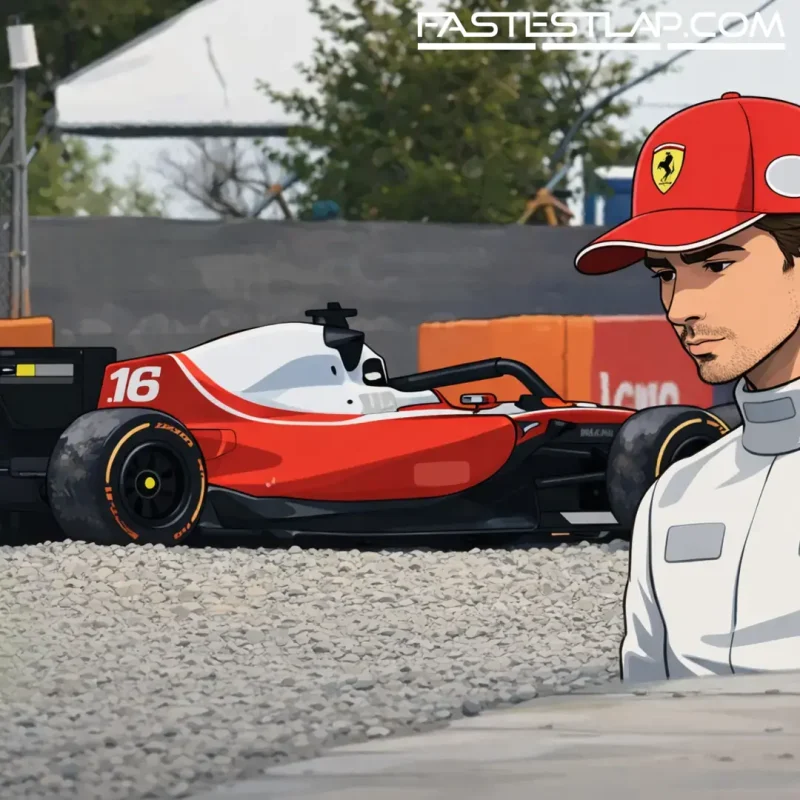
He’d been right in the fight for pole all weekend, and in a qualifying session where Ferrari’s SF-26 genuinely looked like it could go toe-to-toe with Mercedes, Leclerc had every reason to believe Saturday could be his. Instead, his Q3 ended in the gravel at Turn 4 after a snap of oversteer fired him off on the exit of the long right-hander and into the barriers, bringing out the red flag and leaving him without a lap on the board.
The radio silence in the garage was telling. This wasn’t a “these things happen” shunt; it was the sort of mistake that stings because it arrives precisely when the ingredients are finally there.
Leclerc didn’t try to dress it up afterwards. “Ashamed” was the word he used — repeatedly — as he digested another weekend turning on a single moment. Monaco had already ended with him nosing into the barrier and retiring from the race, and now Barcelona had served up a fresh gut-punch at the worst possible time.
“I feel very ashamed after last three weekends that have been particularly difficult for me,” he admitted. “Everything felt really, really good, and in these days I need to deliver, and I didn’t.”
What makes this one particularly hard to spin is that there wasn’t an obvious external hook to hang the error on. Leclerc had changed certain brake materials heading into the weekend, a detail that would’ve made for an easy technical scapegoat, but he shut that down immediately. No blame-shifting, no hedging, no searching for a reference point that might soften the verdict.
“I felt very at ease with it, and there’s nothing of that,” he said of the revised configuration. “There’s no excuses on trying to find the reference or whatsoever.”
The accident itself reads like a driver trying to be perfect — and overreaching in the last place you can afford to. Leclerc explained he was attempting to release the brake earlier to carry more speed, aware Turn 4 was one of the few areas where there was still lap time to be found.
“I tried to release brakes earlier, trying to carry more speed, as I knew it was the main weakness, if not the only weakness,” he said. “Tried to carry more speed in, worked out, but then I went on traction on the dirty side of the track, and lost the rear.”
That “dirty side” detail matters because it speaks to how marginal the difference is right now. It doesn’t take much — a half-metre wider, a touch earlier on throttle — and suddenly you’re not fighting for pole, you’re watching the rest of Q3 from behind the barrier.
The collateral damage for Ferrari was immediate. With Leclerc’s session ended, it was Lewis Hamilton left carrying the front-row hopes, and he duly delivered — qualifying alongside George Russell, who put Mercedes on pole. World championship leader Kimi Antonelli slotted in behind them, while Leclerc was left staring at 10th on the grid simply because he never got the chance to set a Q3 time.
And 10th in Barcelona isn’t just “a bit further back”. It’s the wrong side of the road for the long run down to Turn 1, the side where grip is at a premium even on a good day. For a driver who’d been sniffing pole, it’s a brutal reset.
Still, the shape of the weekend offers Leclerc a thin thread to tug at. Ferrari has looked competitive, and the pace he showed before the crash suggests the car is strong enough to climb — if the race doesn’t get messy and if the tyre story plays into his hands.
“I think we can do great tomorrow, and I think we can come back,” he said, trying to pivot his mindset to Sunday. But he didn’t pretend the disappointment had already passed. “So, I’m optimistic for tomorrow, but for now, the disillusion of quali is all I can think of.”
That’s the line that lingers. Because in 2026, with the margins tight and the spotlight relentless, the sport doesn’t really leave room for drivers to “bank” good weekends anymore — not when your teammate is on the front row and your rivals are converting.
Leclerc has never lacked speed, and Barcelona did nothing to change that. But with Monaco already in the rear-view mirror and another opportunity thrown away at Turn 4, the question now isn’t whether he can be fast enough. It’s whether he can stop handing away the Saturdays that set up the Sundays.