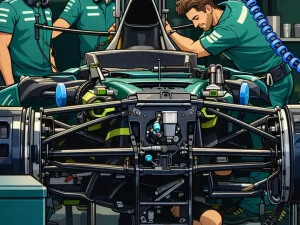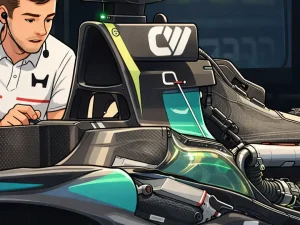
Williams has left Barcelona with more paperwork than points after both of its cars were pulled into separate post-race investigations by the FIA stewards.
Alex Albon and Carlos Sainz have each been flagged for an alleged start-procedure infringement ahead of the 66-lap Spanish Grand Prix at Circuit de Barcelona-Catalunya. The stewards’ documents cite a potential breach of Article B5.5.5 of the sporting regulations — the clause that requires all team personnel and equipment to be clear of the grid before the 15-second signal.
It’s the sort of detail teams obsess over because it’s so avoidable, and because it’s exactly the kind of procedural slip that can turn an already bruising weekend into a proper mess. The FIA has been increasingly unforgiving about grid discipline in recent seasons, not out of pedantry but because the start sequence is one of the sport’s most tightly controlled safety environments. If you’re still on the grid when you shouldn’t be, you’re not just breaking a rule — you’re adding variables to the most congested moment of the race.
For Williams, the timing couldn’t be worse. Barcelona was already unravelling long before the chequered flag fell on Lewis Hamilton’s victory, and the team never really got the chance to reset its narrative once the lights went out.
Albon’s afternoon, in particular, turned into survival mode. Mid-race he was forced into the pits when a Formula One Management-supplied onboard camera worked loose, prompting a stop on safety grounds to secure the housing. That kind of interruption is the very definition of momentum-killer: you lose track position, you lose rhythm, and you lose the ability to make your race mean something in the classification.
Once Albon had fallen several laps behind, Williams effectively pivoted into damage limitation and treated the remainder as a test session — a familiar euphemism in modern F1 for “we’re not racing anyone, so we might as well learn something”. That may be sensible engineering triage, but it also underlines how quickly the weekend slipped away.
Sainz at least made it to the end in a representative position, but “representative” is doing a lot of work here. He finished 12th of the 14 cars that reached the flag, two laps down, which tells its own story about how the race developed for Williams once the front of the field settled into its rhythm.
Now the focus shifts to what the stewards decide to do with the grid allegations. Article B5.5.5 is clear in its wording, but penalties can vary depending on what exactly happened, why it happened, and whether it conferred any sporting advantage or raised a safety concern. Teams tend to argue context; the FIA tends to look at the rulebook and the clock.
Either way, Williams would have preferred to spend the post-race hours debriefing performance rather than explaining who was still on the grid and why. In a season where margins are tight and weekends are increasingly shaped by execution rather than pure pace, these are the self-inflicted wounds that teams can’t afford — especially when the on-track story has already been difficult enough.