Pierre Gasly isn’t pretending Monaco is settled just because a document says “penalty rescinded”.
After Alpine successfully triggered a Right of Review and got Gasly’s two pit-lane speeding penalties wiped away, the Frenchman has made it clear he’ll defend that reclaimed podium on principle — and he’s not especially interested in arguments built around fairness to those who served their own sanctions.
Gasly had originally been pinged twice for exceeding the pit-lane limit, with two passages logged at 60.1 km/h and 60.4 km/h. Two five-second penalties followed. Added to his race time, they knocked him from third down to seventh at the flag. It looked, in typical Monaco fashion, brutal and final.
Then came Thursday’s hearing. Alpine’s Right of Review succeeded, and the penalties were rescinded after Formula One Management revealed the distance used to calculate speed was “inaccurate and overstated the speed” Gasly had actually been doing. Third place was restored.
That shuffle mattered. Isack Hadjar had inherited the final podium spot in the immediate aftermath of the chequered flag, and when Gasly was reinstated it wasn’t just Hadjar who lost out. Oscar Piastri, Liam Lawson and Arvid Lindblad each dropped one position too, along with the points that come with it.
Piastri’s frustration has been the loudest. The McLaren driver was one of five penalised for pit-lane speeding in the same race — and crucially, he served his penalty during the Grand Prix. That cost him track position, and it also removed the possibility of the same kind of post-race rescue Alpine pulled off. In Piastri’s view, it’s hard to square an acknowledged error being corrected for one driver when others paid the price in real time.
“I’m pretty mind blown by the decision,” Piastri said, pointing to the uncomfortable reality: the original call was wrong, but only one party gets the benefit of that being admitted.
Mercedes, too, has indicated it sought a Right of Review after George Russell’s Monaco was effectively torpedoed by his own speeding penalty. And in the background, there’s clear paddock noise: McLaren and Red Bull have signalled an intent to challenge the stewards’ choice to overturn Gasly’s punishment.
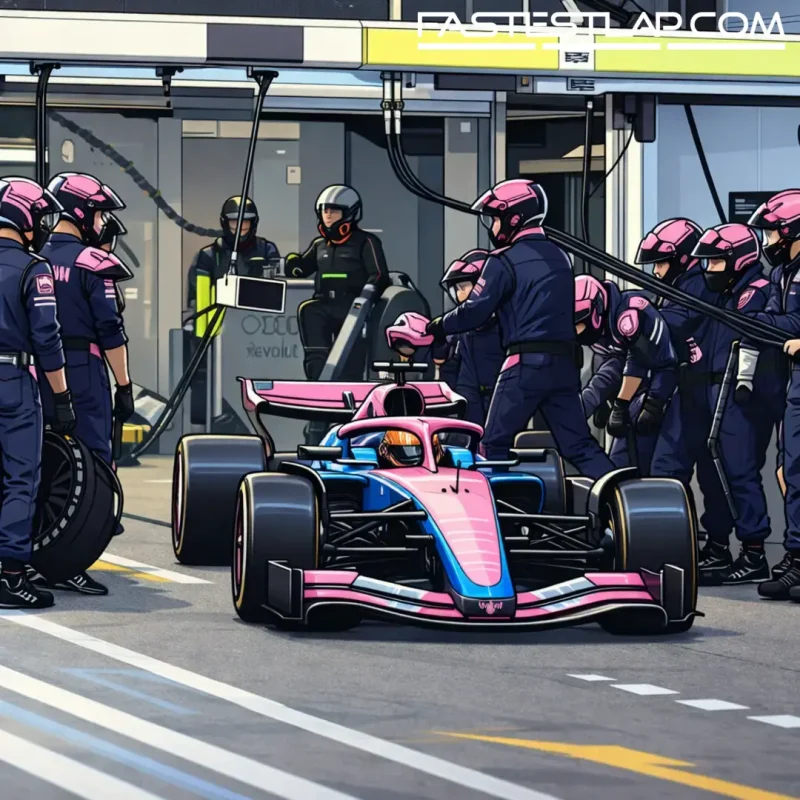
Gasly’s response is sharp, and it goes straight at the strategic subtext of Monaco. Alpine, he says, made a conscious decision not to “box a second time” to serve the penalty — a gamble rooted in conviction that the team’s data showed he hadn’t broken the limit.
“I’m just going to make something clear,” Gasly said. “I know what we did. I know we were driving at 59 km/h in the pit lane and we’ve been accused of driving over 60, which wasn’t the case.
“So I think what I’m going to say is that it should not be right to penalise me for something that we haven’t done just because others got penalised.
“If a potential mistake was done once, twice, three times, is there a reason to do it a fourth time? So I think just to draw the line here.”
That’s the crux: Gasly’s argument isn’t that the system is perfect — it’s that once an error is identified, the sport shouldn’t cling to it for the sake of symmetry. It’s an unfashionable stance in a grid that often defaults to “we all suffered, so you should too”, but it’s also a very Monaco stance: decisions here are as much about what you dare not do as what you choose to do.
Of course, the obvious counter is the one Piastri has raised: if other drivers were caught in the same net, why should only one be released? Gasly is careful on that point, refusing to assume equivalence without seeing the underlying data.
“Second point is, I actually don’t know whether Oscar or George over-sped or not,” he said. “I haven’t seen their data. I don’t know if it’s the same issue as we’ve had. And based on that, I cannot comment.
“Obviously, if they didn’t, then that’s a big shame. They obviously lost out. And yeah, I mean, I’m not for that.”
There’s a telling line in there: Gasly isn’t celebrating that others might have been wronged. But he also won’t accept a retroactive punishment just because another team chose — or felt forced — to take their medicine during the race.
Alpine’s view, echoed by Gasly, is that it played this correctly: don’t serve a penalty you believe is based on faulty information, back your numbers, and force the sport to look again. It’s the sort of call teams talk about wanting to make, but rarely do, because the political and competitive downside is obvious if the review fails.
“For sure, I think the situation we are facing is, as a team, we decided not to box a second time, change the tyre, not to serve the penalty, because we knew that we didn’t do anything wrong, and we were going to protest it,” Gasly said.
He even offered a rare nod of approval for the sport’s willingness to correct itself. “Fair play to FIA and F1,” he said, adding that taking responsibility and overturning the decision was the right outcome because “we did nothing wrong.”
And then, inevitably, he goes back to the race story Alpine wants on record: a strong qualifying performance, passing Lando Norris at the start, putting himself in the right places at the restarts, and overtaking Hadjar on track before converting that into a third-place finish.
Whether this ends up back in front of officials again depends on how far rivals push the logic of precedent. But Gasly’s message is already out there: Alpine didn’t stumble into this podium through procedural luck. It chose a fight, because it believed the numbers were on its side — and in Monaco, that kind of certainty is worth more than five seconds.