Mercedes insist it’s finally got its arms around the battery reliability gremlins that have been periodically kneecapping its 2026 campaign — and, just as importantly, it now has a plan to stop the damage spreading through the rest of its customer “fleet”.
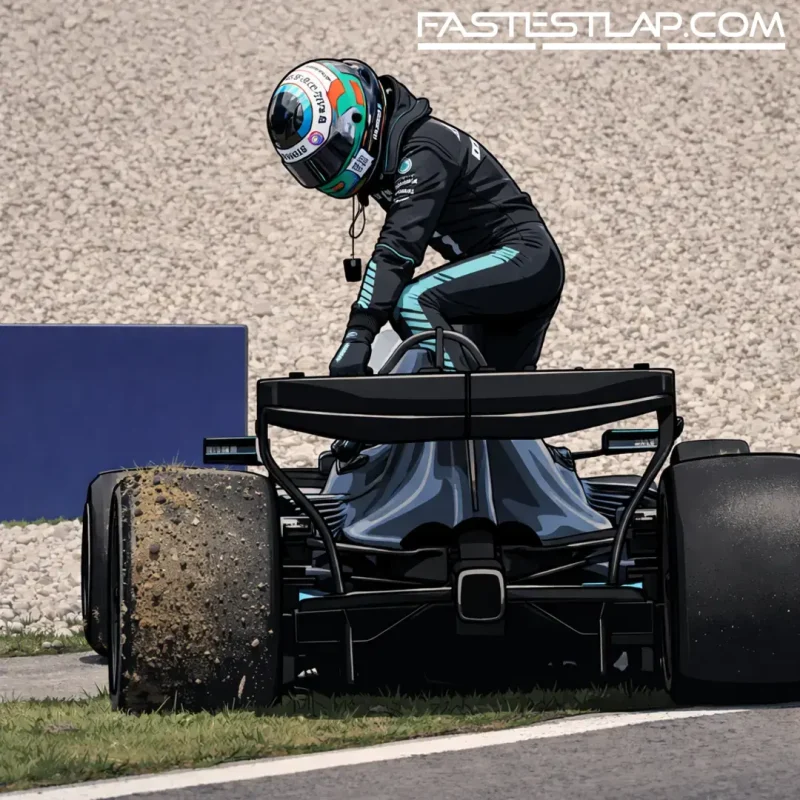
The timing is hardly ideal. Barcelona delivered another gut-punch when Kimi Antonelli, running second and within sight of the flag, ground to a halt with a power unit-related failure. The cruel twist? He’d only just muscled past George Russell to take that position. In a season where Mercedes is trying to build momentum and credibility with the W17 package, these moments don’t just cost points — they puncture weekends that are otherwise trending in the right direction.
It also wasn’t an isolated scar. Only a few weeks earlier in Montreal, Russell suffered a strikingly similar failure at the worst possible moment: his car stopped while he was leading a fight with Antonelli. And Mercedes isn’t alone in being bitten by battery headaches in the opening phase of the new-era regulations. McLaren has had its own electrical frustrations, including Lando Norris changing batteries twice in Monaco, and a double did-not-start in China due to electrical issues.
Yet Mercedes technical director James Allison is adamant the team is no longer staring into the fog. Speaking on the Nu Silver Arrows radio show, Allison described the problem set as “largely understood” — not necessarily identical case-by-case, but connected by a common thread within the same broad region of the battery system.
“I think anyone who’s a keen watcher of the sport will have seen that this has laid a few Mercedes-engined cars low over the season so far,” Allison said. “They’re not all identical, but they do sort of originate in the same broad part of the battery, and I think that most of the areas of risk have been understood.”
That matters, because Mercedes’ immediate headache hasn’t only been the failures themselves — it’s the lag between a failure happening and hard hardware getting back to the factory for a proper forensic teardown. After Russell’s Montreal DNF, deputy team principal Bradley Lord explained the battery had to go through unusual safety procedures and be shipped back to the UK by sea due to fire risk, a process that stretches into months rather than days.
In other words, Mercedes has had to make judgement calls with one hand tied behind its back: protecting itself from repeat failures while chasing performance in a championship that doesn’t wait for anyone to finish an investigation.
Allison’s message is that Mercedes is now past the paralysis stage. Even without every burnt piece of evidence on a workbench in Brackley or Brixworth, the team believes it has identified enough of the risk zones to begin “phasing in” updated modules as the season progresses — effectively cycling improved batteries into the pool and gradually reducing exposure.
“With a bit of luck, when we start to phase in the new modules into the racing season, then our fortunes as a fleet should pick up,” he said. “These DNFs are very, very painful.”
The key word there is “fleet”. This isn’t just a works-team problem; it’s a reputational one. In 2026, with the power unit back at the centre of F1’s competitive identity, manufacturers live and die by how robustly they support customer operations as well as their own. When battery issues become a visible theme across multiple Mercedes-powered cars, it’s not just a points leak — it’s a confidence leak.
There’s also a subtler competitive cost: reliability scares shape how aggressively a team dares to run its hardware. Allison offered a candid look at the internal push-and-pull that follows a failure, particularly when the root cause isn’t yet nailed down with complete certainty.
“You accept that there will be failure,” he said, framing it as the unavoidable price of developing at the limit. The goal, as ever, is to make sure failures happen in testing, on rigs, and in controlled environments — not at 300km/h with a trophy on the line.
But when the car does stop on track, Allison described the typical first response as a “half step backwards”: turning things down, adding caution, taking a little load out of the vulnerable area to avoid a repeat. It’s an understandable triage move, but it comes with an edge. Every half-step back is lap time, and lap time is grid position, and grid position dictates whether you’re fighting for podiums or scrapping in traffic.
Then comes the more important phase — the part Allison called the “proper, proper cure”: engineering out the weakness, proving it, and returning the performance headroom that got temporarily surrendered.
That’s the tightrope Mercedes has been walking through the first chunk of 2026. The W17 has shown enough flashes to hint at real upside, but it’s been forced into cautious compromises at times because the team can’t afford to keep lighting weekends on fire. Antonelli’s retirement from second in Barcelona is precisely the sort of result that sharpens internal urgency: a young driver delivering, a strong points haul in sight, and then nothing to show for it.
Mercedes’ bet now is that the worst of this story will read like an early-season tax — painful, expensive, but finite — as updated battery modules filter into the rotation and the operational restrictions can be eased back off. Whether that improvement arrives quickly enough to change the shape of its season is another question. But for the first time in weeks, Mercedes is talking less like a team searching for answers, and more like one preparing to move on.